
Commentary|Videos|June 17, 2024
Dr Levy on the Clinical Application of ADCs in NSCLC Following ASCO 2024 Data
Author(s)Benjamin Levy, MD, Yan Leyfman, MD
Benjamin Levy, MD, and Yan Leyfman, MD, discuss the clinical application of antibody-drug conjugates in non–small cell lung cancer.
Advertisement
Episodes in this series
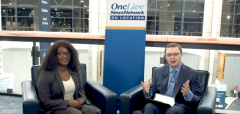
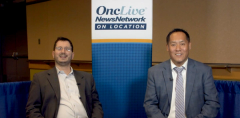
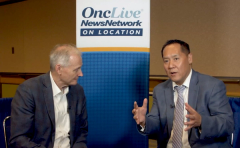
Benjamin Levy, MD, clinical director, Medical Oncology, Johns Hopkins Sidney Kimmel Cancer Center, Sibley Memorial Hospital; associate professor, oncology, Johns Hopkins University School of Medicine, and Yan Leyfman, MD, internal medicine and clinical researcher, Mount Sinai; co-founder, executive director, MedNews Week, executive committee member, Music Beats Cancer, discuss the clinical application of antibody-drug conjugates (ADCs) in the treatment of patients with non–small cell lung cancer (NSCLC) on
When asked which ADCs show the most promising potential for clinical applications, Levy states that the 2024 ASCO Annual Meeting appears to be the first ASCO Annual Meeting with so many ADC presentations, reflecting rapid advancements in the field. There are multiple promising options, with findings from the phase 3 EVOKE-01 trial (NCT05089734) taking a prominent place, he says. This study compares sacituzumab govitecan-hziy (Trodelvy) with docetaxel in the second-line setting in an enriched patient population that includes patients with both nonsquamous and squamous disease. Unfortunately, the study
Another ADC of interest is telisotuzumab vedotin, a MET-directed ADC. Data from the phase 2 LUMINOSITY/M14-239 trial (NCT03539536) were discussed at the meeting, focusing on both patients with EGFR wild-type and EGFR-mutant NSCLC. Preliminary results indicate that patients with wild-type disease with high MET expression derive the most benefit. The nuances of these data will be intriguing to explore, Levy says.
The 2024 ASCO Annual Meeting was incredibly exciting with so much progress seen in the ADC field, especially as advancements in TROP2-directed ADCs, MET-directed ADCs, and translational and predictive biomarkers propel the field forward, according to Levy. This is a thrilling time to witness these developments, he concludes.
Advertisement
Related to this article

Did you catch all of this week's top oncology news? Test your knowledge with OncLive's Weekly News Quiz.

Experts break down key lung cancer data and trends from the IASLC 2026 World Conference on Lung Cancer.
Here is your cheat sheet to all therapeutic options that were cleared by the FDA in September 2026 spanning tumor types.
The c-Met–directed ADC was designated for EGFR wild-type nonsquamous NSCLC after platinum chemotherapy and anti–PD-(L)1 therapy.
Firmonertinib did not significantly improve BICR-assessed PFS vs platinum/pemetrexed chemotherapy in first-line EGFR exon 20–mutant NSCLC in FURVENT trial.
Lung cancer experts discuss emerging strategies after immunotherapy in advanced squamous NSCLC, including updated PRESERVE-003 data from WCLC 2026.
The FDA approved pirtobrutinib for untreated chronic lymphocytic leukemia, granted priority review to elinzanetant for breast cancer hot flashes, and more.

TRE-515 earned fast track status in combination with KRAS inhibitors for G12C-mutated NSCLC after anti–PD-(L)1 therapy and platinum-based chemotherapy.
Advertisement
Advertisement
Trending on OncLive
1
The OncFive: Top Oncology Articles for the Week of 10/4/2026
2
FDA Approves Atezolizumab Plus Chemo for Stage III dMMR Colon Cancer
3
FDA Grants Breakthrough Device Designation to Natera’s Multi-Cancer Early Detection Assay
4
FDA Flashback: Hematologic Cancer Decisions and News From September 2026
5