
Commentary|Videos|June 17, 2024
Dr Marshall on Updates in CRC Following the 2024 ASCO Annual Meeting
Author(s)John L. Marshall, MD
John L. Marshall, MD, discuss updates in colorectal cancer management at the 2024 ASCO Annual Meeting.
Advertisement
Episodes in this series

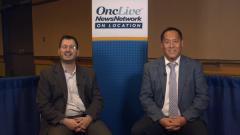
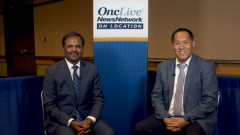
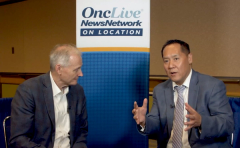

John L. Marshall, MD, chief, Hematology and Oncology, professor, medicine and oncology, director, Otto J Ruesch Center for the Cure of Gastrointestinal Cancers, Georgetown Lombardi Comprehensive Cancer Center; and Chandler H. Park, MD, FACP, medical oncologist, Norton Healthcare; clinical assistant professor, University of Kentucky; medical school professor, University of Louisville School of Medicine; Kentucky medical oncologist representative, National Comprehensive Cancer Network®; Kentucky physician representative, State Executive Council, American Society of Clinical Oncology (ASCO), discuss updates in colorectal cancer (CRC) management on
Park begins by asking about the implications of
This French-led study randomly assigned patients with colorectal liver metastases that were deemed unresectable by a multidisciplinary review. All patients had liver-only disease. Patients were assigned to either continue to receive standard chemotherapy or undergo a liver transplant. TRANSMET produced groundbreaking data that support the consideration of liver transplants for patients with unresectable liver-only metastases, Marshall expands. This study indicates that for truly unresectable cases, getting patients on a transplant list could be a viable path to a potential cure, adding another tool for surgeons to use to try to cure metastatic CRC, he says.
The treatment of patients with metastatic CRC has evolved significantly, Marshall says. Initially, patients typically received chemotherapy. Then, standards moved toward resecting oligometastatic disease in the liver or lungs, then changed to include localized treatments. Now, the CRC treatment paradigm is extending these boundaries even further, he adds. There is still much to learn about the biology of metastatic CRC, and ongoing research aims to uncover these complexities, Marshall concludes.
Advertisement
Related to this article

The top 5 OncLive TV videos of the week.

The FDA approved atezolizumab plus chemo for stage III colon cancer, cleared a tucatinib-based maintenance regimen for advanced breast cancer, and more.

Experts spotlight the gastrointestinal cancer presentations they’re most excited to see at the 2026 ESMO Congress.

Did you catch all of this week's top oncology news? Test your knowledge with OncLive's Weekly News Quiz.

The FDA approved atezolizumab plus chemotherapy for the adjuvant treatment of stage III mismatch repair–deficient colon cancer.
The c-Met–directed ADC-based combination was designated for mCRC previously treated with fluoropyrimidine, irinotecan, oxaliplatin, and anti-VEGF therapy.

The estimated 3-year OS rate with botensilimab plus balstilimab was 48% in heavily pretreated recurrent ovarian cancer in the phase 1b C-800-01 trial.

The top 5 OncLive TV videos of the week cover insights in MDS, multiple myeloma, pancreatic cancer, colorectal cancer, and uveal melanoma.
Advertisement
Advertisement
Trending on OncLive
1
The OncFive: Top Oncology Articles for the Week of 10/4/2026
2
FDA Approves Atezolizumab Plus Chemo for Stage III dMMR Colon Cancer
3
FDA Grants Breakthrough Device Designation to Natera’s Multi-Cancer Early Detection Assay
4
VIR-5500 Receives FDA Fast Track Designation in mCRPC
5