
Opinion|Videos|July 21, 2026
Emerging Agents and Critical Gaps in CNS Data for EGFR-Mutated NSCLC
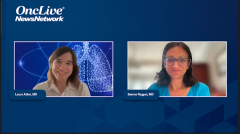
Author(s)Laura Alder, MD, Seema Nagpal, MD
The discussion addresses emerging second-line options and systematic limitations in CNS endpoint reporting across trials.
Advertisement
Episodes in this series
The discussion addresses emerging second-line options and systematic limitations in CNS endpoint reporting across trials. Emerging agents include OptiTROP-Lung04, which showed encouraging median PFS benefit and clinically significant overall survival benefit, representing an exciting space awaiting a larger readout. HARMONi-A evaluated ivonesimab, an anti-PD-L1/VEGF bispecific antibody, with chemotherapy, showing meaningful overall survival benefit and preliminary signals that patients with baseline brain metastases may derive particular benefit. Izalontamab brengitecan represents another pipeline agent generating early CNS interest.
Dr. Alder and Dr. Nagpal address significant gaps in CNS data across trials: CNS-specific endpoints are frequently underpowered or secondary; much of the emerging data originates from Chinese trial populations, raising questions about generalizability given known differences in disease biology, mutation spectrum, and exposure history; and optimal sequencing remains undefined.
Critically, leptomeningeal disease is rarely reported as a distinct endpoint in large trials, despite being a growing problem as patients with EGFR-mutated NSCLC survive longer. Dr. Nagpal argues for dedicated leptomeningeal cohorts in future trials rather than lumping these patients with parenchymal brain metastasis populations.
The inconsistency between RECIST and RANO brain metastasis criteria across trials further complicates cross-trial interpretation, particularly because SRS achieves approximately 90% local control for lesions under 1.5 cm, making it essentially impossible to attribute intracranial responses to drug versus prior radiation when treated lesions are included without distinction.
Advertisement
Related to this article

An OncLive workshop covered practice-changing ROS1- and ALK-directed data in NSCLC shared at ASCO 2026 and beyond.

Bringing some or all clinical trial-related activities directly to patients can help overcome barriers that prevent many people from participating.
Higher EO2463-induced CD8 T-cell expansion was associated with significantly longer PFS in indolent non-Hodgkin lymphoma.

Alpha DaRT plus pembrolizumab produced responses in all evaluable elderly patients with PD-L1–positive recurrent/metastatic head and neck cancer.

High CR/CRi rates were shown for olverembatinib plus blinatumomab in relapsed/refractory Ph-positive chronic myeloid leukemia and B-ALL.
PRAME-directed therapies represent a novel approach in the treatment of advanced melanoma.

Roswell Park Comprehensive Cancer Center investigators will deliver 21 presentations at the AHNS 12th International Conference on Head and Neck Cancer.

Pelareorep plus a checkpoint inhibitor earned FDA fast track designation for pretreated, inoperable, recurrent, or metastatic squamous cell anal carcinoma.
Advertisement
Advertisement
Trending on OncLive
1
FDA Grants Fast Track Designation to Pelareorep in Pretreated SCAC
2
PRAME-Directed Therapies Advance Melanoma Treatment Across Clinical Settings
3
Dr Falchi on Critical Unmet Needs and Important Next Steps in DLBCL
4
META 10-19 Elicits High Complete Response Rate at Ultra-Low Doses in High-Risk R/R DLBCL
5