

Laura Alder, MD, discusses a retrospective analysis in which early-morning tarlatamab infusions during cycle 1 did not improve outcomes in small cell lung cancer, and what a prospective test would require.

Laura Alder, MD is a medical oncologist with Duke Cancer Center.
Laura Alder, MD, discusses a retrospective analysis in which early-morning tarlatamab infusions during cycle 1 did not improve outcomes in small cell lung cancer, and what a prospective test would require.
Laura Alder, MD, discusses a multi-institutional real-world analysis of local consolidation and continued tarlatamab in patients with oligoprogressive small cell lung cancer.
Dr. Alder asks how clinicians without access to proton therapy, intrathecal treatment, or specialized neuro-oncology consultation should approach LMD and CNS disease, and what infrastructure changes would most improve outcomes.
Dr. Nagpal outlines her treatment algorithm for leptomeningeal disease (LMD) in EGFR-mutated NSCLC, framing her approach from a neuro-oncology perspective that prioritizes preserving brain function, sometimes over full disease eradication.
The discussion addresses emerging second-line options and systematic limitations in CNS endpoint reporting across trials.
Dr. Nagpal asks how Dr. Alder synthesizes the growing CNS evidence base for second-line therapy after osimertinib progression, referencing COMPEL, TROPION-Lung01 and TROPION-Lung05, MARIPOSA-2, and real-world sequencing data from ASCO 2026.
Dr. Nagpal presents a 58-year-old female non-smoker with stage IVB lung adenocarcinoma, EGFR L858R mutation, and TP53 co-mutation who maintained partial systemic response on first-line osimertinib for approximately 3.5 years.
Dr. Alder raises the inconsistency of CNS surveillance across practice settings in EGFR-mutated NSCLC, noting that even within the FLAURA2 and MARIPOSA trials, brain MRI schedules were not uniform. She asks Dr. Nagpal to address evidence-based surveillance recommendations and the barriers to implementing them.
Dr. Nagpal reviews frontline CNS data from the FLAURA2 and MARIPOSA trials, noting the importance of CNS-specific endpoints now being routinely incorporated into NSCLC clinical trials. Both trials enrolled patients with stable, predominantly pre-treated brain metastases.
Samuel Rosner, MD, and Laura Alder, MD, discuss ongoing research to watch in EGFR-mutated NSCLC.
Samuel Rosner, MD, and Laura Alder, MD, discuss AE management and compliance strategies for patients with EGFR-mutated NSCLC.
Samuel Rosner, MD, and Laura Alder, MD, discuss how antibody-drug conjugates have affected the EGFR-mutated NSCLC treatment paradigm.
Samuel Rosner, MD, and Laura Alder, MD, discuss treatment approaches following frontline use of the MARIPOSA or FLAURA-2 regimens in EGFR-mutated NSCLC.
Samuel Rosner, MD, and Laura Alder, MD, discuss how MET status and other factors can help inform sequencing decisions in EGFR-mutated NSCLC.
Samuel Rosner, MD, and Laura Alder, MD, discuss combination vs monotherapy approaches in EGFR-mutated NSCLC.
Samuel Rosner, MD, and Laura Alder, MD, discuss factors that help inform frontline treatment selection in EGFR-mutated NSCLC.
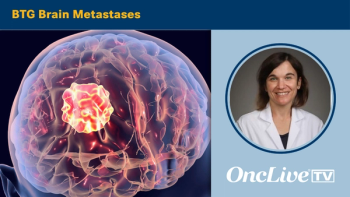
Laura Alder, MD, discusses clinical decision-making around prioritizing local vs systemic therapy for patients with lung cancer who present with CNS-only metastatic disease.
March 23rd 2026
March 30th 2026