
Opinion|Videos|July 28, 2026
Leptomeningeal Disease Management in EGFR-Mutated NSCLC: Systemic Therapy, Radiation, and Intrathecal Options
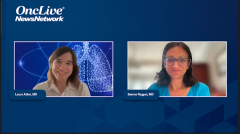
Author(s)Laura Alder, MD, Seema Nagpal, MD
Dr. Nagpal outlines her treatment algorithm for leptomeningeal disease (LMD) in EGFR-mutated NSCLC, framing her approach from a neuro-oncology perspective that prioritizes preserving brain function, sometimes over full disease eradication.
Advertisement
Episodes in this series
Dr. Nagpal outlines her treatment algorithm for leptomeningeal disease (LMD) in EGFR-mutated NSCLC, framing her approach from a neuro-oncology perspective that prioritizes preserving brain function, sometimes over full disease eradication.
For newly diagnosed LMD patients who have not received prior therapy, osimertinib is the backbone. Data from the BLOSSOM study suggest that dose escalation from 80 mg to 160 mg is not necessary if the patient has never responded at standard dosing. For patients with adequate performance status, she advocates initiating FLAURA2-based therapy (osimertinib plus chemotherapy) upfront, as LMD-related symptoms often outweigh chemotherapy toxicity. For patients who develop LMD while on standard-dose osimertinib, she considers escalating to 160 mg or using pulse-dosed osimertinib, a strategy supported by a published institutional case series. When osimertinib no longer appears effective, she considers transitioning to amivantamab-lazertinib, for which she has observed favorable responses.
Dr. Nagpal explains her selective and sparing approach to radiation. Proton craniospinal irradiation (CSI) shows advantage over involved-field radiation in LMD based on existing data, and VMAT technology is narrowing the gap between proton and photon approaches. However, proton CSI still delivers radiation to the entire CNS, meaning that an accelerated dementia risk remains, which is the primary concern patients wish to avoid. She uses it selectively, framing it as a patient-centered conversation about risk versus benefit.
For intrathecal therapy, Dr. Nagpal has returned to using these agents as an adjunct given the increasingly active systemic backbones, employing intrathecal topotecan, intrathecal pemetrexed (at 15 mg rather than the more toxic 50 mg dosing), and intrathecal trastuzumab for patients with HER2 amplification identified on CSF cellular analysis. She uses circulating tumor cells from CSF rather than cell-free DNA for molecular profiling of leptomeningeal disease, which provides surface marker information including HER2 amplification status and upcoming PD-1 markers, while acknowledging that cell-free DNA from CSF may reflect either parenchymal or leptomeningeal compartments and does not always distinguish between them.
Advertisement
Related to this article

The FDA issued final guidances on performance status, washout periods, and laboratory values aimed at expanding oncology trial participation.

Laurence J. DiNardo, MD, FACS, discusses ctDNA testing in head and neck cancers, advancements in targeted therapies, and multidisciplinary collaboration.
Marina Chiara Garassino, MD, provided a review of AI-designed drugs, autonomous clinical agents, and prescreening devices.

Roswell Park Comprehensive Cancer Center received a grant to advance CAR T-cell therapy research in pediatric AML.
The FDA approved SimpleScreen CRC as a screening option for colorectal cancer in adults 45 years of age and older at average risk for the disease.

Sonesitatug vedotin improved overall survival in pretreated CLDN18.2-positive advanced gastric/GEJ cancers in the phase 3 CLARITY-Gastric01 trial.

Safusidenib produced a 51.9% confirmed ORR and a 79.1% 36-month PFS rate in chemotherapy- and radiotherapy-naive grade 2 IDH1-mutant glioma.
Faculty convened at an OncLive Scientific Interchange and Workshop to discuss individualizing ARPI-based therapy in advanced prostate cancer.
Advertisement
Advertisement
Trending on OncLive
1
FDA Approves SimpleScreen CRC Blood-Based Screening Test for Average-Risk Adults
2
Sonesitatug Vedotin Improves Overall Survival in Second- and Later-Line CLDN18.2-Positive Gastric/GEJ Cancer
3
Updated Safusidenib Data Show Durable Responses in Grade 2 IDH1-Mutant Glioma
4
Dr Le on Choosing Between Zongertinib and Sevabertinib in HER2 TKD–Mutant NSCLC
5