
Opinion|Videos|August 4, 2026
Community Access, Future Directions, and Key Takeaways for CNS Disease in EGFR-Mutated NSCLC
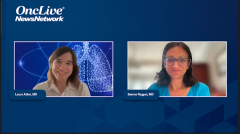
Author(s)Laura Alder, MD, Seema Nagpal, MD
Dr. Alder asks how clinicians without access to proton therapy, intrathecal treatment, or specialized neuro-oncology consultation should approach LMD and CNS disease, and what infrastructure changes would most improve outcomes.
Advertisement
Episodes in this series
Dr. Alder asks how clinicians without access to proton therapy, intrathecal treatment, or specialized neuro-oncology consultation should approach LMD and CNS disease, and what infrastructure changes would most improve outcomes.
Dr. Nagpal emphasizes that maximizing systemic CNS-penetrant therapy is the most broadly applicable strategy. As more drugs accumulate CNS-specific data, community practitioners will be better equipped to provide intracranial protection through systemic treatment choices alone. Intrathecal therapy will remain niche given its substantial burden on both patients and providers, which is time that many patients would prefer to spend with family. Proton CSI remains to be evaluated more broadly before recommending it universally.
The most anticipated near-term developments include CNS data from sacituzumab tirumotecan, and results from an NRG cooperative group study evaluating whether preoperative SRS before brain metastasis resection reduces the rate of subsequent leptomeningeal disease, a practice change that could affect a substantial proportion of patients. CSF liquid biopsy methodology continues to evolve and will provide increasingly actionable information.
Closing key messages include: optimize systemic CNS-penetrant therapy first; refer to neuro-oncology early and freely; clinical trials remain the preferred option at any treatment transition; and patients with LMD now have access to disease-specific support through the Leptomeningeal Cancer Foundation, which is partnering with major lung and breast cancer advocacy organizations. A national leptomeningeal tumor board is forthcoming, representing a meaningful resource for clinicians and patients navigating this challenging diagnosis.
Advertisement
Related to this article

The top 5 OncLive TV videos of the week cover insights in MDS, multiple myeloma, pancreatic cancer, colorectal cancer, and uveal melanoma.

The combination nearly doubled the confirmed response rate in the randomized phase 2 portion of HexAgon-HN, with the greatest benefit in HPV-positive disease.
The FDA approved pirtobrutinib for untreated chronic lymphocytic leukemia, granted priority review to elinzanetant for breast cancer hot flashes, and more.

The 2026 amendment adds 40 new recommendations, including active surveillance, office-based treatment, and chemoablation for select recurrent low-grade disease.
The FDA has approved pirtobrutinib for the treatment of adult patients with previously untreated CLL or SLL harboring no known 17p deletion.

By finding a way to attack the most important human oncogene, KRAS, the UCSF chemical biologist launched a new era in cancer treatment.

TRE-515 earned fast track status in combination with KRAS inhibitors for G12C-mutated NSCLC after anti–PD-(L)1 therapy and platinum-based chemotherapy.

An NDA for zipalertinib in EGFR exon 20 insertion–positive NSCLC is being supported by phase 3 REZILIENT3 data.
Advertisement
Advertisement
Trending on OncLive
1
INBRX-106 Plus Pembrolizumab Improves Responses and PFS in First-Line PD-L1–Positive HNSCC
2
FDA Approves Pirtobrutinib for Previously Untreated CLL/SLL
3
The OncFive: Top Oncology Articles for the Week of 9/27/2026
4
NDA Submission Is Initiated for Zipalertinib Plus Chemotherapy in Frontline EGFR Exon 20 Insertion+ NSCLC
5