
Opinion|Videos|March 4, 2026
Emerging Targeted and Combination Strategies in Metastatic Pancreatic Ductal Adenocarcinoma
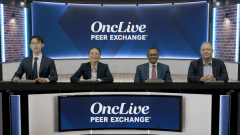
Experts discuss the impact of NCCN guidelines on pancreatic cancer treatment, highlighting new therapies and future advancements in patient care.
Advertisement
Episodes in this series
This forward looking segment examines how emerging targeted therapies may be integrated with chemotherapy for metastatic pancreatic ductal adenocarcinoma. Faculty discuss evolving strategies involving agents such as KRAS and PRMT5 inhibitors and how these approaches may complement existing cytotoxic regimens.
Panelists explore which patient subsets may benefit most from targeted and combination strategies, emphasizing the importance of molecular characterization and disease biology. The discussion includes whether these agents are more likely to be used alongside chemotherapy, as maintenance therapy, or in sequential treatment approaches.
Faculty also address the challenges associated with incorporating novel agents into routine practice, including toxicity management, patient selection, and optimal sequencing. Emphasis is placed on the need for well designed clinical trials that clearly define benefit and identify predictive biomarkers.
This segment underscores that while targeted therapies hold promise, their successful integration into metastatic pancreatic ductal adenocarcinoma care will depend on robust clinical evidence and thoughtful implementation strategies.
Advertisement
Related to this article
An IDMC recommended continuing a phase 2 minimal residual disease study of IMNN-001 without modification following a favorable safety review.

Shailender Bhatia, MD, discusses next steps for adjuvant therapy research in light of the phase 3 ADAM trial and broader implications for Merkel cell carcinoma.

Clinicians and researchers are set to gather for the UCSF-cosponsored International Invasive Lobular Carcinoma Symposium.
SOT106 now holds both orphan drug and fast track designations across soft tissue sarcoma and osteosarcoma ahead of a first-in-human trial.

Shailender Bhatia, MD, discusses ADAM trial design, key efficacy and safety findings, and treatment implications in Merkel cell carcinoma.

Read a refresh of breast cancer FDA news from August 2026, including an sNDA application in PIK3CA-mutant disease and a fast track designation.

Lanreotide injection, a generic formulation referencing lanreotide, was approved by the FDA for GEP-NETs management.
The FDA granted final approval to aLutetium Lu 177 dotatate biosimilar for patients with SSTR-positive GEP-NETs.
Advertisement
Advertisement
Trending on OncLive
1
FDA Grants Final Approval to Lutetium Lu 177 Dotatate Biosimilar for SSTR+ GEP-NETs
2
FDA Approves Generic Lanreotide Injection for GEP-NETs
3
FDA Flashback: Breast Cancer Decisions and News From August 2026
4
Tegavivint Plus Osimertinib Shows Early Activity in First-Line EGFR-Mutated NSCLC
5