
Opinion|Videos|June 25, 2026
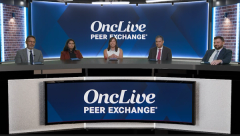
Evolving Understanding and Treatment Landscape
Learn how NET therapy is tailored—surgery when curable, somatostatin analogs first, then PRRT, targeted drugs, and liver-directed options.
Advertisement
Episodes in this series
Faculty discuss how the understanding and management of neuroendocrine tumors has transformed over the past two decades. The panel notes rising incidence and prevalence driven both by increased imaging and a true increase in disease, alongside improved recognition of tumor heterogeneity. Speakers describe the shift away from clumping all tumors as indolent carcinoid disease toward more nuanced grading and differentiation, with several advocating finer stratification within grades based on Ki-67. The conversation addresses the evolving classification of grade 3 disease and the importance of distinguishing well-differentiated grade 3 neuroendocrine tumors from poorly differentiated carcinomas, given divergent treatment implications. Faculty place current practice in historical context, recalling when surgery and somatostatin analogs were the only options, and highlight the subsequent approval of systemic therapies, radioligand therapy, and refined liver-directed approaches. They also welcome trials comparing two active agents and improving preclinical models for this expanding treatment landscape.
Advertisement
Related to this article

Japan approved Optune Pax plus gemcitabine and nab-paclitaxel for unresectable locally advanced pancreatic cancer.
A pilot study represents a milestone toward testing a faster, more powerful, and potentially less-toxic form of radiation therapy for cancer treatment.
Oral azacitidine and cedazuridine met the end point of total cycle azacitidine exposure vs subcutaneous azacitidine in MDS or CMML.
UTRxMYCN M1-14 received orphan drug status for soft tissue sarcoma and RPDD for rhabdomyosarcoma.

Interim data showed that the BCMA-directed CAR T-cell therapy NXC-201 generated complete responses in relapsed/refractory AL amyloidosis.

Estelamari Rodriguez, MD, MPH, discusses the rationale, design, and practice implications of the phase 3 RELATIVITY-1093 trial in nonsquamous NSCLC.

Experts spotlight the variety of breast cancer research being presented at the 2026 ESMO Congress.

The third BLA submission for tabelecleucel follows 2 CRLs and includes updated ALLELE data with additional patients and longer follow-up.
Advertisement
Advertisement
Trending on OncLive
1
FDA Grants Fast Track Designation to Plinabulin Plus Docetaxel in Post-ICI Non-Squamous NSCLC
2
Breast Cancer Experts Highlight Abstracts to Watch at ESMO 2026
3
Navigating DLL3-Targeting T-Cell Engagers and the Evolving Small Cell Lung Cancer Treatment Landscape
4
FDA Approves Denosumab Biosimilar for Skeletal-Related Events, GCTB, and Hypercalcemia of Malignancy
5