
Opinion|Videos|June 18, 2026
Treatment Selection in First Line and After Progression
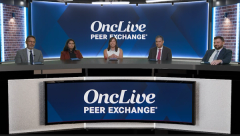
The panel examines how treatment is selected across the disease course in neuroendocrine tumors, beginning with the distinction between early-stage and advanced disease.
Advertisement
Episodes in this series
Faculty emphasize that surgery remains the only curative option for localized tumors, with many lung and small bowel cases identified incidentally and managed by resection followed by surveillance. For advanced disease, somatostatin analogs are the predominant first-line choice, providing both tumor control and management of hormonal syndromes. The discussion details the factors guiding initiation, including symptom burden, documented disease stability, tumor grade, and primary site. Faculty then turn to treatment selection after progression, noting that the generally well-tolerated options make disease factors more decisive than patient factors. Site of disease, extent of metastatic burden, and differentiation status shape choices among everolimus, cabozantinib, capecitabine plus temozolomide, and radioligand therapy. The panel also highlights liver-directed and surgical approaches as important considerations even in metastatic disease.
Advertisement
Related to this article

FDA has granted fast track designation to LYT-200 plus a hypomethylating agent in relapsed/refractory high-risk myelodysplastic syndromes.

Toon Van Gorp, MD, PhD, discusses key data with TUB-040 in platinum-resistant ovarian cancer and next steps for development.

Japan approved subcutaneous pembrolizumab and berahyaluronidase alfa across all indications for which intravenous pembrolizumab is approved in the country.

New research reveals how cancers carrying mutations in the p53 tumor-suppressor protein can hide those mutations from T cells.

Elise A. Chong, MD, discusses real-world liso-cel efficacy and safety, outpatient use, and future directions in relapsed/refractory mantle cell lymphoma.

Brad S. Kahl, MD, discusses TRIANGLE and EA4151 data reshaping ASCT use in frontline MCL, induction intensity, and high-risk disease strategies.

Mary Ann Anderson, MBBS, FRACP, FRCPA, PhD, discusses recent CLL approvals, BTK and BCL-2 inhibitor safety, and individualizing frontline therapy.

The top 5 OncLive TV videos of the week cover insights in NSCLC, large granular lymphocytic leukemia, ovarian cancer, and myelofibrosis.
Advertisement
Advertisement
Trending on OncLive
1
CLL Treatment Individualization Prompts Changes in Patient Evaluation and Care
2
Japan Approves Subcutaneous Pembrolizumab for All Approved Pembrolizumab Indications
3
FDA Grants Fast Track Designation to LYT-200 in R/R High-Risk MDS
4
Olaparib Maintenance Yields Promising Long-Term OS Outcomes in Asian Patients With Platinum-Sensitive, Relapsed Ovarian Cancer
5