
Opinion|Videos|December 25, 2024
Multidisciplinary Treatment Sequencing and Coordination
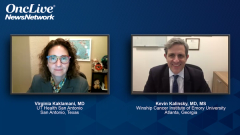
Author(s)Kevin Kalinsky, MD, MS, Virginia Kaklamani, MD
Panelists discuss their approach to sequencing surgery, radiation, and systemic therapies for early-stage breast cancer patients, emphasizing the guiding principles of treatment sequencing and how individual patient factors influence decisions; they also highlight the importance of multidisciplinary coordination, identifying key specialists, ensuring alignment on diagnosis, risk assessment, and treatment goals, and the critical role of including the patient in these discussions.
Advertisement
Episodes in this series
Video content above is prompted by the following:
- Could you explain your approach to sequencing surgery, radiation, and systemic therapies for early-stage patients?
- What principles guide your treatment sequencing recommendations
- To what extent does sequencing vary based on individual patient factors?
- Dr Kalinsky to Dr Kaklamani: What multidisciplinary coordination is vital to optimizing care for patients in this setting?
- Which specialists should be involved, and what is their role on the treatment team?
- How do you ensure the multidisciplinary team is aligned on diagnosis, risk assessment, and treatment goals for each patient?
- What is the importance of including the patient in these treatment goal discussions?
Advertisement
Related to this article
Jason Hafron, MD, discusses the emotional, clinical, and financial burden of false positive cancer screening results and improved risk stratification.

Raajit K. Rampal, MD, PhD, discusses JAK inhibitor choice in cytopenic myelofibrosis, emerging combinations, and anemia-directed agents.
The sNDA for elinzanetant seeks FDA approval for moderate-to-severe vasomotor symptoms in women receiving endocrine therapy for HR-positive breast cancer.

The NMPA has approved of pirtobrutinib in treatment-naive and previously treated CLL/SLL.

Roswell Park Comprehensive Cancer Center recognized members of its clinical, research and healthcare teams during the second annual Excellence Awards.

The top 5 OncLive TV videos of the week cover insights in breast cancer, PV, myeloma, and CLL.

The first MRD data from the phase 3 EXCALIBER-RRMM trial support iberdomide-based triplet therapy as early as first relapse, with PFS follow-up ongoing.
After nearly 7 years of follow-up, daratumumab added to VRd continued to improve PFS, PFS2, and sustained MRD negativity in transplant-eligible myeloma.
Advertisement
Advertisement
Trending on OncLive
1
Ifinatamab Deruxtecan BLA Voluntarily Withdrawn in Previously Treated Extensive-Stage SCLC
2
China's NMPA Approves Pirtobrutinib Across CLL
3
Long-Term PERSEUS Data Confirm Durable PFS Benefit With D-VRd in Transplant-Eligible Newly Diagnosed Myeloma
4
FDA Grants Priority Review to Elinzanetant for Endocrine Therapy–Associated Vasomotor Symptoms in HR+ Breast Cancer
5