
Opinion|Videos|September 28, 2026
Relapsed/Refractory Multiple Myeloma: Best Practices for Holding and Bridging Therapy
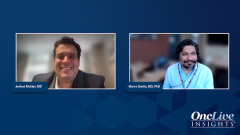
Author(s)Joshua Richter, MD, Marco Davila, MD, PhD
Dr. Joshua Richter and Dr. Marco Davila discuss practical considerations for holding and bridging therapy in patients with relapsed/refractory multiple myeloma (RRMM) who are preparing to receive CAR T-cell therapy.
Advertisement
Episodes in this series
Dr. Joshua Richter and Dr. Marco Davila discuss practical considerations for holding and bridging therapy in patients with relapsed/refractory multiple myeloma (RRMM) who are preparing to receive CAR T-cell therapy. Dr. Davila explains that, whenever feasible, T-cell collection should occur before initiating holding therapy to preserve treatment options and avoid unnecessary delays. When holding therapy is required, he recommends selecting treatments that control disease while avoiding T-cell engagers and therapies targeting the same antigen as the planned CAR T-cell product, when appropriate, because of potential effects on T-cell function and treatment efficacy. For bridging therapy following cell collection, he reiterates that the primary objective is to maintain disease control rather than achieve a deep response. The faculty emphasize that limiting bridging therapy to the minimum necessary duration helps reduce treatment-related toxicity and prevents unnecessary delays to CAR T-cell infusion, reinforcing a patient-centered approach that prioritizes timely delivery of definitive cellular therapy in RRMM.
Advertisement
Related to this article
The top 5 OncLive TV videos of the week cover insights in breast cancer, PV, myeloma, and CLL.
The first MRD data from the phase 3 EXCALIBER-RRMM trial support iberdomide-based triplet therapy as early as first relapse, with PFS follow-up ongoing.

After nearly 7 years of follow-up, daratumumab added to VRd continued to improve PFS, PFS2, and sustained MRD negativity in transplant-eligible myeloma.
The FDA approved lirafugratinib in FGFR2+ cholangiocarcinoma and belzutifan plus lenvatinib in advanced ccRCC, and more.
Did you catch all of this week's top oncology news? Test your knowledge with OncLive's Weekly News Quiz.
Daiichi Sankyo and Merck withdrew the I-DXd BLA in ES-SCLC after FDA discussions found phase 2 IDeate-Lung01 data insufficient for accelerated approval.
Monthly etentamig significantly improved response and PFS over standard available therapies in the phase 3 CERVINO trial, with low rates of high-grade CRS.
FDA grants priority review to durvalumab plus enfortumab vedotin for cisplatin-ineligible MIBC based on positive phase 3 VOLGA data.
Advertisement
Advertisement
Trending on OncLive
1
Ifinatamab Deruxtecan BLA Voluntarily Withdrawn in Previously Treated Extensive-Stage SCLC
2
FDA Grants Priority Review to Perioperative Durvalumab Plus Neoadjuvant Enfortumab Vedotin in MIBC
3
Five Under 5: Top Oncology Videos for the Week of 9/20
4
Long-Term PERSEUS Data Confirm Durable PFS Benefit With D-VRd in Transplant-Eligible Newly Diagnosed Myeloma
5