
Opinion|Videos|February 16, 2026
Sequencing Beyond T-DXd: TKIs, ADCs, and Individualized Decision-Making
Experts weigh HER2+ metastatic options after T‑DXd, balancing tucatinib CNS benefit, ADC‑after‑ADC evidence, and patient toxicity or comorbidities.
Advertisement
Episodes in this series
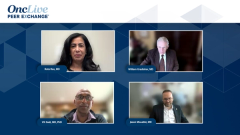
This segment addresses one of the most uncertain and clinically challenging areas in HER2-positive metastatic breast cancer: treatment sequencing after progression on T-DXd. Dr. Gadi frames his approach around a guiding principle, using the most effective therapy as early as possible, while acknowledging that evidence becomes increasingly limited once patients progress beyond T-DXd, the current cornerstone of care.
After T-DXd progression, Dr. Gadi favors changing the mechanism of action rather than continuing within the same therapeutic class. From this perspective, tucatinib-based regimens combined with chemotherapy and trastuzumab are particularly appealing, even though prospective data in the post–T-DXd setting are lacking. He notes that these regimens demonstrated strong efficacy before T-DXd entered the landscape and, importantly, offer CNS penetration, an essential consideration given the high frequency of brain metastases at progression.
The discussion then turns to the controversial concept of ADC-after-ADC sequencing. Although this strategy raises concerns in other breast cancer subtypes where many ADCs share similar payloads, HER2-positive disease may be more flexible. Dr. Gadi highlights that T-DM1 differs mechanistically from T-DXd, using a microtubule-inhibitor payload rather than a topoisomerase I inhibitor, which may allow sequential use. He also stresses the importance of reassessing HER2 expression through biopsy at progression, as loss or reduction of HER2 could meaningfully influence therapeutic choices. Importantly, he cautions against rigid assumptions, noting early-phase experiences where ADCs with similar mechanisms still demonstrate activity, potentially due to differences in linker technology or drug delivery.
Dr. Mouabbi adds real-world insight, citing a single-institution report suggesting preserved T-DM1 activity after T-DXd, offering early reassurance that ADC sequencing may be feasible. Finally, Dr. Gradishar grounds the discussion in patient-centered care, emphasizing that toxicity profiles, comorbidities, adherence, organ function, and patient preferences all critically shape regimen selection, even when efficacy remains the primary goal in the metastatic setting.
Advertisement
Related to this article
Jay M. Lee, MD, discusses how NAUTIKA1 compares with ALNEO and LORIN, why full genomic profiling is now essential before starting chemoimmunotherapy, and how tumor boards will manage early-stage NSCLC in 5 years.
Jay M. Lee, MD, discusses the primary analysis of the ALK+ cohort of NAUTIKA1, what MPR status adds to risk stratification, and whether neoadjuvant alectinib is ready for patients today.
David R. Gandara, MD, discusses why PD-L1 scoring in NSCLC undercounts immunotherapy benefit and where TMB and plasma proteomics fit alongside it.

The final OS analysis of PAPILLON did not reach statistical significance in the ITT population, but a pre-specified crossover-adjusted analysis showed a 43% reduction in the risk of death.

An exploratory landmark analysis of the phase 3 ADAURA trial showed 8-year OS rates of 79% versuss 64% with placebo, with benefit maintained across stages and subgroups.
Frontline zidesamtinib produced a 94% response rate and 100% intracranial response rate in TKI-naive ROS1-positive advanced NSCLC.

First-line trastuzumab deruxtecan reduced the risk of progression or death by 37% compared with pembrolizumab plus chemotherapy in HER2-mutant non–small cell lung cancer.
Edgardo S. Santos Castillero, MD, discusses MAVERICK, B7-H3 ADC data, and tarlatamab sequencing in SCLC, plus molecular testing in a value-based practice.
Advertisement
Advertisement
Trending on OncLive
1
DESTINY-Lung04 Showcases PFS Benefit With First-Line T-DXd in HER2-Mutant NSCLC
2
Adjuvant Osimertinib Keeps OS Benefit at 8 Years in Resected EGFR-Mutated Stage IB to IIIA NSCLC
3
Intercalated Gefitinib Plus Chemotherapy Improves DFS in Resected EGFR-Mutant NSCLC
4
PAPILLON: Frontline Amivantamab Plus Chemotherapy Yields 34.3-Month Median OS in EGFR Exon 20 Insertion–Positive NSCLC
5