

Opinion|Videos|February 16, 2026
Integrating HER2-Targeted Trial Data into Real-World Pathways and Managing Toxicities
Clinicians show how to tailor HER2 treatment beyond guidelines, using proactive education and monitoring to curb ADC/TKI toxicities.
Advertisement
Episodes in this series
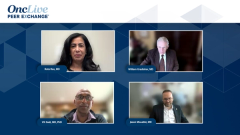
This segment focuses on how clinicians translate recent HER2-targeted therapy data into practical treatment decisions and manage associated toxicities in real-world settings.
Guideline Integration and Personalized Care:
Dr. Gradishar emphasizes that guidelines like NCCN provide a framework and evidence-based sequence for therapies but are designed for populations, not individual patients. He notes that comorbidities, travel limitations, and other patient-specific factors may necessitate deviations, highlighting that "perfect can be the enemy of good." Dr. Mouabbi and Dr. Gadi reinforce this view, noting that tertiary centers have more flexibility to personalize care, whereas community practices often must strictly follow guidelines due to reimbursement considerations. NCCN guidelines are described as a "floor above which we should always be practicing," serving as a benchmark rather than a rigid rule.
Toxicity Management and Monitoring Strategies:
The discussion shifts to monitoring and managing toxicities associated with ADCs and tyrosine kinase inhibitors (TKIs). Key points include:
- Patient Education: Central to toxicity management. Patients should understand what side effects to monitor (ILD/pneumonitis, gastrointestinal (GI), ocular issues, cardiotoxicity) and report symptoms early.
- Proactive Surveillance: Rather than reacting to adverse events, clinicians should schedule proactive monitoring: echocardiograms for cardiac function, imaging for ILD detection, and baseline optometry exams for ocular side effects. Early detection allows continuation of therapy with appropriate interventions.
- Medication Management: For GI side effects (especially with TKIs), prophylactic measures such as loperamide or dose-escalation strategies can reduce severity. Low-dose olanzapine has also been highlighted as effective for nausea and vomiting.
- Salvaging Therapy: Dr. Gadi references real-world data showing that patients who temporarily stopped ADC therapy due to ILD can, in some cases, safely resume treatment, maintaining efficacy.
- Team-Based Education: Dr. Rao emphasizes that education should extend beyond patients to healthcare teams, including nurses and pharmacists, who often serve as the first point of contact for side effects.
Overall, the segment underscores that integrating trial data into practice requires balancing guideline recommendations with individualized patient factors and emphasizes a proactive, team-based approach to managing toxicities.
Advertisement
Related to this article
Here is your cheat sheet to all therapeutic options that were cleared by the FDA in September 2026 spanning tumor types.

The FDA approved tucatinib plus trastuzumab and pertuzumab as maintenance for advanced HER2-positive breast cancer after induction.

The c-Met–directed ADC was designated for EGFR wild-type nonsquamous NSCLC after platinum chemotherapy and anti–PD-(L)1 therapy.

Dana-Farber’s Xin Gu, PhD, and Nicholas Polizzi, PhD, received NIH New Innovator Awards for high-risk, high-reward research.
The c-Met–directed ADC-based combination was designated for mCRC previously treated with fluoropyrimidine, irinotecan, oxaliplatin, and anti-VEGF therapy.

Pooled data from 3 randomized trials showed ropeginterferon alfa-2b improved responses vs phlebotomy alone but not vs hydroxyurea in polycythemia vera.

Experts break down key multiple myeloma data and trends from the 23rd Annual IMS Meeting.

Firmonertinib did not significantly improve BICR-assessed PFS vs platinum/pemetrexed chemotherapy in first-line EGFR exon 20–mutant NSCLC in FURVENT trial.
Advertisement
Advertisement
Trending on OncLive
1
FDA Approves Tucatinib Plus Trastuzumab/Pertuzumab as First-Line Maintenance in Advanced HER2+ Breast Cancer
2
FDA Grants Breakthrough Therapy Designation to Telisotuzumab Adizutecan Plus Bevacizumab in Refractory mCRC
3
Firmonertinib Fails to Meet PFS End Point in First-Line EGFR Exon 20 Insertion–Mutant NSCLC
4
FDA Grants Breakthrough Therapy Designation to Temab-A in Previously Treated c-Met–Expressing Nonsquamous NSCLC
5