

Explore the latest insights on biomarkers and emerging therapies for HER2-positive metastatic breast cancer, highlighting future research opportunities.
Explore the latest insights on biomarkers and emerging therapies for HER2-positive metastatic breast cancer, highlighting future research opportunities.
This segment emphasizes the need to ensure equitable access to novel HER2-targeted therapies through financial and logistical support, accurate biomarker testing, and effective knowledge dissemination to community clinicians.
This segment emphasizes that multidisciplinary collaboration and survivorship planning are essential to safely deliver HER2-targeted therapies and support long-term patient outcomes.
Clinicians show how to tailor HER2 treatment beyond guidelines, using proactive education and monitoring to curb ADC/TKI toxicities.
Infusion bottlenecks, prior authorizations and travel barriers limit access to new HER2 therapies; upcoming trials test better sequencing and equity.
Experts weigh HER2+ metastatic options after T‑DXd, balancing tucatinib CNS benefit, ADC‑after‑ADC evidence, and patient toxicity or comorbidities.
Experts weigh how early HER2 escalation with T‑DXd reshapes metastatic sequencing, with tucatinib options and APHINITY’s long-term signals.
Experts unpack second-line HER2+ breast cancer choices, why T-DXd leads, and when T-DM1 or tucatinib matters—especially with brain mets.
Experts discuss treatment strategies for brain metastases, weighing local therapy versus tucatinib-based regimens in asymptomatic patients.
Experts discuss the complexities of treatment sequencing in cancer therapy, highlighting the importance of patient-reported outcomes and drug efficacy.
Explore the complexities of treating HER2-positive breast cancer with CNS involvement after T-DXd therapy, focusing on innovative approaches and outcomes.
Experts discuss treatment strategies for lung metastases, emphasizing the importance of effective therapies and monitoring for ILD in patients.
Experts discuss innovative strategies in breast cancer treatment, exploring induction maintenance and optimal response approaches for improved patient outcomes.
Explore the complexities of treating a premenopausal woman with metastatic breast cancer, focusing on HER2-positive and ER-positive strategies.
Explore the latest insights on CNS metastases treatment, highlighting the effectiveness of T-DXd and local therapies in managing brain cancer.
Exploring the potential of T-DXd in HER2 therapy, including resistance mechanisms and optimal treatment sequencing for better patient outcomes.
Explore the evolving landscape of HER2-targeted therapies and the challenges in selecting effective second-line treatments after T-DXd.
Experts discuss the promising safety and efficacy of T-DXd in treating HER2-positive breast cancer, highlighting improved survival rates and response.
This segment highlights the interim topline efficacy findings from DESTINY Breast09 and explores their potential implications for first-line treatment of HER2 positive metastatic breast cancer. The discussion summarizes progression-free survival signals observed with trastuzumab deruxtecan with or without pertuzumab compared with the historical standard regimen of docetaxel, trastuzumab, and pertuzumab. Panelists emphasize that these results represent an early data readout and should be interpreted cautiously pending peer-reviewed publication, mature follow-up, and formal guideline integration. The conversation focuses on how these findings may challenge existing first-line paradigms by introducing an antibody drug conjugate earlier in the disease course, while reinforcing the importance of contextualizing DB09 within the broader HER2 evidence base. This segment sets the stage for subsequent discussion on safety, durability of benefit, and how emerging data may ultimately influence clinical practice once fully validated.
This opening segment sets the clinical foundation for the program by reviewing how treatment paradigms for HER2 positive metastatic breast cancer have evolved in recent years. The discussion introduces current guideline supported first line standards of care and highlights how the incorporation of antibody drug conjugates has expanded therapeutic possibilities beyond traditional chemotherapy and monoclonal antibody combinations. Panelists reflect on how these advances have reshaped long term disease management by improving response depth and extending disease control for many patients. Attention is also given to real world implementation, with comparison of adoption patterns across academic and community practices. Factors such as familiarity with novel agents, comfort managing ADC and TKI associated toxicities, and access to infusion resources are explored as drivers of variation in first line treatment selection. This segment establishes a practical framework for understanding how evolving evidence translates into everyday clinical decision making for patients with HER2 positive disease.

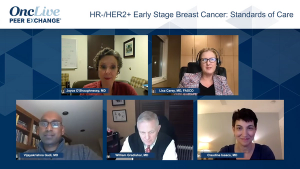
William Gradishar, MD, discusses the significance of drug development in HER2-positive breast cancer.


January 20th 2021
February 5th 2021
March 5th 2021
January 20th 2021
February 12th 2021
February 5th 2021