

Opinion|Videos|February 16, 2026
Adjuvant Escalation and Long-Term Benefit: Rethinking Sequencing After Early HER2 Exposure
Experts weigh how early HER2 escalation with T‑DXd reshapes metastatic sequencing, with tucatinib options and APHINITY’s long-term signals.
Advertisement
Episodes in this series
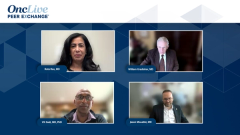
This segment explores how emerging data from the adjuvant and post-neoadjuvant settings are reshaping expectations for treatment sequencing later in metastatic HER2-positive breast cancer. Dr. Bill Gradishar begins by describing this as a rapidly evolving area, driven by the movement of highly active agents into earlier lines of therapy. Historically, the KATHERINE trial established T-DM1 as the standard for patients with residual disease after neoadjuvant treatment, demonstrating improved outcomes regardless of residual disease burden. However, newer data now suggest that T-DXd may be superior to T-DM1 even in this post-surgical context.
These advances raise critical downstream questions. As patients increasingly receive potent antibody–drug conjugates in the adjuvant or neoadjuvant setting, clinicians must reconsider options at the time of metastatic recurrence. Dr. Gradishar notes that whether a drug can be reused may depend heavily on the interval between treatment and relapse. A long disease-free interval may justify reintroduction of T-DXd, whereas early recurrence could prompt a switch to a different mechanism of action, such as a tucatinib-based regimen like HER2CLIMB. He emphasizes that this remains an open question, with multiple new agents and strategies under investigation.
Dr. Jason Mouabbi then contextualizes these decisions through lessons from the 10-year follow-up of the APHINITY trial. Long-term data showed a sustained, though modest, benefit from adding pertuzumab in the adjuvant setting, particularly for node-positive patients. He highlights that traditional “naked” antibodies lack cytotoxic payloads and have limited immune activation, which may constrain their durability later in metastatic sequencing. As the field shifts toward earlier use of ADCs and dual HER2 blockade, Dr. Mouabbi suggests moving away from simply recycling older antibodies. Instead, he points to newer engineered antibodies, enhanced ADCs, and emerging bispecific agents as promising options to deliver more durable benefit. Together, the panel underscores how early treatment intensification is fundamentally redefining long-term sequencing strategies in HER2-positive breast cancer.
Advertisement
Related to this article

Sagar Lonial, MD, FACP, FASCO, and Sikander Ailawadhi, MD, discuss the investigation of cemsidomide in relapsed/refractory multiple myeloma.

Mayo Clinic Study Estimates Cancer Risk in Patients With Pancreatic Cysts, Advancing Early Detection
Mayo Clinic researchers have estimated the risk that pancreatic cysts with worrisome or high-risk features will progress to pancreatic cancer or advanced precancerous changes.

The oral pan-RAS molecular glue ERAS-0015 has received FDA fast track designation for the management of metastatic pancreatic adenocarcinoma.

The MHLW approval covers all lines of therapy, including first-line use, in unresectable advanced or recurrent HER2-mutant NSCLC.

The FDA set a target action date of February 2027 for the dostarlimab-gxly sBLA in dMMR/MSI-H locally advanced rectal cancer.

The European Commission approved sacituzumab govitecan plus pembrolizumab for treatment-naive, PD-L1-positive metastatic triple-negative breast cancer.

R. Lor Randall, MD, FACS, discusses what’s next for TGCT treatment and the most important developments to come out of 2026 TGCT Master Workshop.

Teclistamab-based induction generated a 91.8% MRD-negative complete response rate with a manageable safety profile in multiple myeloma.
Advertisement
Advertisement
Trending on OncLive
1
FDA Grants Fast Track Designation to Pan-RAS Molecular Glue ERAS-0015 for Metastatic Pancreatic Adenocarcinoma
2
FDA Grants Priority Review to Dostarlimab for dMMR/MSI-H Locally Advanced Rectal Cancer
3
European Commission Approves Sacituzumab Govitecan Plus Pembrolizumab for Frontline PD-L1+ mTNBC
4
Darlifarnib Plus Cabozantinib Displays Early Signals of Safety and Efficacy in RCC
5