Balazs Halmos, MD, discusses treatment sequencing considerations in the second line and beyond in NSCLC.
Balazs Halmos, MD, discusses treatment sequencing considerations in the second line and beyond in NSCLC.
Balazs Halmos, MD, discusses novel targets for drug development in small cell lung cancer.
Balazs Halmos, MD, discusses challenges associated with the diagnosis and treatment of patients with small cell lung cancer.
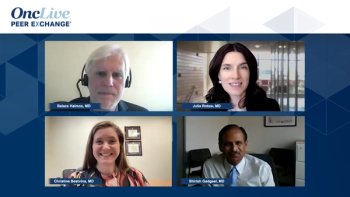
Panelists discuss how they currently utilize emerging ctDNA platforms for high-risk patients and explore whether these advancements will soon become standard practice in clinical decision-making.
Panelists discuss how the field aims to translate lessons learned from metastatic treatment into earlier-stage interventions for select patients, sharing their current practices and hopes for future advancements in care.
Panelists discuss how recent insights into delayed resistance mechanisms in EGFR-positive cancers, including the role of combination therapies and improved testing methods, are shaping strategies to better manage and overcome resistance.
Panelists discuss how advancements in targeted therapies and personalized medicine are crucial for addressing the pressing unanswered questions in the management of ALK-positive and BRAF-positive cancers.
Panelists discuss the role of immunotherapy in the treatment landscape for BRAF-positive NSCLC, considering factors influencing the choice between immunotherapy and targeted therapy, emerging therapies, ongoing clinical trials, and approaches to dosing, sequencing, and toxicity management for both ALK and BRAF inhibitors.
Panelists discuss recent data on progression-free survival (PFS) and duration of response (DOR) for BRAF-MEK inhibitor combinations, including encorafenib + binimetinib and dabrafenib + trametinib, while also addressing emerging safety signals, differences in response based on treatment lines, and considerations for dose modifications and sequencing strategies in clinical practice.
Panelists discuss their insights on current and emerging combination strategies in the treatment of BRAF-positive NSCLC, focusing on the integration of targeted therapies, immunotherapies, or both.
Panelists discuss the findings from the ALINA study on adjuvant alectinib vs chemotherapy in resected ALK-positive NSCLC, considering how these results may influence early-stage management, sequencing strategies for ALK inhibitors, and the role of resistance mechanisms in treatment decisions.
Panelists discuss the efficacy of ALK inhibitors in treating brain metastases, referencing data from the REMARK study, the CROWN trial, ALTA-3, and ALTA-1L/brigatinib, among others.
Panelists discuss the circumstances under which they would consider switching patients on different first-line treatments to lorlatinib and outline approaches for CNS surveillance and management in ALK-positive patients.
Panelists discuss how recent data influence treatment choices for ALK-positive NSCLC patients, highlighting specific patient factors that guide decisions and potential concerns regarding the use of lorlatinib as first-line therapy.
Panelists discuss the key findings from the latest data from the CROWN and BRIGHTSTAR studies, emphasizing efficacy end points and comparing the effectiveness of these regimens with that of others in the treatment landscape for ALK-positive NSCLC.
Panelists discuss the importance of molecular testing in NSCLC, particularly for ALK rearrangements, and explore how recent advancements and emerging technologies are shaping first-line treatment selection for ALK-positive patients.
Dr Halmos discusses common AEs associated with the ADCs that are used in NSCLC and ways to manage and mitigate these toxicities.
Balazs Halmos, MD, discusses treatment strategies for patients with EGFR-mutant non–small cell lung cancer.
Shared insight from key opinion leaders on the value of molecular testing in patients with resectable non–small cell lung cancer and how it can be applied.
Balazs Halmos, MD, discusses the safety and efficacy of lurbinectedin in the second-line setting for patients with small cell lung cancer.
Balazs Halmos, MD, discusses the importance of testing for HER2 mutations and exon 20 insertions, which are emerging new targets in non–small cell lung cancer, and how fam-trastuzumab deruxtecan-nxki meets needs for patients with HER2-mutant disease.
Balazs Halmos, MD, discusses the significance of the FDA approval of tremelimumab-actl plus durvalumab and chemotherapy in patients with metastatic non–small cell lung cancer.
Josh Sabari, MD; Nicholas C. Rohs, MD; and Balazs Halmos, MD; conclude this series by discussing encouraging data and updates in non–small cell lung cancer treatment for patients who harbor KRAS and HER2 abnormalities.
Josh Sabari, MD; Nicholas C. Rohs, MD; and Balazs Halmos, MD, discuss the updates with targeted therapy as it relates to the early-stage setting of non–small cell lung cancer as well as those who harbor EGFR exon 20 insertion mutations.
Josh Sabari, MD; Nicholas C. Rohs, MD; and Balazs Halmos, MD, highlight new therapeutic advances in the advanced setting of non–small cell lung cancer unveiled throughout 2021.
Thoracic Night Live is devoted to spotlighting the biggest topics in lung cancer and pivotal studies discussed at medical meetings throughout the year. This episode is a review of the clinical advancements in lung cancer treatment throughout 2021. Funding from Daiichi Sankyo/Content Independently Developed by OncLive
Thoracic Night Live is devoted to spotlighting the biggest topics in lung cancer and pivotal studies discussed at medical meetings throughout the year.
Balazs Halmos, MD, discusses the efficacy of the COVID-19 vaccines in patients with cancer.
Balazs Halmos, MD, MS, discusses the emergence of KRAS-targeted therapies in lung cancer.
Following a 2-decade lull in early-stage lung cancer, we are now seeing much better-designed neoadjuvant and adjuvant studies based on proper biomarker selection, as well as optimized treatment choices founded upon recent advances in the metastatic setting.
November 14th 2022

March 26th 2014
April 2nd 2014