Bhavana Pothuri, MD, discusses phase 2 data with trastuzumab pamirtecan (DB-1303/BNT323) in pretreated patients with HER2-expressing endometrial cancer.

Bhavana Pothuri, MD, is a gynecologic oncologist and professor in the Department of Obstetrics and Gynecology at the NYU School of Medicine in New York.
Bhavana Pothuri, MD, discusses phase 2 data with trastuzumab pamirtecan (DB-1303/BNT323) in pretreated patients with HER2-expressing endometrial cancer.

Bhavana Pothuri, MD, discusses remaining unmet needs for patients with recurrent/advanced endometrial cancer.

Bhavana Pothuri, MD, and Tiffany Redfern, MD, FACOG, discuss ongoing research and areas of potential investigation in ovarian cancer.
Bhavana Pothuri, MD, and Tiffany Redfern, MD, FACOG, discuss updates in ovarian cancer from the 2025 SGO Annual Meeting.
Bhavana Pothuri, MD, and Tiffany Redfern, MD, FACOG, discuss other potential roles for mirvetuximab soravtansine in ovarian cancer.
Bhavana Pothuri, MD, and Tiffany Redfern, MD, FACOG, on patient-reported outcome data for mirvetuximab soravtansine in platinum-resistant ovarian cancer.
Bhavana Pothuri, MD, and Tiffany Redfern, MD, FACOG, on final overall survival data for mirvetuximab soravtansine in platinum-resistant ovarian cancer.
Bhavana Pothuri, MD, and Tiffany Redfern, MD, FACOG, discuss current treatment approached in platinum-resistant ovarian cancer.

Bhavana Pothuri, MD, discusses the current treatment paradigm in endometrial cancer and the targeted therapies currently being investigated.
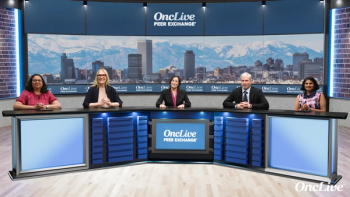
Panelists discuss recent data on emerging antibody-drug conjugates in advanced and recurrent endometrial cancer, including anti-TROP2 agents like sacituzumab govitecan from the TROPiCS-03 trial, datopotamab deruxtecan from TROPION-PanTumor03, and sacituzumab tirumotecan, as well as anti–folate receptor agents like luveltamab tazevibulin and rinatabart sesutecan, while offering future perspectives and closing thoughts on the evolving role of these agents in the treatment landscape for endometrial cancer.
Panelists discuss the recent tumor-agnostic approval of trastuzumab deruxtecan (T-DXd) based on findings from the DESTINY-PanTumor02 trial, exploring its implications for treatment approaches in advanced endometrial cancer, how to integrate T-DXd into treatment algorithms, patient selection criteria, and which patients are most likely to benefit from this therapy compared to lenvatinib/pembrolizumab.
Panelists discuss emerging data from ongoing trials evaluating innovative combination strategies for endometrial cancer, including insights from the LEAP trial (pembrolizumab + lenvatinib) and the KEYNOTE-B21 trial (pembrolizumab + chemotherapy with or without radiotherapy). They also address treatment considerations for patients with sentinel lymph node–positive disease.
Panelists discuss recent updates from the DUO-E trial, highlighting key efficacy and safety data that led to the FDA’s approval of durvalumab for endometrial cancer while examining how this new indication influences treatment strategies for advanced or recurrent cases.
Panelists review available treatment options for recurrent endometrial cancer, discussing their typical treatment approaches and the factors influencing treatment selection. Panelists also address insights from the RUBY trial, its updates, and the expanded FDA indication for dostarlimab, including the implications of these developments on treatment strategies and the potential benefits and challenges of broader use in patients.
Panelists discuss their approach to biomarker testing in advanced endometrial cancer, including the timing and types of testing performed, the specific biomarkers assessed (such as mismatch repair/microsatellite instability, POLE, and TP53), and how these results inform treatment decisions.
Panelists discuss the integration of tisotumab vedotin into ovarian cancer therapy, covering its role in treatment approaches, patient selection, adverse event management, clinical pearls, challenges in practice, and the implications of the drug’s payload on treatment efficacy.
Panelists discuss key findings from the KEYNOTE-A18 trial, which evaluated pembrolizumab in combination with chemoradiotherapy for high-risk locally advanced cervical cancer, highlighting the implications for treatment approaches in this patient population.
Panelists discuss recent data on various antibody-drug conjugates (ADCs) in ovarian cancer, including mirvetuximab soravtansine from trials like FORWARD II, MIRASOL, and PICCOLO; luveltamab tazevibulin and rinatabart sesutecan from STRO-002-GM1 and REFRαME-O1; and raludotatug deruxtecan from REJOICE-Ovarian01, highlighting the evolving role of these agents in the treatment landscape for ovarian cancer.
Panelists discuss the recent tumor-agnostic approval of trastuzumab deruxtecan (T-DXd) based on findings from the DESTINY-PanTumor02 trial, its potential impact on treating advanced ovarian cancer given HER2 data, and how T-DXd may fit into the current treatment algorithm for ovarian cancer.
Panelists discuss strategies to address PARP inhibitor (PARPi) resistance in ovarian cancer, including emerging combinations like gotistobart + pembrolizumab from the PRESERVE-004 trial, insights from the SOPRANO trial on managing oligometastases or oligoprogression, and approaches to mitigate or manage common adverse events associated with PARPi maintenance therapy.
Panelists discuss how emerging maintenance strategies for advanced/metastatic disease increasingly focus on novel combination approaches, including immunotherapy combinations with PARP inhibitors (rucaparib + nivolumab), anti-angiogenic agents (atezolizumab + bevacizumab), and dual targeted therapy (olaparib + cediranib), with ongoing evaluation of optimal patient selection and sequencing in the treatment paradigm.
Panelists explore emerging combination therapies in maintenance treatment for advanced ovarian cancer, including rucaparib + nivolumab; atezolizumab + bevacizumab; and olaparib + cediranib, also discussing how these strategies fit into the current treatment paradigm and in which patient populations they may be considered.
Panelists discuss optimal durations for PARP inhibitor maintenance therapy in ovarian cancer, exploring how long patients are typically kept on PARPi in both first-line and second-line maintenance settings.
Panelists discuss frontline maintenance therapies for advanced ovarian cancer, focusing on the impact of BRCA and HRD statuses on treatment selection and the choice between combination therapy (PARPi + bev) and monotherapy.
Bhavana Pothuri, MD, discusses real-world treatment patterns and outcomes in patients with advanced endometrial cancer according to MMR/MSI status.

Experts Ritu Salani, MD, MBA, and Bhavana Pothuri, MD, explore the significance of enrolling diverse patients in clinical trials and the pivotal role of community settings in advancing endometrial cancer research and treatment.
Delve into the exciting developments in endometrial cancer treatment, including HER2 antibody drug conjugates, checkpoint inhibitors, and the promising impact of these therapies in the quest to reduce chemotherapy use.
Explore the groundbreaking shift in frontline treatment for endometrial cancer, driven by recent data from trials like RUBY and GY018, highlighting the significant impact of checkpoint inhibitors in patients with mismatch repair deficiency.
Discover strategies for minimizing adverse events and overlapping toxicities in patients undergoing lenvatinib and pembrolizumab therapy for recurrent endometrial cancer.
Learn about the factors that influence the choice between chemotherapy re-challenge and the combination of lenvatinib and pembrolizumab for endometrial cancer treatment in the context of clinical data.

June 29th 2023