

Frontline treatment with zanubrutinib continued to improve PFS vs bendamustine plus rituximab at 5 years in patients with treatment-naive CLL/SLL.

Your AI-Trained Oncology Knowledge Connection!
Frontline treatment with zanubrutinib continued to improve PFS vs bendamustine plus rituximab at 5 years in patients with treatment-naive CLL/SLL.

Durvalumab plus monalizumab and durvalumab plus ceralasertib showed promising long-term benefits in advanced NSCLC.

Treatment with firmonertinib was safe and effective for patients with EGFR P-loop and αC-helix compressing-mutated non–small cell lung cancer.

Earlier use of acalabrutinib was associated with improved survival in patients with chronic lymphocytic leukemia.

The small molecule inhibitor DFF332 elicited clinical activity and had a tolerable safety profile in patients with advanced clear cell renal cell carcinoma.

Belumosudil plus ruxolitinib elicited responses with acceptable tolerability in patients with chronic graft-vs-host disease.
Lenvatinib/pembrolizumab shows a trend of improved PFS and overall response rate vs standard immunotherapies in advanced renal cell carcinoma.

Capivasertib plus fulvestrant did not negatively affect quality of life compared with placebo plus fulvestrant in patients with aromatase inhibitor–resistant, hormone receptor–positive, HER2-negative advanced breast cancer.
Continued treatment with lenvatinib monotherapy after the completeion of combination therapy with pembrolizumab and lenvatinib resulted in sustained clinical benefit vs chemotherapy alone in patients with previously treated advanced endometrial cancer.

The EZH2 inhibitor tazemetostat may mimic the role of the KDM6A gene in upregulating CD38 and CD48 expression, suggesting that this agent could restore responses to daratumamab in patients with multiple myeloma, according to a presentation at the 20th International Myeloma Society Annual Meeting.

Uwe Platzbecker, MD, discusses how the FDA approval of luspatercept for the treatment of anemia in patients who have not had prior treatment with erythropoiesis-stimulating agent and may require regular red blood cell transfusions could change the sequencing of agents for this patient population.

The addition of datopotamab deruxtecan to durvalumab, with or without carboplatin, demonstrated favorable efficacy and safety in patients with advanced or metastatic non–small cell lung cancer, according to an interim analysis of the phase 1b TROPION-Lung04 trial.
The addition of quizartinib to induction and consolidation chemotherapy, followed by single-agent quizartinib for up to 36 cycles, improved survival outcomes vs placebo in patients with FLT3 ITD–mutated, newly diagnosed acute myeloid leukemia.

OMS906, a MASP-3 inhibitor, normalized hemoglobin, lactate dehydrogenase, and reticulocytes levels in patients with paroxysmal nocturnal hemoglobinuria.
Treatment with the combination of epcoritamab, rituximab, and lenalidomide led to responses and durable remissions in patients with relapsed/refractory follicular lymphoma.
The presence of cytopenias did not affect the favorable and durable responses seen with ruxolitinib vs best available therapy in patients with steroid-refractory acute graft-vs-host disease.
Timing of severe symptom onset is the only distinct difference between late and classic acute graft-vs-host disease, and long-term outcomes were similar between the two types of disease.
Newer frontline therapies demonstrated a real-world improvement in survival and responses compared with sorafenib in patients with hepatocellular carcinoma.

Sequential administration of lintuzumab-Ac225 after salvage chemotherapy proved to be safe and feasible, and to result in high response and minimal residual disease negativity rates in high-risk patients with relapsed/refractory acute myeloid leukemia.

The addition of carboplatin to taxane-anthracycline chemotherapy led to a significant improvement in event-free survival and overall survival as neoadjuvant therapy in patients with operable and locally advanced triple-negative breast cancer.

Patients with completely resected non–small cell lung cancer did not derive a significant benefit with adjuvant canakinumab vs placebo.

Four weeks of treatment with nivolumab plus ipilimumab elicited major pathologic responses in 95% of patients with mismatch repair–deficient colon cancer.

The addition of isatuximab to carfilzomib and dexamethasone elicited a clinically meaningful improvement in depth of response in patients with relapsed multiple myeloma.
Adagrasib led to an intracranial objective response rate of 32% and a median intracranial duration of response that was not reached in patients with KRAS G12C–mutant non–small cell lung cancer and active, untreated CNS metastases, according to findings from the KRYSTAL-1 trial.

Patients with metastatic non–small cell lung cancer treated with first-line nivolumab and ipilimumab plus chemotherapy experienced prolonged benefit in overall survival compared with those who received chemotherapy alone.
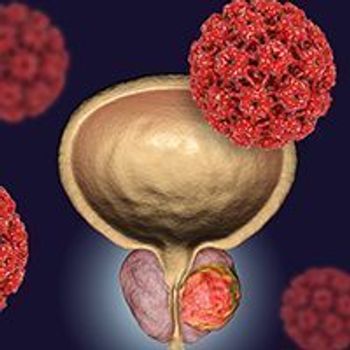
The addition of enzalutamide vs a conventional nonsteroidal antiandrogen agent to testosterone suppression continued to provide clinically meaningful improvements in overall survival in patients with metastatic hormone-sensitive prostate cancer.
BTX-1188, a first-in-class oral molecular glue, is undergoing investigation in phase 1 clinical trials in patients with solid tumors or acute myeloid leukemia, after preclinical trials supported its potential safety benefits in this population and demonstrated its high sensitivity in Myc-driven cancer cell lines.
The combination of tislelizumab plus nab-paclitaxel demonstrated benefit and a tolerable safety profile in patients with high-risk non–muscle invasive bladder cancer.
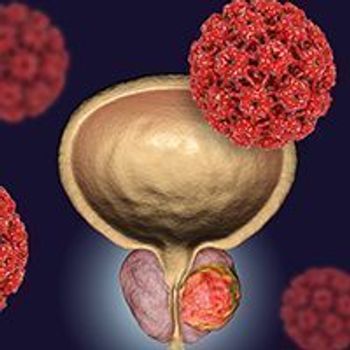
The combination of neoadjuvant tislelizumab and nab-paclitaxel elicited a high rate of pathologic complete response in patients with muscle-invasive bladder cancer, according to preliminary findings from the phase 2 TRUCE-01 trial.
The combination of JSP191, fludarabine, and low-dose total body irradiation demonstrated facilitation of full donor myeloid chimerism, clearance of minimal residual disease, and a tolerable safety profile in patients with myelodysplastic syndrome or acute myeloid leukemia.
Published: September 8th 2023 | Updated:
Published: June 4th 2022 | Updated:
Published: December 10th 2020 | Updated:
Published: December 12th 2021 | Updated:

Published: December 7th 2020 | Updated:

Published: December 6th 2020 | Updated: