Elizabeth O’Donnell, MD, Dana-Farber Cancer Institute
Articles by Elizabeth O’Donnell, MD, Dana-Farber Cancer Institute
Elizabeth O’Donnell, MD, comments on the most significant advancements for frontline therapy in transplant-ineligible patients with newly diagnosed multiple myeloma. She also provides key takeaways from the latest clinical trial data, discussing how she anticipates these findings will impact her day-to-day clinical practice.
Elizabeth O’Donnell, MD, comments on specific patient subgroups, such as frail or high-risk individuals, who benefit most from particular regimens. She discusses adverse events observed in combination therapies for transplant-ineligible patients with newly diagnosed multiple myeloma and shares her approaches to managing these adverse effects in clinical practice.
Elizabeth O’Donnell, MD, comments on how the aforementioned trials have influenced the treatment landscape for transplant-ineligible patients with newly diagnosed multiple myeloma and discusses situations in which she favors triplet therapy over quadruplet therapy for these patients.
Elizabeth O’Donnell, MD, provides a brief overview of key findings from the MAIA, IMROZ, BENEFIT, and CEPHEUS trials, highlighting significant developments in the treatment of transplant-ineligible patients with newly diagnosed multiple myeloma.
Elizabeth O’Donnell, MD, discusses the key considerations when choosing frontline therapy for transplant-ineligible patients with newly diagnosed multiple myeloma and how factors such as frailty, age, and performance status influence the decision-making process.
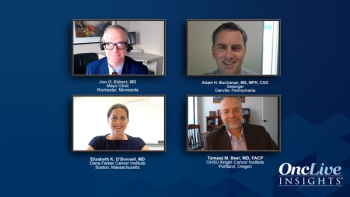
Expanding Cancer Screening: The Future of Blood-Based Testing
ByElizabeth O’Donnell, MD, Dana-Farber Cancer Institute,Jon O. Ebbert, MD, Mayo Clinic,Adam H. Buchanan, MS, MPH, LGC,Tomasz Beer, MD Closing out their panel, experts discuss the potential of blood-based tests to democratize access to cancer screening, complement existing protocols, and achieve early detection goals in the fight against cancer.
Future of Multi-Cancer Early Detection: A Recap and Horizon
ByElizabeth O’Donnell, MD, Dana-Farber Cancer Institute,Jon O. Ebbert, MD, Mayo Clinic,Adam H. Buchanan, MS, MPH, LGC,Tomasz Beer, MD Elizabeth O’Donnell, MD, and Tomasz Beer, MD, FACP, recap key takeaways from the panel and consider the potential of MCED testing in transforming cancer screening and addressing gaps in early detection.
Moonshot Cancer Initiative and MCED Consortium: Advancing Cancer Detection
ByElizabeth O’Donnell, MD, Dana-Farber Cancer Institute,Jon O. Ebbert, MD, Mayo Clinic,Adam H. Buchanan, MS, MPH, LGC,Tomasz Beer, MD Explore the pivotal role of the Moonshot Cancer Initiative and MCED Consortium in shaping the landscape of early cancer detection and screening, with a focus on innovative screening tools and legislative support.
Future Needs and Challenges of Multi-Cancer Early Detection Tests
ByElizabeth O’Donnell, MD, Dana-Farber Cancer Institute,Jon O. Ebbert, MD, Mayo Clinic,Adam H. Buchanan, MS, MPH, LGC,Tomasz Beer, MD Implementation challenges and the importance of equitable access in the future of multi-cancer early detection tests.
Efficiency in Diagnostic Resolution: Imaging vs. Molecular Tissue of Origin
ByElizabeth O’Donnell, MD, Dana-Farber Cancer Institute,Jon O. Ebbert, MD, Mayo Clinic,Adam H. Buchanan, MS, MPH, LGC,Tomasz Beer, MD Shared insight into the efficiency of diagnostic resolution approaches, comparing imaging-based and molecular tissue of origin strategies in multi-cancer early detection testing.
Advancing Cancer Detection With the ASCEND Trial: Key Objectives and Rationale
ByElizabeth O’Donnell, MD, Dana-Farber Cancer Institute,Jon O. Ebbert, MD, Mayo Clinic,Adam H. Buchanan, MS, MPH, LGC,Tomasz Beer, MD Expert perspectives about the ASCEND trial, its study design, and the critical role it plays in developing advanced cancer detection methods.
Advancements in Multi-Biomarker Cancer Testing
ByElizabeth O’Donnell, MD, Dana-Farber Cancer Institute,Jon O. Ebbert, MD, Mayo Clinic,Adam H. Buchanan, MS, MPH, LGC,Tomasz Beer, MD Key opinion leaders review the rationale behind multi-biomarker approaches and how they're shaping the future of cancer detection and research.
Cancer Screening Breakthroughs: Implications for Clinical Practice
ByElizabeth O’Donnell, MD, Dana-Farber Cancer Institute,Jon O. Ebbert, MD, Mayo Clinic,Adam H. Buchanan, MS, MPH, LGC,Tomasz Beer, MD Discover the potential clinical implications of groundbreaking cancer screening studies, DETECT-A and PATHFINDER, and the evolving landscape of multi-cancer early detection.
Latest Insights from the PATHFINDER Study: Cancer Detection Advancements
ByElizabeth O’Donnell, MD, Dana-Farber Cancer Institute,Jon O. Ebbert, MD, Mayo Clinic,Adam H. Buchanan, MS, MPH, LGC,Tomasz Beer, MD Panelists explore recent findings of the PATHFINDER study, focusing on the objectives, study design, key results, and differences from previous studies, shedding light on the potential of early cancer detection tests.
DETECT-A Study: Advancements in Early Cancer Detection
ByElizabeth O’Donnell, MD, Dana-Farber Cancer Institute,Jon O. Ebbert, MD, Mayo Clinic,Adam H. Buchanan, MS, MPH, LGC,Tomasz Beer, MD Shared insight into findings of the DETECT-A study, a prospective interventional trial, covering feasibility, safety, and performance of multicancer early detection tests in a healthcare system setting.
Addressing Healthcare Inequity With Accessible Multicancer Early Detection
ByElizabeth O’Donnell, MD, Dana-Farber Cancer Institute,Jon O. Ebbert, MD, Mayo Clinic,Adam H. Buchanan, MS, MPH, LGC,Tomasz Beer, MD The potential of MCED testing to reduce health inequities and an examination of accessibility, including FDA approval, physician education, patient awareness, affordability, and logistical support.
The Transformative Potential of Multicancer Early Detection Testing
ByElizabeth O’Donnell, MD, Dana-Farber Cancer Institute,Jon O. Ebbert, MD, Mayo Clinic,Adam H. Buchanan, MS, MPH, LGC,Tomasz Beer, MD Expert panelists delve into multicancer early detection testing and discuss its potential to revolutionize cancer screening, close healthcare gaps, and complement standard care approaches.
Multiple Myeloma: Unmet Needs and Future Directions in Care
ByJoshua Richter, MD, Tisch Cancer Center at Mount Sinai,Susan Bal, MD, O'Neal Comprehensive Cancer Center at UAB,Natalie S. Callander, MD, University of Washington Carbone Cancer Center ,Alfred L. Garfall, MD, Abramson Cancer Center,Elizabeth O’Donnell, MD, Dana-Farber Cancer Institute After discussing earlier-line use of CAR T-cell therapy in patients with multiple myeloma, the panel considers key takeaways and future evolutions in the treatment landscape.
CAR T-Cell Therapy in Multiple Myeloma: Updates from ASCO 2023 and Beyond
ByJoshua Richter, MD, Tisch Cancer Center at Mount Sinai,Susan Bal, MD, O'Neal Comprehensive Cancer Center at UAB,Natalie S. Callander, MD, University of Washington Carbone Cancer Center ,Alfred L. Garfall, MD, Abramson Cancer Center,Elizabeth O’Donnell, MD, Dana-Farber Cancer Institute Before closing out their discussion on novel therapies in multiply relapsed multiple myeloma, panelists identify the evolving role of CAR T-cell therapy.
Combination Strategies With Bispecifics in Multiple Myeloma
ByJoshua Richter, MD, Tisch Cancer Center at Mount Sinai,Susan Bal, MD, O'Neal Comprehensive Cancer Center at UAB,Natalie S. Callander, MD, University of Washington Carbone Cancer Center ,Alfred L. Garfall, MD, Abramson Cancer Center,Elizabeth O’Donnell, MD, Dana-Farber Cancer Institute Key opinion leaders on multiple myeloma reflect on the use of combination strategies with bispecifics in the multiply relapsed setting.

Bispecifics in Multiple Myeloma: Adverse Event Management
ByJoshua Richter, MD, Tisch Cancer Center at Mount Sinai,Susan Bal, MD, O'Neal Comprehensive Cancer Center at UAB,Natalie S. Callander, MD, University of Washington Carbone Cancer Center ,Alfred L. Garfall, MD, Abramson Cancer Center,Elizabeth O’Donnell, MD, Dana-Farber Cancer Institute Expert perspectives on adverse event management in patients on bispecific therapy for multiply relapsed multiple myeloma.
Bispecifics in Multiple Myeloma: Dosing and Transition of Care
ByJoshua Richter, MD, Tisch Cancer Center at Mount Sinai,Susan Bal, MD, O'Neal Comprehensive Cancer Center at UAB,Natalie S. Callander, MD, University of Washington Carbone Cancer Center ,Alfred L. Garfall, MD, Abramson Cancer Center,Elizabeth O’Donnell, MD, Dana-Farber Cancer Institute A brief review of logistical considerations that play a part in selecting novel therapy for patients with multiply relapsed multiple myeloma.
Multiple Myeloma: Sequencing Novel Therapies in Later Lines of Treatment
ByJoshua Richter, MD, Tisch Cancer Center at Mount Sinai,Susan Bal, MD, O'Neal Comprehensive Cancer Center at UAB,Natalie S. Callander, MD, University of Washington Carbone Cancer Center ,Alfred L. Garfall, MD, Abramson Cancer Center,Elizabeth O’Donnell, MD, Dana-Farber Cancer Institute Focused discussion on the sequencing of bispecifics or CAR T-cell therapies in patients with multiply relapsed multiple myeloma.
Patient Scenario: Bispecifics in MM After Multiple Prior Lines of Therapy
ByJoshua Richter, MD, Tisch Cancer Center at Mount Sinai,Susan Bal, MD, O'Neal Comprehensive Cancer Center at UAB,Natalie S. Callander, MD, University of Washington Carbone Cancer Center ,Alfred L. Garfall, MD, Abramson Cancer Center,Elizabeth O’Donnell, MD, Dana-Farber Cancer Institute Centering discussion on a patient scenario of multiply relapsed multiple myeloma, panelists consider available novel therapies within the treatment landscape.
Factors in Selecting Therapy at First Relapse in Multiple Myeloma
ByJoshua Richter, MD, Tisch Cancer Center at Mount Sinai,Susan Bal, MD, O'Neal Comprehensive Cancer Center at UAB,Natalie S. Callander, MD, University of Washington Carbone Cancer Center ,Alfred L. Garfall, MD, Abramson Cancer Center,Elizabeth O’Donnell, MD, Dana-Farber Cancer Institute Shared insight from experts in multiple myeloma on patient and disease characteristics that inform selection of best therapy at first relapse.
Patient Scenario: Treatment Options in MM at First Relapse
ByJoshua Richter, MD, Tisch Cancer Center at Mount Sinai,Susan Bal, MD, O'Neal Comprehensive Cancer Center at UAB,Natalie S. Callander, MD, University of Washington Carbone Cancer Center ,Alfred L. Garfall, MD, Abramson Cancer Center,Elizabeth O’Donnell, MD, Dana-Farber Cancer Institute Key opinion leaders review the case of a patient at first relapse with multiple myeloma and consider optimal treatment strategies in this setting.
Treatment Duration in Patients With Newly Diagnosed Multiple Myeloma
ByJoshua Richter, MD, Tisch Cancer Center at Mount Sinai,Susan Bal, MD, O'Neal Comprehensive Cancer Center at UAB,Natalie S. Callander, MD, University of Washington Carbone Cancer Center ,Alfred L. Garfall, MD, Abramson Cancer Center,Elizabeth O’Donnell, MD, Dana-Farber Cancer Institute A panel of experts reflects on treatment duration and its role in optimizing management of patients with newly diagnosed multiple myeloma.
Determining Frailty in Patients With Newly Diagnosed Multiple Myeloma
ByJoshua Richter, MD, Tisch Cancer Center at Mount Sinai,Susan Bal, MD, O'Neal Comprehensive Cancer Center at UAB,Natalie S. Callander, MD, University of Washington Carbone Cancer Center ,Alfred L. Garfall, MD, Abramson Cancer Center,Elizabeth O’Donnell, MD, Dana-Farber Cancer Institute Focused discussion on the importance of patient frailty in determining optimal treatment pathways in newly diagnosed multiple myeloma.
Treatment Options for Transplant-Ineligible Newly Diagnosed Multiple Myeloma
ByJoshua Richter, MD, Tisch Cancer Center at Mount Sinai,Susan Bal, MD, O'Neal Comprehensive Cancer Center at UAB,Natalie S. Callander, MD, University of Washington Carbone Cancer Center ,Alfred L. Garfall, MD, Abramson Cancer Center,Elizabeth O’Donnell, MD, Dana-Farber Cancer Institute Expert perspectives on the treatment armamentarium for transplant-ineligible newly diagnosed multiple myeloma.
Impact of Risk Status on Treatment Pathways in Newly Diagnosed Multiple Myeloma
ByJoshua Richter, MD, Tisch Cancer Center at Mount Sinai,Susan Bal, MD, O'Neal Comprehensive Cancer Center at UAB,Natalie S. Callander, MD, University of Washington Carbone Cancer Center ,Alfred L. Garfall, MD, Abramson Cancer Center,Elizabeth O’Donnell, MD, Dana-Farber Cancer Institute Shared insight on the impact risk status has on the selection of optimal therapy for patients with newly diagnosed multiple myeloma.