
Susan O’Brien, MD, discusses the impact that has been seen with ibrutinib following the long-term follow-up of the RESONATE studies in chronic lymphocytic leukemia.
Susan O’Brien, MD, discusses the impact that has been seen with ibrutinib following the long-term follow-up of the RESONATE studies in chronic lymphocytic leukemia.
Daniel Coit, MD, discusses clinical findings with complete lymph node dissection and the evolution of surgery in the melanoma landscape.
Catherine Smith, MD, discusses the evolution of FLT3 inhibition in AML and ongoing studies that are poised to potentially change practice.
Sandy W. Wong, MD, discusses immunoglobulin light chain amyloidosissome and recent data that have shown excitement in this landscape.

Nina Shah, MD, discusses immunotherapy and cellular treatments moving fast through the multiple myeloma pipeline, and the hope for CAR T-cell therapy to move up to earlier lines of treatment.
Lecia V. Sequist, MD, reflects on the practice-changing osimertinib data, ongoing trials exploring combination regimens, and discusses the potential for immunotherapy in EGFR-positive NSCLC.
Erminia Massarelli, MD, PhD, discusses the evolving paradigm of ALK-positive non-small cell lung cancer based on recent regulatory decisions and what additional advancements are expected in the year ahead.
Jae Y. Kim, MD, discusses developments with checkpoint inhibition in patients with resectable NSCLC.

Ravi Salgia, MD, PhD, discusses the evolution and current state of biomarker testing in the field of NSCLC.
Dan J. Raz, MD, discusses the ongoing ALCHEMIST trial and some novel techniques, such as tissue slice culture, that are propelling the field of lung cancer forward.
The MEK inhibitor cobimetinib (Cotellic) led to objective responses in 14 of 16 patients with BRAF-mutated and wild-type histiocytic disorders.
More than one-quarter of patients with relapsed/refractory mantle cell lymphoma remained progression free and nearly half were alive at 3 years when treated with the BTK inhibitor ibrutinib (Imbruvica).
Loretta Erhunmwunsee, MD, discusses the racial and socioeconomic disparities in lung cancer trials
Karen Reckamp, MD, discusses positive phase III data, recent regulatory approvals, and what research the new year is likely to bring to the field of non-small cell lung cancer (NSCLC).
Sagus Sampath, MD, discusses ongoing studies exploring checkpoint inhibitors with radiation therapy and the promise of integrating these 2 treatments in the field of non-small cell lung cancer.
Edward S. Kim, MD, discusses the advancements in lung cancer in 2017, specifically in EGFR- and ALK-positive patients and those with PD-L1 expression.
Ghassan K. Abou-Alfa, MD, discusses what he sees coming down the pike in epatocellular carcinoma with regard to novel agents, including CAR T-cell therapy, and the burgeoning questions with optimal sequencing of these treatments.
Leonard Saltz, MD, discusses current go-to therapies and overarching questions for mCRC treatment.

William R. Jarnagin, MD, discusses the necessary role of surgery and novel techniques in patients with colorectal cancer.
Michael Bouvet, MD, highlights the evolving surgical options in the thyroid cancer field
Key opinion leaders share their insight on the pivotal and highly anticipated abstracts across hematologic malignancies, including lymphoma, leukemia, and multiple myeloma, ahead of 2017 ASH Annual Meeting and exactly how these findings could be implemented in and affect clinical practice.
Olga Frankfurt, MD, discusses advances in the field of AML and challenges that lie ahead.
Richard S. Finn, MD, discusses the evolution of CDK 4/6 inhibition in the field of breast cancer and appropriate patient selection for this type of therapy.
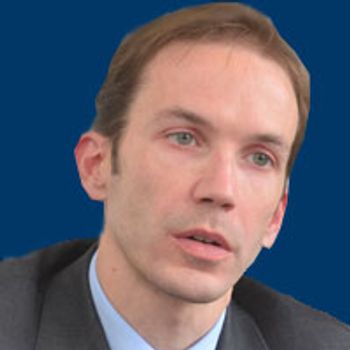
Andrea Necchi, MD, discusses the evolution of bladder cancer therapies, the challenge with the currently available agents, and the next steps and clinical trials being conducted in the field.
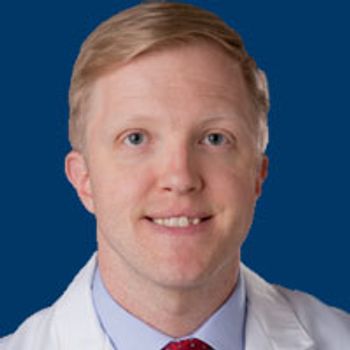
Cabozantinib (Cabometyx) remains to be the sole oral drug to meet 3 clinical trial endpoints of progression-free survival, overall survival, and overall response rate in patients with advanced RCC.
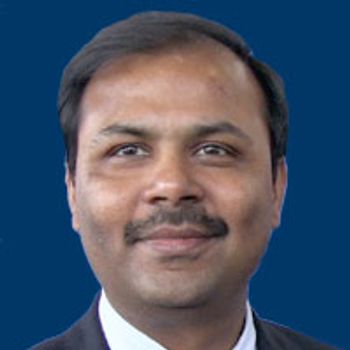
Suresh A. Ramalingam, MD, discusses some of the changes to the NCCN guidelines in non-small cell lung cancer, specifically with EGFR-mutation–positive disease, and how the frontline recommendation of osimertinib will impact clinical practice.
It has been a “renaissance” in the non–small cell lung cancer landscape with the rapid evolution of targeted treatment for patients with EGFR-mutation–positive disease, says Edward S. Kim, MD.
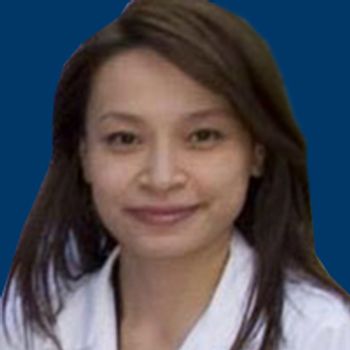
Immunotherapy is being positioned as an earlier therapeutic option for patients with high levels of microsatellite instability or mismatch repair deficiency, regardless of their tumor location, expert says.
Paul Sabbatini, MD, discusses the recent data surrounding IP and dose-dense therapy and the next steps for both treatment approaches in ovarian cancer.
Mario M. Leitao, Jr, MD, FACOG, FACS, discusses how surgery retains its imperative role in ovarian cancer and sheds light on the challenges that still remain.