
The armamentarium of multiple myeloma has expanded with the introduction of combination regimens in the up-front setting and novel targeted agents, including CAR T-cell therapy, in the relapsed/refractory setting.

Assistant Editor, OncLive®
Jessica joined the company in August 2019 and is one of the point contacts for the OncLive On Air™ podcast. She is a Rider University alumna and holds a degree in journalism and biology. Prior to joining MJH Life Sciences, she interned with the Ireland-based social media monitoring agency Olytico and served as a copy editor and writer for The Rider News. Email: jhergert@onclive.com
The armamentarium of multiple myeloma has expanded with the introduction of combination regimens in the up-front setting and novel targeted agents, including CAR T-cell therapy, in the relapsed/refractory setting.
Data from key clinical trials evaluating expanded combination strategies and novel therapies have transformed the treatment paradigms of newly diagnosed, relapsed/refractory, and heavily pretreated multiple myeloma, but it remains important to contextualize the data appropriately without cross-trial comparisons.
Syma Iqbal, MD, shares the main highlights from an IPC meeting, which centered on the evolving landscapes and importance of implementing best practices for patients with hepatobiliary cancers, locally advanced and advanced pancreatic cancer, advanced gastric/gastroesophageal junction cancer, and metastatic colorectal cancer.
With the rapid uptake of novel therapies, including immunotherapy and targeted therapy, shifts in treatment strategies are anticipated in hepatobiliary cancers, locally advanced and advanced pancreatic cancer, gastric/gastroesophageal junction cancers, and metastatic colorectal cancer.
Adam M. Brufsky, MD, PhD, FACP, discusses the rationale to evaluate HER2-directed bispecific antibodies in HER2-positive breast cancer, the emergence of zanidatamab as a potential treatment strategy, and the unmet medical need the agent could fill in this disease.
The FDA approvals of several targeted therapies, such as sotorasib, amivantamab-vmjw, and mobocertinib, as well as immunotherapeutic strategies, such as adjuvant atezolizumab, represent significant advances made in 2021 for the treatment of patients with non–small cell lung cancer.

Despite their rarity, the management of desmoid tumors has been an area of significant clinical change as the field has shifted away from aggressive surgical interventions to active surveillance and systemic therapies that are less morbid for patients.

The WEE1 inhibitor adavosertib improved progression-free survival with a tolerable safety profile compared with active monitoring in patients with RAS/TP53-mutated metastatic colorectal cancer.
The first patient with high-risk, early-stage HER2-positive breast cancer has received a dose of neoadjuvant fam-trastuzumab deruxtecan-nxki as part of the global, phase 3 DESTINY-Breast11 trial.
The investigational bispecific antibody APVO436 demonstrated tolerability with encouraging anti-neoplastic efficacy in patients with relapsed/refractory acute myeloid leukemia or myelodysplastic syndrome, according to updated findings from an ongoing phase 1 trial.
Cycle 1 double step-up dosing with cevostamab demonstrated encouraging activity with effective cytokine release syndrome mitigation in patients with heavily pretreated relapsed/refractory multiple myeloma, supporting further development of the dual-targeted bispecific antibody.
As second-line treatment, tisagenlecleucel failed to demonstrate an event-free survival advantage compared with standard of care platinum-based chemotherapy followed by autologous stem cell transplant or additional chemotherapy in patients with relapsed/refractory aggressive B-cell non-Hodgkin lymphoma.
Tisagenlecleucel demonstrated encouraging real-world efficacy and a favorable safety profile that was consistent with findings from the pivotal phase 2 JULIET trial in patients with relapsed/refractory diffuse large B-cell lymphoma or high-grade B-cell lymphoma.
The combination of obinutuzumab and venetoclax (GVe), as well as GVe plus ibrutinib demonstrated superior rates of undetectable minimal residual disease compared with chemoimmunotherapy in fit patients with chronic lymphocytic leukemia, according to findings from the phase 3 GAIA (CLL13) trial.
Patients with hormone receptor–positive, HER2-negative metastatic breast cancer with rising ESR1 mutations previously treated with an aromatase inhibitor plus palbociclib had a doubling of progression-free survival when switched to fulvestrant plus palbociclib before disease progression, according to findings from the phase 3 PADA-1 trial.
The Japan Pharmaceuticals and Medical Devices Agency has approved the PD-1 inhibitor pembrolizumab for frontline use in combination with 5-fluorouracil plus cisplatin chemotherapy in patients with radically unresectable, advanced, or recurrent esophageal carcinoma.
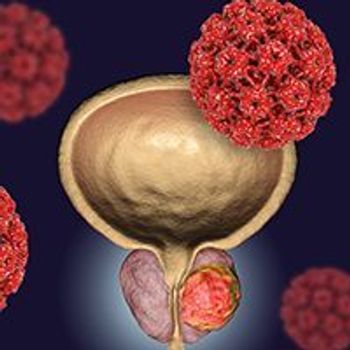
Patients with locally advanced or metastatic hormone-sensitive prostate cancer who received docetaxel and abiraterone acetate plus prednisone or prednisolone and standard of care androgen deprivation therapy had superior patient-reported quality of life compared with patients who received docetaxel plus ADT, although the improvement narrowly missed the predefined value for clinical significance.

Panelists discuss the latest advances in targeting HER2-positive breast cancer, the rapidly evolving landscape of triple-negative breast cancer, the role of maintenance therapy in ovarian cancer, and recent updates in the treatment of patients with endometrial and cervical cancers.

Jeff M. Michalski, MD, MBA, FASTRO, shares his presidential goals for ASTRO, the success of the hybrid 2021 ASTRO Annual Meeting, and remaining questions in radiation oncology that research efforts are poised to address.
Nathaniel Ivanick, MD, FCCP, discusses the evolution of interventional pulmonology, the benefits of robotic navigational bronchoscopy and other novel technologies in the field, and ongoing research that could further push the paradigm forward.

Utilizing a multidisciplinary approach to care is critical in the field of ovarian cancer with the substantial advancements that have been made with systemic chemotherapeutic regimens, PARP inhibitors, maintenance therapy, and surgical interventions.
Joyce L. Neumann, PhD, APRN, AOCN, BMTCN, FAAN, discusses the variability in cGVHD presentation, key symptoms of the disease in patients with cancer, and how the field is navigating between available therapies.

Sarah Sammons, MD, discusses key advances made across the spectrum of breast cancer, including HER2-positive, hormone receptor–positive, and triple-negative disease, as well as key data that have reshaped these paradigms.
R. Lor Randall, MD, FACS, the 10-year results of a retrospective analysis, potential strategies to mitigate early failures in recipients of compressive osseointegrative endoprosthetic devices, and the need for communication between medical oncologists and orthopedic surgeons to ensure patients on chemotherapy receive optimal care.

Edgardo Santos, MD, discusses the current state of targeted therapies for EGFR- and ALK-positive non–small cell lung cancer, as well as immunotherapy in stage III NSCLC, and management strategies in small cell lung cancer.
The combination of surufatinib and toripalimab demonstrated promising clinical activity with a manageable safety profile when used as second-line treatment for patients with advanced neuroendocrine carcinoma.
ATG-101, a novel PD-L1/4-1BB bispecific antibody, demonstrated good in vivo efficacy, safety without hepatotoxicity, and pharmacokinetic/pharmacodynamic properties in cynomolgus monkeys.

Treatment selection and sequencing in genitourinary cancers, such as metastatic bladder cancer and metastatic renal cell carcinoma, have become more complicated and require nuanced decision making.

Significant progress with rapidly evolving therapies, including blinatumomab, inotuzumab ozogamicin, and CAR T-cell therapy, has been made to extend the median overall survival and improve outcomes for patients with relapsed/refractory B-cell acute lymphoblastic leukemia.
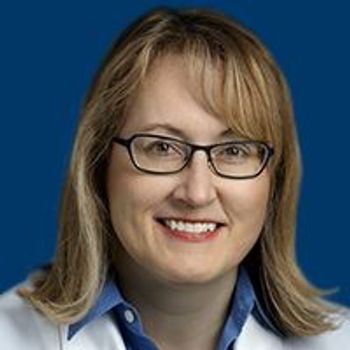
Julie Renee Brahmer, MD, MSc, discusses remaining questions regarding immunotherapy and targeted therapy in locally advanced NSCLC, data from the phase 3 PACIFIC and ADAURA trials, and her hopes for future clinical trials in the paradigm.