Joleen M. Hubbard, MD, discusses the design of the ongoing phase 2/3 NRG-GI005 trial in patients with stage IIA colorectal cancer after surgery.
Joleen M. Hubbard, MD, discusses the design of the ongoing phase 2/3 NRG-GI005 trial in patients with stage IIA colorectal cancer after surgery.
Joleen M. Hubbard, MD, discusses minimal residual disease assessment to inform treatment decisions in patients with resected metastatic colorectal cancer.

Joleen M. Hubbard, MD, discusses the barriers of implementing circulating tumor DNA into widespread clinical practice in colorectal cancer.
John L. Marshall, MD; Marwan G. Fakih, MD; and Joleen M. Hubbard, MD, highlight novel strategies in the metastatic colorectal cancer pipeline that look exciting and consider their integration into future clinical practice.
The rationale for continuing to study the combination of immunotherapies with novel tyrosine kinase inhibitors in metastatic colorectal cancer.

Implications for using the combination of pembrolizumab and lenvatinib to treat patients with metastatic colorectal cancer based on updated data from the LEAP-005 study.
Considerations for treating patients with metastatic colorectal cancer with the combination of nivolumab and regorafenib based on preliminary data.
Drs. John L. Marshall, Marwan G. Fakih, and Joleen M. Hubbard, describe the current role of chemotherapy for frontline metastatic colorectal cancer based on novel treatment advances.
Considerations for frontline immunotherapy for patients with microsatellite instability high metastatic colorectal cancer based on data from the KEYNOTE-177 and CheckMate 142 studies.

Mayo Clinic’s Joleen M. Hubbard, MD, interprets data recently presented on the use of EGFR inhibitors as frontline therapy for appropriate patients with metastatic colorectal cancer.
Tumor characteristics, patient factors, and supporting data that affect frontline treatment decisions for patients with microsatellite stable (MSS) metastatic colorectal cancer.
Metastatic colorectal cancer (CRC) experts discuss tumor sidedness and their current use of next-generation sequencing panels to assess patients and guide treatment decisions.

Reactions to the increase in prevalence of metastatic colorectal cancer (CRC) among a younger patient population despite treatment advances.

Joleen M. Hubbard, MD, discusses the utility of minimal residual disease assessment for stage II colorectal cancer.
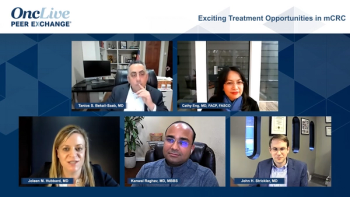
Closing out a discussion on novel therapies used to individualize treatment for patients with metastatic colorectal cancer, a panel of gastrointestinal oncologists highlight the most exciting treatment opportunities being explored to address current gaps in care.
Considerations regarding best sequencing strategies with novel therapies to treat HER2-mutated metastatic colorectal cancer.

Implications for treating patients with HER2-expressing metastatic colorectal cancer with novel agents such as trastuzumab deruxtecan and tucatinib.
Current trials exploring novel combinations that show potential in making microsatellite stable tumors hot and amenable to response to immunotherapy in metastatic colon cancer.
Drs Cathy Eng and Joleen M. Hubbard discuss the rationale for studying dual immunotherapy approaches for metastatic colorectal cancer treatment.

Joleen M. Hubbard, MD, discusses the potential for treatment with immunotherapy alone in patients with colorectal cancer.
Kanwal Raghav, MD, MBBS, of The University of Texas MD Anderson Cancer Center, discusses when it is most appropriate to initiate immunotherapy for metastatic colorectal cancer, highlighting the roles of tumor mutation burden and microsatellite instability as biomarkers for treatment.
Cathy Eng, MD, FACP, FASCO, describes data revealed by the KEYNOTE-177 trial and discusses best practices for using immunotherapy as first-line treatment of metastatic colorectal cancer.

A panel of gastrointestinal oncologists discuss current options for molecular testing based on the understanding that predictive biomarkers play a role in the management of metastatic colon cancer.
Expectations regarding the use of fruquintinib, an oral VEGF tyrosine kinase inhibitor, as third-line therapy for metastatic colorectal cancer.
Considerations for how to sequence therapy with regorafenib for relapsed or refractory metastatic colorectal cancer based on the REVERCE II study.
Variables that impact patient selection for TAS-102 treatment as later-line therapy for metastatic colorectal cancer and considerations for using TAS-102 in combination with bevacizumab.
The rationale for treating metastatic colon cancer with regorafenib in a later-line setting and the importance of applying the dose-escalation strategy demonstrated by the ReDOS trial into clinical practice.
Gastrointestinal oncologists consider when it is most appropriate to initiate the BEACON trial regimen of encorafenib-binimetinib-cetuximab as treatment for BRAF-mutated metastatic colorectal cancer.
Considerations for treating BRAF-mutated metastatic colorectal cancer with the combination of a BRAF inhibitor plus anti-EGFR agent based on recently presented data.
The role of molecular assays, including liquid biopsies, in providing information on resistance mechanisms in metastatic colorectal cancer and the impact of testing results on decisions for rechallenging with a previous therapy.
April 16th 2021
April 23rd 2021

August 17th 2021
August 24th 2021
April 23rd 2021