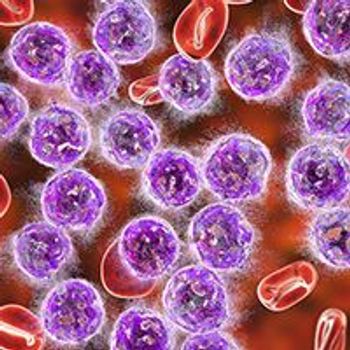

The FDA granted a fast track designation to EZM0414, a first-in-class, oral SETD2 inhibitor, for use as a potential therapeutic option in adult patients with relapsed or refractory diffuse large B-cell lymphoma.

Your AI-Trained Oncology Knowledge Connection!


Associate Editorial Director, OncLive®
Kristi Rosa joined MJH Life Sciences in 2016 and has since held several positions within the company. She helped launch the rapidly growing infectious disease news resource Contagion, strengthened the Rare Disease Report, of HCPLive, and now oversees OncLive and its flagship publication OncologyLive. Prior to working at the company, she served as lead copywriter and marketing coordinator at The Strand Theater. Email: krosa@onclive.com

The FDA granted a fast track designation to EZM0414, a first-in-class, oral SETD2 inhibitor, for use as a potential therapeutic option in adult patients with relapsed or refractory diffuse large B-cell lymphoma.

The European Medicines Agency granted an orphan drug designation to devimistat for the treatment of patients with relapsed or refractory Burkitt lymphoma. The novel compound targets mitochondria in tumor cells.

Leronlimab was found to improve survival in patients with CCR5-positive metastatic triple-negative breast cancer in whom at least 2 prior lines of therapy had failed, according to data from an updated analysis of a Compassionate Use Study, a phase 1b/2 study, and from a basket study.

The FDA has extended the Prescription Drug User Fee Act target date for the biologics license application seeking the approval of the CAR T-cell therapy ciltacabtagene autoleucel for use in adult patients with relapsed and/or refractory multiple myeloma.

Sesen Bio met with the FDA to discuss questions related to the Chemistry, Manufacturing, and Controls that were raised in the complete response letter previously issued by the regulatory agency regarding the biologics license application for Vicineum as a potential treatment for patients with Bacillus Calmette-Guérin–unresponsive non–muscle invasive bladder cancer.

Adjuvant pembrolizumab continued to showcase improved relapse-free survival over placebo in patients with resected high-risk stage II melanoma with 6 months of additional follow-up.

The FDA has accepted for review a biologics license application for the use of toripalimab in combination with gemcitabine and cisplatin in the frontline treatment of patients with advanced recurrent or metastatic nasopharyngeal carcinoma, and for use as a single agent in the second- or later-line treatment of patients with recurrent or metastatic nasopharyngeal carcinoma following platinum-containing chemotherapy.

The FDA has accepted a new drug application for the PI3Kδ inhibitor parsaclisib for use in the treatment of patients with relapsed or refractory follicular lymphoma, marginal zone lymphoma, and mantle cell lymphoma.

Devimistat, which is being evaluated in combination with modified FOLFIRINOX in the frontline treatment of patients with metastatic adenocarcinoma of the pancreas, failed to meet the primary end point of overall survival in the phase 3 AVENGER 500 trial.

The FDA has granted an accelerated approval to asciminib for patients with Philadelphia chromosome (Ph)–positive chronic myeloid leukemia (CML) in chronic phase who have previously been treated with 2 or more TKIs, and for those with Ph-positive CML in chronic phase with a T315I mutation.

The clinical-stage immunotherapy company PDS Biotechnology Corporation has announced the temporary suspension of recruitment to the National Cancer Institute–led phase 2 trial, which is evaluating a novel triplet combination comprised of PDS0101 and 2 immunomodulating agents in patients with advanced human papillomavirus cancers.

The FDA has granted a priority review to tisagenlecleucel for use in adult patients with relapsed or refractory follicular lymphoma.

Treatment with the next-generation anthracycline annamycin was found to result in preliminary clinical activity without dose-limiting toxicities in patients with soft tissue sarcoma lung metastases.

The administration of NBTXR3 monotherapy activated by radiotherapy resulted in encouraging survival improvements in difficult-to-treat elderly and frail patients with locally advanced head and neck squamous cell carcinoma who are ineligible for cisplatin and intolerant to cetuximab.

The FDA has granted a fast track designation to the interleukin-2 variant immunotherapy nemvaleukin alfa for use in combination with pembrolizumab in the treatment of patients with platinum-resistant ovarian cancer.

The FDA has granted a fast track designation to the universal cancer vaccine UV1 for use in combination with checkpoint inhibitors in patients with unresectable or metastatic melanoma, either as an add-on therapy to pembrolizumab or to ipilimumab.

Although the addition of eryaspase to chemotherapy improved overall survival over chemotherapy alone in patients with metastatic pancreatic cancer, the difference in benefit was not found to be statistically significant, missing the primary end point of the phase 3 TRYbeCA-1 trial.

The combination of durvalumab and chemotherapy resulted in a statistically significant and clinically meaningful improvement in overall survival compared with chemotherapy alone when used in the first-line treatment of patients with advanced biliary tract cancer, meeting the primary end point of the phase 3 TOPAZ-1 trial.

Canakinumab plus pembrolizumab and platinum-based doublet chemotherapy did not significantly improve progression-free survival or overall survival in previously untreated patients with locally advanced or metastatic non–small cell lung cancer, missing the primary end points of the phase 3 CANOPY-1 trial.

The immuno-oncology company Agenus has made the decision to withdraw its biologic license application for the use of the PD-1 inhibitor balstilimab in patients with recurrent or metastatic cervical cancer who experienced disease progression on, or after, chemotherapy.

Oncopeptides AB has made the decision to withdraw the indication of melphalan flufenamide in combination with dexamethasone in select adult patients with relapsed or refractory multiple myeloma from the US market.

The frontline combination of trifluridine/tipiracil and bevacizumab was not found to result in a significant improvement in progression-free survival over capecitabine and bevacizumab in patients with unresectable metastatic colorectal cancer who are not eligible to receive intensive therapy, missing the primary end point of the phase 3 SOLSTICE trial.

The European Commission has approved pembrolizumab plus chemotherapy for the frontline treatment of patients with locally recurrent unresectable or metastatic triple-negative breast cancer whose tumors have a PD-L1 expression combined positive score of 10 or higher and who have not previously received chemotherapy for metastatic disease.

The FDA has approved the VENTANA PD-L1 assay to assist in identifying which adult patients with stage II to IIIA non–small cell lung cancer whose tumors have PD-L1 expression on 1% or more of tumor cells are eligible to receive adjuvant atezolizumab following surgery and platinum-based chemotherapy.

Treatment with the small molecule oral immunomodulator EC-18 resulted in a reduction in both the duration and incidence of severe oral mucositis in patients with head and neck cancer who are undergoing concurrent chemoradiation.

The European Commission has approved nivolumab plus fluoropyrimidine- and platinum-based chemotherapy for the frontline treatment of adult patients with HER2-negative advanced or metastatic gastric, gastroesophageal junction, or esophageal adenocarcinoma whose tumors have a PD-L1 combined positive score of 5 or higher.

Elacestrant monotherapy improved progression-free survival over standard-of-care (SOC) treatment in patients with estrogen receptor–positive, HER2-negative breast cancer, including those whose tumors harbored ESR1 mutations, meeting the primary end points of the phase 3 EMERALD trial.

Intravesical Bacillus Calmette–Guérin in combination with N-803 resulted in a 12-month disease-free survival rate of 57% in patients with BCG-unresponsive high-grade papillary non–muscle invasive bladder cancer, meeting the primary end point for cohort B of the phase 2/3 QUILT 3.032 trial.

The dismutase mimetic avasopasem manganese was not found to significantly reduce the incidence of severe oral mucositis in patients with locally advanced head and neck cancer who were receiving standard-of-care radiotherapy, missing the primary end point of the phase 3 ROMAN trial.

The bicycle toxin conjugates BT5528 and BT8009 have showcased preliminary signs of antitumor activity and encouraging tolerability when administered to patients with solid tumors such as urothelial cancer and ovarian cancer.