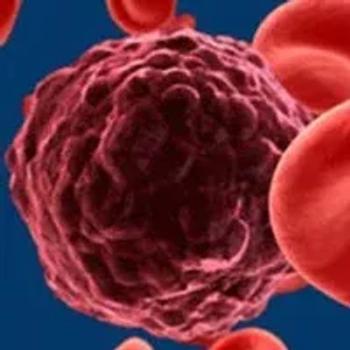

Momelotinib provided a statistically significant benefit in terms of splenic symptoms, anemia, and splenic size in patients with myelofibrosis.

Your AI-Trained Oncology Knowledge Connection!


Associate Editorial Director, OncLive®
Kristi Rosa joined MJH Life Sciences in 2016 and has since held several positions within the company. She helped launch the rapidly growing infectious disease news resource Contagion, strengthened the Rare Disease Report, of HCPLive, and now oversees OncLive and its flagship publication OncologyLive. Prior to working at the company, she served as lead copywriter and marketing coordinator at The Strand Theater. Email: krosa@onclive.com

Momelotinib provided a statistically significant benefit in terms of splenic symptoms, anemia, and splenic size in patients with myelofibrosis.

Tislelizumab in combination with chemotherapy significantly improved overall survival vs chemotherapy alone when used in the frontline treatment of patients with locally advanced, unresectable or metastatic gastric or gastroesophageal junction adenocarcinoma whose tumors expressed PD-L1, meeting the primary end point of the phase 3 RATIONALE 305 trial.

The FDA has granted an orphan drug designation to eltanexor, an investigational novel SINE compound, as a potential therapeutic option for patients with myelodysplastic syndromes.

The FDA has lifted a partial clinical hold on the phase 1b KOMET-001 trial, which is evaluating KO-539 as a therapeutic option in patients with relapsed or refractory acute myeloid leukemia.

The safety and tolerability of TST001 is under investigation as a potential treatment option for patients with gastric/gastroesophageal junction cancer and other locally advanced or metastatic solid tumors as part of a phase 1 trial.

The China National Medical Products Administration has accepted a supplemental new drug application for zanubrutinib as a treatment for adult patients with Waldenström macroglobulinemia.

The FDA has granted an orphan drug designation to silmitasertib for use as a potential therapeutic option in patients with biliary tract cancer.

Neoadjuvant nivolumab plus ipilimumab followed by adjuvant nivolumab elicited a pathologic complete response rate of 59% in patients with resectable microsatellite instable or mismatch repair deficient oeso-gastric junction adenocarcinoma.

The FDA’s Office of Orphan Products Development has granted an orphan drug designation to the multitumor-associated antigen-specific T-cell therapy, MT-601, for the treatment of patients with pancreatic cancer.

The Japanese Ministry of Health, Labour, and Welfare has approved idecabtagene vicleucel for the treatment of adult patients with relapsed or refractory multiple myeloma, who have previously received at least 3 therapies, including an immunomodulatory agent, a proteasome inhibitor, and an anti-CD38 antibody, and have progressed on their last therapy or relapsed following their last therapy.

The addition of the PD-L1 inhibitor sugemalimab to chemotherapy significantly improved overall survival compared with chemotherapy alone in the frontline treatment of patients with stage IV non–small cell lung cancer.

The FDA has granted a fast track designation to gedatolisib for use as a potential therapeutic option in patients with hormone receptor–positive, HER2-negative metastatic breast cancer who experienced disease progression on CDK4/6 therapy.

The FDA has accepted for review a supplemental biologics license application for cemiplimab-rwlc in combination with chemotherapy in the frontline treatment of patients with advanced non–small cell lung cancer.

Gilead Sciences, Inc. has decided to voluntarily withdraw the indications of idelalisib in patients with relapsed follicular B-cell non-Hodgkin lymphoma and relapsed small lymphocytic lymphoma who had received at least 2 prior systemic therapies.

The Scottish Medicines Consortium has accepted fam-trastuzumab deruxtecan-nxki as a treatment option for adult patients with HER2-positive unresectable or metastatic breast cancer who have previously received 2 or more anti–HER2-based therapies.

The FDA has granted priority review to the supplemental biologics license application of fam-trastuzumab deruxtecan-nxki for the treatment of adult patients with unresectable or metastatic HER2-positive breast cancer who have received a prior anti–HER2-based regimen.1

The addition of ADXS-503 to the treatment of patients with metastatic non–small cell lung cancer who were progressing on pembrolizumab (Keytruda) resulted in encouraging responses and durable disease control, according to findings from the phase 1/2 trial.

The FDA has granted a regenerative medicine advanced therapy designation and a fast track designation to C-CAR039 for use as a potential therapeutic option in patients with relapsed or refractory diffuse large B-cell lymphoma.

The FDA has granted a breakthrough device designation to BNT200, a prescription-only digital therapeutic to leverage in the treatment of anxiety and depressive symptoms created by psychological stressors experienced by adults with acute myeloid leukemia who are hospitalized and undergoing high-intensity induction chemotherapy.

The diffusing alpha-emitter radiation therapy, Alpha DaRT, was found to elicit complete responses per RECIST v1.1 criteria in 10 patients with malignant skin and soft tissue cancers who are enrolled to an ongoing single-institution pilot feasibility trial.

The Data Safety Monitoring Board has determined that it is safe and appropriate to continue recruitment to the expansion arm of the phase 1/2 GLORIA trial, which is examining a novel combination comprised of NOX-A12, radiotherapy, and bevacizumab in glioblastoma and incomplete tumor resection.

The novel antimetabolite aspacytarabine was found to produce a complete remission rate of 37% in adult patients with newly diagnosed acute myeloid leukemia who are unfit for intensive therapy.

The European Commission has granted conditional marketing authorization to sotorasib for the treatment of adult patients with KRAS G12C mutant advanced non–small cell lung cancer.

The FDA has granted a fast track designation to enobosarm as a potential therapeutic option for patients with androgen receptor–positive, estrogen receptor–positive, HER2-negative, metastatic breast cancer who progressed on a nonsteroidal aromatase inhibitor, fulvestrant, and a CDK4/6 inhibitor, and who have AR staining of 40% or more in cancer tissue.

Adjuvant treatment with pembrolizumab led to a statistically significant and clinically meaningful improvement in disease-free survival vs placebo in patients with stage IB to IIIA non–small cell lung cancer following resection, regardless of PD-L1 expression, meeting 1 of the dual primary end points of the phase 3 KEYNOTE-091 trial.

No dose-limiting toxicities have been reported in the first cohort of patients with relapsed clear cell sarcoma who received the combination of devimistat and hydroxychloroquine in the dose-escalation portion of the ongoing phase 1/2 APOLLO 613 trial.

CA-4948 monotherapy was found to have preliminary activity with acceptable safety and tolerability in patients with relapsed or refractory acute myeloid leukemia or high-risk myelodysplastic syndromes, according to updated data from an ongoing phase 1/2 trial.

The FolRα-targeted antibody-drug conjugate STRO-002 was found to elicit encouraging responses in heavily pretreated patients with advanced ovarian cancer.

The combination of pembrolizumab and pepinemab showcased encouraging safety and tolerability when given as first-line treatment in patients with advanced, recurrent, or metastatic head and neck squamous cell carcinoma.

The FDA granted a breakthrough therapy designation to telisotuzumab vedotin for use in patients with advanced or metastatic EGFR wild-type, nonsquamous non–small cell lung cancer who have high levels of c-Met overexpression and whose disease has progressed on, or after, platinum-based chemotherapy.