
Early data suggest that afatinib (Gilotrif) is a potentially effective treatment option for patients with lung adenocarcinoma who have NRG1 fusions, but the identification of these fusions continues to pose a challenge.

Associate Editorial Director, OncLive®
Kristi Rosa joined MJH Life Sciences in 2016 and has since held several positions within the company. She helped launch the rapidly growing infectious disease news resource Contagion, strengthened the Rare Disease Report, of HCPLive, and now oversees OncLive and its flagship publication OncologyLive. Prior to working at the company, she served as lead copywriter and marketing coordinator at The Strand Theater. Email: [email protected]
Early data suggest that afatinib (Gilotrif) is a potentially effective treatment option for patients with lung adenocarcinoma who have NRG1 fusions, but the identification of these fusions continues to pose a challenge.

Thought leaders from NYU Langone’s Perlmutter Cancer Center highlight the latest groundbreaking breast cancer research being conducted at their institution.
The addition of the antibody-drug conjugate brentuximab vedotin and the PD-1 inhibitor nivolumab to chemotherapy in patients with stage I/II Hodgkin lymphoma is under investigation in an ongoing phase II trial (NCT03233347).

Experts from City of Hope share insight on some of the pivotal research being conducted at their institution.
Petros Grivas, MD, highlights the evolving role of immunotherapy in bladder cancer and ongoing research slated to further progress along.
The tumor-infiltrating lymphocyte therapy LN-145 induced promising response rates with acceptable safety in patients with recurrent, metastatic, or persistent cervical cancer—a patient population of great unmet need.
Linda R. Duska, MD, discusses the ongoing debate between upfront surgery and neoadjuvant chemotherapy in ovarian cancer and the data that support both options.
The frontline combination of nivolumab (Opdivo) and ipilimumab (Yervoy) showed a robust and durable clinical benefit in patients with metastatic colorectal cancer.

At the 2019 OncLive® State of the Science Summit™ on Ovarian Cancer, we asked experts from the University of Pittsburgh Medical Center about the intriguing research being conducted at their institution.
John Comerci, Jr, MD, provides an overview of advances made in ovarian cancer and remaining challenges to address with future research.
Lan G. Coffman, MD, PhD, discusses pivotal trials evaluating frontline maintenance therapy in advanced ovarian cancer and unanswered questions that still need to be addressed with future research.
Data from several clinical trials support treatment with lenalidomide (Revlimid) plus low-dose dexamethasone in select patients with high-risk smoldering multiple myeloma to prevent disease progression and other promising combinations under investigation are showing curative potential.
The emergence of monoclonal antibodies, immunomodulatory agents, immunotoxins, bispecific T-cell engagers, and CAR T-cell therapies will redefine multiple myeloma treatment. However, these new approaches, by themselves, are not enough to achieve cure; they must be used in combination.
The goal of induction regimens for patients with newly diagnosed multiple myeloma is to reduce the burden of disease and prolong durability of response and overall survival, while minimizing toxicity.
Conor E. Steuer, MD, discusses emerging agents in the treatment of patients with ALK- or ROS1-positive non–small cell lung cancer and the sequencing challenges that have resulted in the space.
Experts from Emory University School of Medicine, Massachusetts General Hospital, and Hospital of the University of Pennsylvania, highlight the exciting research being conducted at their respective institutions.
Manali Bhave, MD, highlights the novel agents under investigation in the treatment of patients with metastatic HER2-positive breast cancer.
Benjamin Weinberg, MD, provides insight into NRG1 fusions, the effectiveness of afatinib in patients harboring these fusions, and future research being done in NRG1 fusion–positive gastrointestinal cancers.
David Samuel Dicapua Siegel, MD, highlights key research in multiple myeloma and the renewed focus on improving quality of life.
Jane Meisel, MD, provides insight on how genomic assays are helping to individualize treatment plans and strategies to determine the optimal duration of endocrine therapy.
Matthew Steliga, MD, discusses key surgical updates in lung cancer and the shifting role of surgery with the emergence of novel therapies.
Celestia S. Higano, MD, FACP, shares insight on key trials in prostate cancer.
Mollie Meek, MD, highlights key lung cancer screening trials, offered insight into how to successfully implement an effective program, and stressed that collaboration is critical in order to provide the best patient care.
David F. McDermott, MD, provides insight on pembrolizumab in non-clear cell renal cell carcinoma (RCC) and the next steps for research in the overall RCC paradigm.
Claud M. Grigg Jr, MD, highlights data from pivotal trials with combinations in both clear cell and non-clear cell renal cell carcinoma, as well as challenges with identifying biomarkers for immunotherapy.
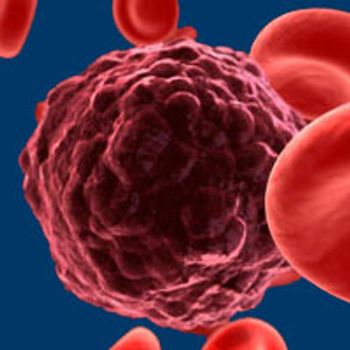
Monocytic myeloid-derived suppressor cells increased with ibrutinib treatment in a preclinical model of chronic lymphocytic leukemia, suggesting a role for ITK inhibition in this cell population.
Brian Van Tine, MD, highlights the latest developments in soft tissue sarcoma, including data from key trials and further research being conducted in the rare tumor field.
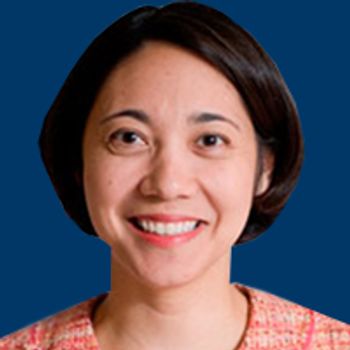
Lecia V. Sequist, MD, MPH, highlights recent developments in NSCLC treatment and shared key questions that still need to be addressed.
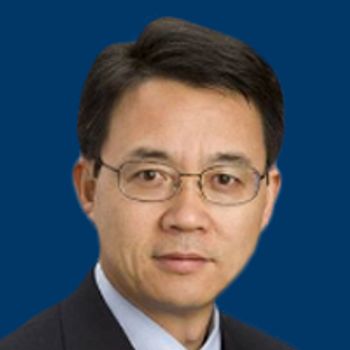
Jing-Zhou Hou, MD, PhD, highlights the research being conducted in the realm of lymphoma, including positive and negative trials that have read out in the space, and provides insight into novel approaches under investigation.
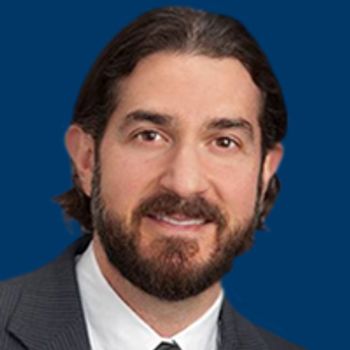
James M. Rossetti, DO, discusses strategies for symptom management, tools available for risk stratification, and updated data with some of the pivotal agents in myeloproliferative neoplasms.