
Annie Im, MD, discusses the importance of minimal residual disease in acute lymphoblastic leukemia, the role of transplant, and novel treatment approaches under investigation.

Associate Editorial Director, OncLive®
Kristi Rosa joined MJH Life Sciences in 2016 and has since held several positions within the company. She helped launch the rapidly growing infectious disease news resource Contagion, strengthened the Rare Disease Report, of HCPLive, and now oversees OncLive and its flagship publication OncologyLive. Prior to working at the company, she served as lead copywriter and marketing coordinator at The Strand Theater. Email: [email protected]
Annie Im, MD, discusses the importance of minimal residual disease in acute lymphoblastic leukemia, the role of transplant, and novel treatment approaches under investigation.

Anastasios Raptis, MD, highlights promising combinations under investigation in the frontline setting and remaining challenges in multiple myeloma.
Kleber Yotsumoto Fertrin, MD, PhD, provided insight into the new options that have emerged in the treatment landscape of benign hematologic malignancies.

Vivian G. Oehler, MD, highlights ongoing developments in myeloproliferative neoplasms and shares her hopes for the future.
Thomas E. Stinchcombe, MD, discusses the numerous ALK inhibitors available in the treatment of ALK-positive non–small cell lung cancer, ongoing efforts to combat resistance, and sequencing challenges that have emerged.
Daniel Gomez, MD, provides insight on the different treatment approaches under exploration for patients with oligometastatic disease.

The FDA has granted an approval to a prefilled syringe for lanreotide (Somatuline Depot), which has been designed to enable healthcare providers to administer the injection easier, for the treatment of adults with unresectable, well or moderately differentiated, locally advanced or metastatic gastroenteropancreatic neuroendocrine tumors.
Howard S. Hochster, MD, provides insight into TAS-102 (trifluridine/tipiracil; Lonsurf) and highlights other important research being conducted in the colorectal cancer space.

Nirav S. Dhruva, MD, highlightes key advances made in non–small cell lung cancer, the importance of PD-L1 expression testing, and ongoing efforts to bridge the gap between community and academic centers in lung cancer care.

Chad Pecot, MD, discusses practice-changing immunotherapy research that has read out in squamous non–small cell lung cancer, emerging biomarkers under investigation, and logical combinations that beg for further exploration.
Neal E. Ready, MD, PhD, highlights recent advances that have been made in the treatment of small cell lung cancer, the promise of immunotherapy, and opportunities to improve patient care.

Christopher Lieu, MD, highlights updates on biomarker-directed therapy with colorectal cancer and ongoing research being done with immunotherapy.
S. Lindsey Davis, MD, highlights the latest immunotherapy developments and other advances in gastric and gastroesophageal junction cancers.
Ann S. LaCasce, MD, MMSc, highlights recent progress made in MCL, exciting approaches under investigation, and provides insight into where future research should focus.
Emil Cohen, MD, discusses the locoregional therapies available for the treatment of patients with hepatocellular carcinoma and offers insight into optimal strategies.
Pei-Chun McGregor, MD, discusses where future research with androgen deprivation therapy-associated adverse events is headed, and called for multidisciplinary care for patients receiving this approach.
This month, OncLive® officially launched the OncLive® Community, a social network designed specifically for healthcare professionals working in the field of oncology.
Richard (Rick) JaeBong Lee, MD, PhD, discusses the differences between second-generation targeted antiandrogens and highlights potential factors to consider in terms of selection.
David J. Einstein, MD, discusses newer imaging techniques and overall progress in the treatment of patients with nonmetastatic hormone-sensitive prostate cancer.
Jacqueline S. Garcia, MD, highlights key progress made in acute myeloid leukemia and remaining questions with maintenance strategies.

Omar Nadeem, MD, highlights exciting approaches that have emerged in relapsed/refractory myeloma, such as CAR T-cell therapy, and shares unanswered questions that future research should address.
Paul G. Richardson, MD, highlights the many promising agents that have emerged in relapsed/refractory multiple myeloma in recent years, remaining challenges, and hope for continued progress.
Ann S. LaCasce, MD, MMSc, highlights the therapeutic progress in the treatment of patients with mantle cell lymphoma , key remaining challenges, and where future research is headed.
Vassiliki A. Papadimitrakopoulou, MD, highlights the implications of the NILE study on clinical practice and sheds light on the potential future utility of liquid biopsies in non–small cell lung cancer.

The combination of the PARP inhibitor olaparib (Lynparza) and the pan-HER TKI neratinib (Nerlynx) proved to be highly synergistic and demonstrated significant activity in preclinical models of HER2-positive uterine serous carcinoma.
Juan P. Alderuccio, MD, discusses the current state of the treatment paradigm in multiple myeloma and ongoing challenges that remain.
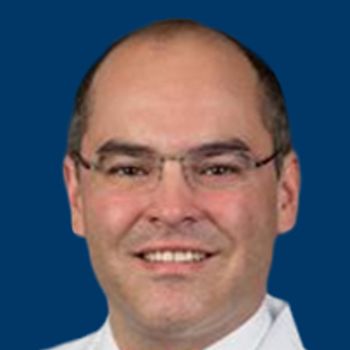
Alvaro Jose Alencar, MD, highlights advances made in the treatment of patients with hematologic disorders, offers advice on how to choose between available agents, and sheds light on future research.

Pembrolizumab (Keytruda) demonstrated promising antitumor activity with durable responses in patients with pretreated advanced small cell lung cancer.
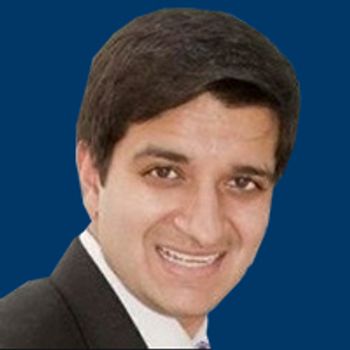
The immune checkpoint inhibitor combination of nivolumab and ipilimumab induced a greater than 40% response rate and was well tolerated in patients with high-grade neuroendocrine carcinoma.
The FDA has proposed amendments to key policies to modernize breast cancer screening and improve mammography services, in order to enable healthcare providers and patients to make more informed medical decisions