

Fixed-duration ibrutinib plus venetoclax was effective with nearly 70 months of follow-up in patients with untreated CLL/SLL.

Kyle Doherty joined MJH Life Sciences in 2021 and is the lead editor for Oncology Fellows. He also produces print content for OncologyLive, as well as news and conference updates for OncLive.com. Email: [email protected]
Fixed-duration ibrutinib plus venetoclax was effective with nearly 70 months of follow-up in patients with untreated CLL/SLL.

Pexidartinib generated long-term responses in patients with symptomatic tenosynovial giant cell tumors.

Padeliporfin vascular targeted photodynamic therapy was highly active with a tolerable safety profile in low-grade upper tract urothelial cancer.

Ivosidenib was effective for the real-world treatment of patients with IDH1-mutated cholangiocarcinoma.

An assistant professor at The Warren Alpert Medical School of Brown University discusses offers insights on the job search process following fellowship.

Quantitative vessel tortuosity features were able to detect the VEGFR inhibitory mechanism of fruquintinib in metastatic colorectal cancer.

Certepetide plus gemcitabine and nab-paclitaxel was safe and effective in patients with untreated metastatic pancreatic ductal adenocarcinoma.

Denbrayce was approved in Europe for the treatment of skeletal-related events in advanced malignancies involving the bone and giant cell tumor of the bone.
A research fellow from Dana-Farber Cancer Institute shares post hoc findings from the phase 3 JAVELIN Renal 101 trial.
Sam Klempner, MD, discusses the ongoing evaluation of domvanalimab plus zimberelimab and chemotherapy in upper GI cancers.

Zanidatamab has become the first HER2-targeted agent to gain conditional approval for HER2-positive biliary tract cancer in the European Union.

Experts in the fields of lung, head and neck, HER2+ breast, and hematologic cancers discuss notable updates for fellows from the 2025 AACR Annual Meeting.
Elraglusib plus gemcitabine and nab-paclitaxel lead to an OS benefit vs chemotherapy alone in treatment-naive metastatic PDAC.
Balazs Halmos, MD, discusses the DLL3-targeted BiTE obrixtamig for the treatment of patients with extrapulmonary neuroendocrine carcinoma.

ALLO-316 showed activity and a tolerable safety profile in patients with pretreated advanced or metastatic clear cell renal cell carcinoma.
The NMPA of China has accepted the new drug application for satricabtagene autoleucel in pretreated gastric/GEJ cancer.

FLT3-ITD positivity plus mutations in NPM1 and epigenetic regulatory genes led to heightened efficacy of quizartinib plus chemotherapy in newly diagnosed AML.

Kate Gasparini, PharmD, BCOP, BCPPS, discusses how liquid formulations of oral agents, including imatinib, can aid in the delivery of anticancer agents.

Robin Jones MD, MBBS, MRCP, discusses the treatment landscape of GIST and how patients can be effectively treated in the community.
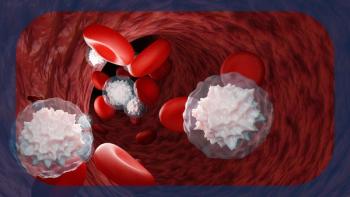
R2 followed by R-DHAP led to an ORR of 93.3% in patients with newly diagnosed MCL.
THE001 plus regional hyperthermia was safe and led to responses in patients with heavily pretreated soft tissue sarcoma.

Amit Mehta, MD, discusses the landscape of metastatic urothelial carcinoma, including data updates as well as treatment selection and safety considerations.

Ibrutinib plus venetoclax led to complete responses and durable remissions in the first-line treatment of older patients with MCL.

Ana Velázquez Mañana, MD, MSc, discusses survey findings that revealed gender equity training for oncology fellows is often lacking.

The European Medicines Agency’s CHMP has recommended the approval of darolutamide plus ADT in mHSPC in the European Union.

Pembrolizumab plus chemoradiation with maintenance pembrolizumab was safe and effective in unresectable vulvar cancer.

Galleri, a multicancer early detection test, demonstrated high positive predictive value and cancer detection in PATHFINDER 2.

Joshua K. Sabari, MD, discusses the role of telisotuzumab vedotin in patients with locally advanced/metastatic NSCLC with c-MET overexpression.

Sarah Sammons, MD, discusses data with T-DXd in frontline HER2-positive breast cancer and other ADCs in the breast cancer space.
Venetoclax plus rituximab displayed OS and PFS benefits vs BR after long-term follow-up in relapsed/refractory CLL.