
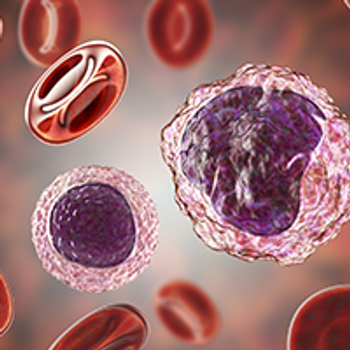
CTL019 CAR T-cell therapy plus time-limited ibrutinib resulted in high complete response rates in relapsed/refractory mantle cell lymphoma.

Kyle Doherty joined MJH Life Sciences in 2021 and is the lead editor for Oncology Fellows. He also produces print content for OncologyLive, as well as news and conference updates for OncLive.com. Email: [email protected]
CTL019 CAR T-cell therapy plus time-limited ibrutinib resulted in high complete response rates in relapsed/refractory mantle cell lymphoma.

Experts discuss updated findings from key clinical trials in hepatocellular carcinoma presented during the 2024 Gastrointestinal Cancers Symposium.

The Japanese Ministry of Health, Labour and Welfare has approved zolbetuximab for CLDN18.2-positive, unresectable, advanced or recurrent gastric cancer.

Recent report details the issues early-career oncologists experience regarding parental leave.

A matching-adjusted indirect comparison shows that brexu-cel is superior to pirtobrutinib regarding response and survival in relapsed/refractory MCL.
Shanta Dhar, PhD, FRSC, discusses the significance of being named a fellow of the National Academy of Inventors for her research in prostate cancer.

Ribociclib plus a nonsteroidal aromatase inhibitor bested nonsteroidal aromatase inhibitor therapy alone in terms of iDFS in early-stage breast cancer.
Treatment with XPO1 inhibitors could be effective and warrants further investigation in low-grade serous and clear cell ovarian cancer.
NT219 in combination with cetuximab was safe and effective in patients with recurrent/metastatic squamous cell carcinoma of the head and neck.

MRD-guided ibrutinib plus venetoclax displays PFS and OS benefits over fludarabine plus cyclophosphamide and rituximab in chronic lymphocytic leukemia.

Grant winner Tyler Miller, MD, PhD, outlines innovative plans for glioma research.

Treatment with a next-generation CAR T-cell agent displayed early efficacy in a small group of patients with glioblastoma.
Black patients with endometrioid endometrial carcinoma experienced an increased risk of death and lower enrollment in clinical trials vs White patients.

Robert W. Mutter, MD, discusses the nuances of partial breast irradiation in early-stage breast cancer.

Patients with relapsed/refractory chronic lymphocytic leukemia experienced long-lasting responses with venetoclax.

Higher sensitivity for CRC and advanced precancerous lesions, but lower specificity for advanced neoplasia, was seen with a next-generation stool DNA test vs a fecal immunochemical test.
A CAR T-cell therapy directed toward 2 brain tumor–associated proteins displayed preliminary activity in recurrent glioblastoma.
Elisabeth I. Heath, MD, FACP, discusses what makes NECTIN-4 an attractive target in drug development and the significance of the EV-302/KEYNOTE-A39 trial findings.
The TakeAim Leukemia trial aims to add emavusertib to the treatment paradigm of acute myeloid leukemia and high-risk myelodysplastic syndrome.

Andrea Porpiglia, MD, MSc, FACS, and Sanjay Reddy, MD, FACS describe what makes the Complex General Surgical Oncology Fellowship at Fox Chase unique.
Belantamab mafodotin plus pomalidomide and dexamethasone extended PFS in relapsed/refractory multiple myeloma.

Patients with upper tract urothelial cancer who received adjuvant chemotherapy after nephroureterectomy experienced extended DFS vs those who received surveillance.
R. Lor Randall, MD, FACS, discusses the top takeaways from the inaugural 2024 Birmingham Orthopedic Oncology Meeting.
David L. Porter, MD, discusses the decision by the FDA to call for a boxed warning for secondary malignancies on all approved CAR T-cell agents.

Rahul Banerjee, MD FACP, discusses the FDA’s decision to add a class-wide boxed warning for secondary malignancies on all approved CAR T-cell therapies.
SNB-101, a novel polymer nanoparticle agent, has been granted orphan drug designation by the FDA for the treatment of patients with pancreatic cancer.
The biologics license application for first-line tislelizumab plus chemotherapy for gastric/gastroesophageal junction cancer has been accepted by the FDA.
The FDA has granted IO-202 an orphan drug designation for patients with chronic myelomonocytic leukemia.

The sBLA for pembrolizumab plus chemotherapy in endometrial cancer has been granted priority review by the FDA.
Lurbinectedin demonstrated greater activity and a superior safety profile vs topotecan in a subset of small cell lung cancer.