Maurie Markman, MD, president, Medicine and Science, Cancer Treatment Centers of America, editor-in-chief, OncologyLive, discusses combination treatments in ovarian cancer.

Your AI-Trained Oncology Knowledge Connection!


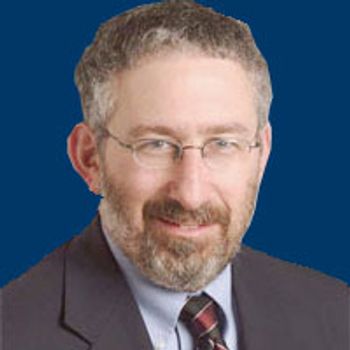
Maurie Markman, MD, is president of Medicine & Science at City of Hope Atlanta, Chicago, and Phoenix

Maurie Markman, MD, president, Medicine and Science, Cancer Treatment Centers of America, editor-in-chief, OncologyLive, discusses combination treatments in ovarian cancer.

Maurie Markman, MD, president of Medicine and Science, Cancer Treatment Centers of America, editor-in-chief, OncologyLive, discusses the development of immune targeting in ovarian cancer.

It is perhaps a little unusual that an oncol­ogy commentary would begin with a highly provocative discussion about the future of driverless cars, but there are similarities in the sharp corners of the debate over this new tech­nology and emerging trends in cancer care.

Maurie Markman, MD, president, Medicine and Science, Cancer Treatment Centers of America, editor-in-chief, OncologyLive, discusses the search for actionable biomarkers in the treatment of patients with ovarian cancer.

Negative reports evaluating molecularly selected agents should not derail the process of developing future therapies by employing a precision medicine approach.

It was not that long ago that decisions regarding cancer management were essentially made exclusively by the treating physician, with patients simply being informed of “the plan” for their treatment.

One of the basic tenets of science is the concept that all accepted “truths” are subject to objective testing and, through this process, can be shown to be false.

Those responsible for developing and implementing governmental health policy have an extremely difficult job. Not only do they have to attempt to satisfy often highly unrealistic expectations of legislators for overall goals and timelines, but they also are frequently asked to accomplish a task with woefully inadequate funding.

Maurie Markman, MD, president, Medicine and Science, Cancer Treatment Centers of America, editor-in-chief, OncologyLive, discusses the current status of immune targeting as potential treatment for patients with ovarian cancer.

In a most provocative commentary published in a recent issue of The Lancet, two authors present a strong argument that it is sometimes ethical to provide therapy that is known to be validated but less effective than the standard of care if this therapy is also so significantly less expensive that access is substantially enhanced.

Twenty-five years ago, WHO declared that coffee was a potential carcinogen. Now, the public health agency has reversed course, raising a host of questions about the accuracy and value not only about the original research but also about the recent report.

Maurie Markman, MD, president, Medicine and Science, Cancer Treatment Centers of America, editor-in-chief, OncologyLive, discusses the most important factors of bilateral salpingo-oophorectomy (BSO) to convey to patients with ovarian cancer.

Perhaps oncologists know that having a detailed understanding of population-based survival statistics is very different from such knowledge of the future clinical course of an individual patient.

Fifty years after Henry Beecher’s landmark critique finally helped begin breaking the “code-of-silence” regarding the conduct of unethical clinical research in the United States—sadly including the oncology arena—many serious concerns linger.

Oncologists eagerly await clinical trial results that will permit them to provide additional strategies to their patients. However, the impact of such randomized trial results can be quite limited where preexisting beliefs, training, economic interests, or well-established practices conflict with what the "evidence" demonstrates.

Although chemotherapy has changed dramatically since it was introduced, platinum-containing combinations remain standard in ovarian cancer. Often, the established regimen can be modified for patients who quite justifiably may fear the toxicities of platinum agents.

Discussions with patients must carefully consider the understandable desire of patients for definitive and hopeful information while at the same time appreciating that poorly understood biology often makes definitive statements and declarations regarding prognosis problematic and not infrequently incorrect.

A phase III trial in ovarian cancer was allowed to continue even as the patients who received the experimental study drug were experiencing strikingly inferior outcomes compared with participants on standard therapy. The lack of answers about this trial remains a glaring example of shortcomings in the research paradigm.

The importance of gaining the input of individual patients with cancer into their own medical management cannot be overstated.

The debate over the confirmation of Robert M. Califf, MD, as FDA commissioner illustrates the need to change the way we talk about whether a medical professional has a "conflict of interest" rather than simply an "association of interest."

Shouldn’t the goal of oncologists be to do what is best for their patients, regardless of the currently existing level of evidence and particularly when any timeline for obtaining that "gold standard" evidence will be irrelevant for the patient being cared for today?

If germline testing for a cancer-associated purpose reveals the risk of an unrelated illness like Alzheimer disease, should patients routinely be told—even if there’s nothing that can be done about that “incidental†finding?

Clinical oncologists may not be fully aware of shortcomings in the laboratory research paradigm that have the potential to distort the scientific underpinnings of vital cancer studies.

The delivery of antineoplastic therapy via the intravenous route is a long-standing, critical, and well-coordinated component of oncology practice. But what happens when a novel treatment strategy is introduced into the oncology arena that challenges this traditional drug infusion paradigm?

One hopes that the infrastructure established to support the Moonshot initiative will serve as an effective counterbalance to the efforts to derail activities critical to improving cancer outcomes.

There is growing evidence that continued reliance on the mantra of “randomized phase III trials†is highly problematic.

The appropriateness of off-label drug use in the management of patients with cancer in the United States is one of the most contentious issues confronting individual oncologists, patients, insurers, and governmental policy makers.

In The Death of Cancer, written by Vincent T. DeVita Jr, MD, a pioneering oncologist reveals, after 50 years on the front lines of medicine, why the war on cancer is winnable, and how to get there. In an interview with OncLive hosted by Maurie Markman, MD, he speaks with DeVita on his book and his thoughts on how the field has evolved.

Although the goals of quality-care and value-based oncology initiatives are legitimate and laudable, some of the assertions should be examined more closely.

The greatest concern with the profoundly distressing episode that has unfolded at Duke University in recent years is whether it will truly serve as a learning experience that would help prevent future misconduct— events that have the potential to result in serious harm to highly vulnerable patients with cancer.