

The selective, oral KRASG12C inhibitor divarasib demonstrated promising clinical activity in patients with colorectal cancer treated with the agent plus cetuximab.

Megan Hollasch joined MJH Life Sciences in 2022 following graduation from the University of Massachusetts Amherst with majors in Communication and English, and a specialization in Literature as History. She produces and edits original content for the print publication OncologyLive, aiding in all aspects of the publication process, as well as content for OncLive.com.
The selective, oral KRASG12C inhibitor divarasib demonstrated promising clinical activity in patients with colorectal cancer treated with the agent plus cetuximab.

Patients with unresectable metastatic desmoplastic melanoma achieved high response rates when treated with single-agent pembrolizumab in the SWOG S1512 trial, according to data presented during the 2023 AACR Annual Meeting.

Ramez N. Eskander, MD, highlights the potential implications of the NRG GY018 trial as well as safety and efficacy results from the trial.
Robert L. Coleman, MD, FACOG, FACS, discusses a subgroup analysis of the SORAYA trial, which was presented during the 2023 Society of Gynecologic Oncology Annual Meeting on Women’s Cancer, and where the field is headed in attempt to address unmet needs for this patient population.

Combining the immune checkpoint inhibitor dostarlimab-gxly with standard-of-care chemotherapy elicited an increase in progression-free survival rates compared with chemotherapy alone for patients with primary advanced or recurrent endometrial cancer.
Cancer screenings rapidly decreased during the COVID-19 pandemic as health care practices considered not urgent came to a halt.

Luis Paz-Ares, MD, PhD, highlight adverse events to monitor with pembrolizumab in this setting as well as its role in the treatment landscape.

Lucy Gilbert, MD, MSc, discusses the favorable safety profile of dostarlimab as well as how it compares with the current standard of care in mismatch repair deficient advanced endometrial cancer.

Lisa M. Carey, MD, ScM, FASCO, discusses upcoming treatments that could impact standard-of-care practices and the continually evolving role of antibody-drug conjugates role in the breast cancer treatment paradigm.

Palbociclib plus an aromatase inhibitor improved real-world data for progression-free survival, overall survival, and time to chemotherapy compared with an aromatase inhibitor alone in patients 75 years and older with hormone receptor–positive, HER2-negative advanced/metastatic breast cancer.
As more antibody-drug conjugates emerge and investigators foresee fam-trastuzumab deruxtecan-nxki moving forward in lines of treatment for metastatic disease, the treatment landscape of hormone receptor–positive, HER2-negative breast cancer continues to expand and shift.

When treating patients with mantle cell lymphoma, early identification and appropriate frontline therapy remains critical, and therapies may vary for those 65 years and older compared with patients under the age of 65, with several additional factors also having a role in approaching treatment options for a new patient in the clinic.
Because a positive correlation has been shown between expression of PD-L1 and BRAF V600E mutations in CRC, several combination therapies with checkpoint inhibitors and targeted agents are currently being explored.

Lenvatinib in combination with pembrolizumab led to deep and durable tumor responses in patients with previously treated advanced endometrial carcinoma.
Phillip J. Koo, MD, highlights insights garnered from prostate cancer experts on topics such as radioligands and modern radiopharmaceuticals, which, along with artificial intelligence, have the potential to revolutionize the field.

François-Clément Bidard, MD, PhD, discusses how elacestrant fits into the treatment paradigm for postmenopausal patients with estrogen receptor-positive, HER2-negative, ESR1-mutated advanced or metastatic breast cancer.
Alfred L. Garfall, MD, discusses the durability of responses teclistamab elicited in the MajesTEC-1 trial and how this agent will change the treatment regimen for relapsed/refractory multiple myeloma.

John H. Strickler, MD, highlights key findings from the MOUNTAINEER trial and addresses the possibility of moving the combination up to the first line setting.
Michael L. Wang, MD, discusses the efficacy of the noncovalent BTK inhibitor pirtobrutinib, as well as safety data from the phase 1/2 BRUIN trial in mantle cell lymphoma.

Brian Schulte, MD, discusses the relevance of these mutations and an actively enrolling phase 2 PRECISION-1 basket trial investigating the efficacy of nab-sirolimus in solid tumors.

Findings from the phase 2 CISLC-12 study show favorable safety and efficacy signals for patients with unresectable hepatocellular carcinoma treated with the combination of envafolimab, lenvatinib, and transarterial chemoembolization.
Joyce Ohm, PhD, details the significance of Twitter’s platform as she’s seen it grow over the years, and Peter Soscia explains the behind-the-scenes of managing communications.

Eunice Wang, MD, highlights the mechanism of action of E-selectin inhibitors and speaks on the safety profile and efficacy of uproleselan in patients with acute myeloid leukemia.

Ursula A. Matulonis, MD, discusses the novelty of mirvetuximab soravtansine in platinum-resistant ovarian cancer, and how it will expand options for a traditionally difficult-to-treat population.
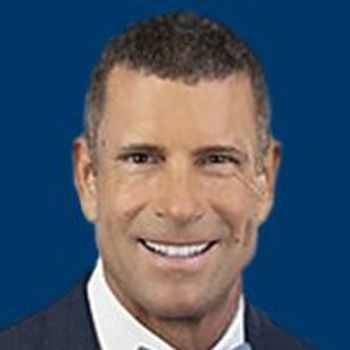
Robert Lawrence Randall, MD, FACS, discussed the role of biological reconstructions as well as factors that determine whether a patient would benefit more from the reconstructions or traditional prosthetics known as endoprosthetics.

Lauren Ritterhouse, MD, PhD, discusses next-generation sequencing testing platforms and the importance of establishing processes for tissue collection in non–small cell lung cancer.
The FDA’s accelerated approval of adagrasib for adult patients with KRAS G12C–mutated locally advanced or metastatic non–small cell lung cancer who have received at least 1 prior systemic therapy has provided a second KRAS G12C inhibitor option for patients.

R. Lor Randall, MD, FACS, discusses the significance of addition of surgery to radiation therapy led to improved local control compared with radiation therapy alone in patients with localized pelvic Ewing Sarcoma.

Leif Stenke, MD, PhD, discusses the role XS004 may have in future clinical development in chronic myeloid leukemia.
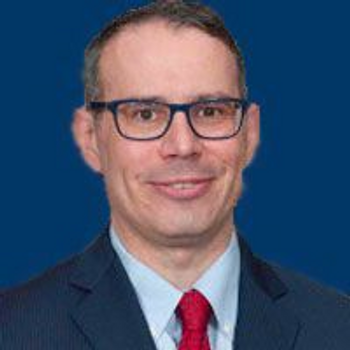
Anthony Mato, MD, MSCE, discusses the relapsed refractory setting compared with the frontline setting and promising agents such as pirtobrutinib and zanubrutinib.