

Reshma Jagsi, MD, DPhil, details advances from 2023 in breast cancer radiation oncology and interventions aimed at combating disparities within oncology.

Megan Hollasch joined MJH Life Sciences in 2022 following graduation from the University of Massachusetts Amherst with majors in Communication and English, and a specialization in Literature as History. She produces and edits original content for the print publication OncologyLive, aiding in all aspects of the publication process, as well as content for OncLive.com.
Reshma Jagsi, MD, DPhil, details advances from 2023 in breast cancer radiation oncology and interventions aimed at combating disparities within oncology.

Dhruva explains how physicians reported a lack of understanding when it comes to the FDA approval process, especially regarding expedited approval pathways.

Corey J. Langer, MD, FACP, discusses findings from the IMpower010 and KEYNOTE-091 studies, which examined immunotherapy in NSCLC.

The combination of the first-in-class inhibitor enasidenib plus venetoclax has generated excitement targeting IDH2 mutations in relapsed/refractory AML.

Sagar Lonial, MD, FACP, details how CAR T-cell therapies and off-the-shelf treatments are improving outcomes for patients with multiple myeloma.
Sanket Dhruva, MD, MHS, details examining the perspectives of physicians regarding the FDA approval process for drugs and high-risk medical devices.

Kiara Ellis, MSW, details community outreach and engagement conversations centered around key matters affecting NCI-designated cancer centers.
Treatment with adjuvant pembrolizumab significantly improved overall survival vs placebo in patients with clear cell renal cell carcinoma.

Danielle Krause, MD, discusses preclinical findings from mouse models evaluating GLP-1 agonists with and without progesterone in endometrial cancer.

The field of hematology is experiencing significant advancements as promising new therapies for malignancies and GVHD continue to emerge.

Investigators continue to evaluate HER2 expression as well as CDK4/6 inhibitor use for hormone receptor–positive/HER2-negative breast cancer.

ASKB589 demonstrated anti-tumor activity in combination with capecitabine and oxaliplatin plus sintilimab in gastric or gastroesophageal junction cancers.

As novel drugs targeting the AURKA pathway continue to advance through the development pipeline, alisertib has emerged as an agent of particular note.
Sagar Lonial, MD, FACP, details agents of interest outside CAR T-cell therapies in multiple myeloma, including elranatamab and talquetamab.

E. Gabriela Chiorean, MD, highlights the importance of consistently testing for biomarkers with RNA-based tests in addition to DNA-based tests.

Investigators hope that first-in-class agents will combat dysfunction of the Hippo pathway by inhibiting the transcription function of TEAD-YAP.function of TEAD-YAP.
Heather Wakelee, MD, discusses the importance of balancing toxicities with efficacy as the non–small cell lung cancer treatment paradigm shifts.

Dedication to his patients and the field of hematology spanning decades has led Stephen J. Forman, MD, to break down barriers for treating patients with leukemia and lymphoma.
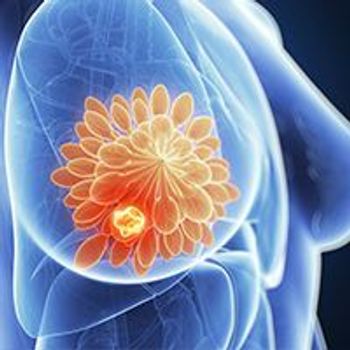
Alisertib as monotherapy and in combination with fulvestrant stands at the forefront of the clinical investigation of selective AURKA pathway inhibition in patients with endocrine-resistant advanced breast cancer, according to Tufia C. Haddad, MD.
The combination of Isa-KRd significantly increased the rates of minimal residual disease negativity at cutoffs post-consolidation vs KRd in patients with newly diagnosed multiple myeloma.

Anastrozole or fulvestrant plus fam-trastuzumab deruxtecan-nxki demonstrated encouraging antitumor activity in patients with chemotherapy-naïve, HER2-low hormone receptor–positive metastatic breast cancer.
Patients with non–small cell lung cancer harboring acquired EGFR mutations, such as C797S and intrinsic mutations in EGFR represent underserved populations where additional targeted therapies are needed.

Final outcomes from the phase 1b/2 Study 111/KEYNOTE-146 trial, evaluating treatment with lenvatinib and pembrolizumab in patients with advanced renal cell carcinoma, has sparked interest in the use of this combination.
The American Oncology Network has started trading on Nasdaq with the goal of continuing the growth of the organization.

With a plethora of data coming out of the 2023 European Society for Medical Oncology Congress, findings from multiple clinical trials examining antibody-drug conjugates in non–small cell lung cancer demonstrated encouraging antitumor activity and manageable safety profiles, including results from the phase 3 TROPION-Lung01 study, which evaluated datopotamab deruxtecan vs docetaxel in pretreated patients with advanced or metastatic disease.
Benjamin Besse, MD, PhD, discusses the results from the ATALANTE-1 trial and details the mechanism of action of the OSE2101 vaccine.

As treatments for patients with stage IV non–small cell lung cancer continue to evolve, patients with PD-L1–negative disease represent a unique cohort and chemotherapy/immunotherapy or immunotherapy doublet regimens appear to be effective.
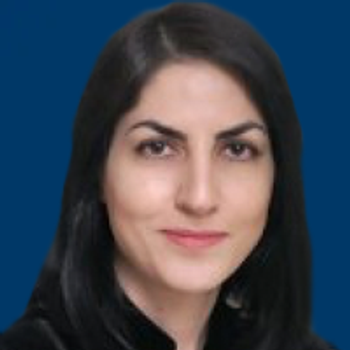
Jaleh Fallah, MD, discusses the FDA's evaluation of data from the phase 2 LITESPARK-004 trial, which supported the approval of belzutifan in von Hippel-Lindau–associated cancers.

Although advancements were “simple” to track for more than 40 years and left few questions open for evaluation in the ovarian cancer treatment paradigm, new questions have begun to develop surrounding the complexity of care.

Nicole Lamanna, MD, discusses treatment options for patients with chronic lymphocytic leukemia who develop resistance to a prior treatment.