
Sandy Srinivas, MD, details updates from 2024 in the kidney and prostate cancer NCCN guidelines and agents/trials to look forward to in 2025.

Megan Hollasch joined MJH Life Sciences in 2022 following graduation from the University of Massachusetts Amherst with majors in Communication and English, and a specialization in Literature as History. She produces and edits original content for the print publication OncologyLive, aiding in all aspects of the publication process, as well as content for OncLive.com.
Sandy Srinivas, MD, details updates from 2024 in the kidney and prostate cancer NCCN guidelines and agents/trials to look forward to in 2025.

Alberto Montero, MD, MBA, CPHQ, discusses the potential role for STX-478 in PIK3CA-mutant breast and gynecologic cancers.
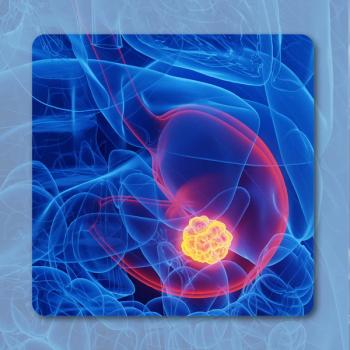
Yelena Y. Janjigian, MD, highlights key takeaways and data from 2024 in the gastric and GEJ cancer field.
Matthew Cortese, MD, MPH, details 2024/2025 updates to the NCCN guidelines for CLL/SLL and treatments to look forward to in the future.

Shaji Kumar, MD, details key updates/revisions made to the multiple myeloma NCCN guidelines in 2024 and the first version of the 2025 guidelines.
Julie R. Brahmer, MD, MSc, FASCO, details practice-changing indications and notable data in the early-stage, neo(adjuvant), and metastatic NSCLC settings.
This roundup includes exclusive insights from 23 clinicians and key data on the top abstracts coming out of the 2024 ESMO Annual Meeting.

Hope Rugo, MD, FASCO, discusses the FDA approval of inavolisib, how it will be incorporated into care, and the patient population evaluated in INAVO120.
John Strickler, MD, details the latest data on the novel c-Met–targeted ADC telisotuzumab adizutecan and how the agent could affect the treatment of CRC.

Anita Scheuber, MD, PhD, details the mechanism of action of NDI-101150, early data seen with the agent, and next steps in the HPK1 inhibitor’s investigation.
Nataliya Uboha, MD, PhD, discusses the FDA’s ODAC’s recommendation to restrict anti–PD-1 agents to patients with PD-L1–positive ESCC.
John L. Marshall, MD, details updates with ctDNA in colorectal cancer, and how precision medicine with ctDNA could change the way patients are treated.
Nataliya Uboha, MD, PhD, discusses the evolving treatment landscape for patients with gastric, gastroesophageal junction, and esophageal cancers.
John H. Strickler, MD, discusses treatment with telisotuzumab adizutecan for CRC as well as this ADC’s potential to broaden the CRC treatment paradigm.
Oncologists detail how zelenectide pevedotin, which is under evaluation in the Duravelo-2 trial, could fill an unmet need in metastatic urothelial carcinoma.
John H. Strickler, MD, highlights the mechanism of action of telisotuzumab adizutecan and the rationale for targeting c-Met in colorectal cancer.
Jorge Cortes, MD, inaugural editor-in-chief of Blood Global Hematology, details what type of research the new journal will highlight and its importance.
Jorge Cortes, MD, details how asciminib could affect care for patients with CML, diving into key takeaways from the ASC4FIRST trial.
Combination therapies with neoadjuvant ICIs and chemotherapy followed by an adjuvant ICI are here to stay in resectable non–small cell lung cancer.
John V. Heymach, MD, PhD, and Marina Chiara Garassino, MD, detail the 11-0 ODAC vote that new trial designs for perioperative regimens in resectable NSCLC should include within-trial assessment of each treatment phase's contribution.

Joseph A. Sparano, MD, details the next generation of CDK inhibitors such as BLU-222 targeting CDK2 and PF-07220060 targeting CDK4.

Grzegorz S. Nowakowski, MD, discusses the methods and objectives of the part B expansion portion of the TakeAim Lymphoma study in patients with PCNSL.
Grzegorz S. Nowakowski, MD, discusses the unique mechanism of action of emavusertib and highlights the phase 1/2 TakeAim Lymphoma trial in PCNSL.
Medicare drug price negotiations may impact community oncology practices, leading to potential changes in drug access, reimbursement, and patient care strategies.
Krishnansu S. Tewari, MD, and Kimberly Futch, MBA, detail considerations with AI programs, and roles AI may have in early diagnosis, time reduction in the examination of scans, and more.

Early switch therapy to atezolizumab after run-in with vemurafenib plus cobimetinib led to improved 4- and 5-month OS rates in BRAF V600–positive melanoma.

Radium-223 plus enzalutamide yielded significant rPFS and OS benefits vs enzalutamide monotherapy in metastatic castration-resistant prostate cancer.
The addition of nivolumab to tivozanib did not improve outcomes in metastatic RCC and 1.34 mg of tivozanib monotherapy may be considered as a second-line therapy.
Adam E. Singer, MD, PhD, highlights how cabozantinib and nivolumab treatment compares with other therapies in terms of efficacy and safety in RCC.
Ibrilatazar plus paclitaxel/carboplatin led to a 100% disease-control rate in patients with advanced/recurrent endometrial cancer and was well tolerated.