

Melissa L. Johnson, MD, Terufumi Kato, MD, and Pasi A. Jänne, MD, PhD, present updates from the International Association for the Study of Lung Cancer 2023 World Conference on Lung Cancer.

Megan Hollasch joined MJH Life Sciences in 2022 following graduation from the University of Massachusetts Amherst with majors in Communication and English, and a specialization in Literature as History. She produces and edits original content for the print publication OncologyLive, aiding in all aspects of the publication process, as well as content for OncLive.com.
Melissa L. Johnson, MD, Terufumi Kato, MD, and Pasi A. Jänne, MD, PhD, present updates from the International Association for the Study of Lung Cancer 2023 World Conference on Lung Cancer.
Two novel antibody-drug conjugates, HS-20089 and SGN-B7H4V, targeting the highly expressed immune checkpoint ligand B7-H4 have demonstrated manageable safety profiles and shown anti-tumor activity in first-in-human dose-escalation portions of phase 1 trials and will move forward to the next portions of the studies.

Denise M. Wolf, PhD, discusses the methods used to conduct the I-SPY2 study and the implications that immune biomarkers could have on selecting treatment for patients with hormone receptor–positive, HER2-negative breast cancer in the future.
Tian Zhang, MD, MHS, details how updated data presented at the 2023 ASCO Annual Meeting from trials such as KEYNOTE-426 and CLEAR have showed the sustained efficacy of VEGF plus immunotherapy combinations vs sunitinib in the first-line setting; discusses where the immunotherapy-only combination of ipilimumab and nivolumab fits in the frontline setting; and highlights how data from CONTACT-03 provided key insights on the use of immunotherapy in patients with advanced renal cell carcinoma after progression on a prior immune checkpoint inhibitor.
The Trop-2 directed antibody drug conjugate datopotamab deruxtecan demonstrated a statistically significant improvement in progression-free survival vs docetaxel in patients with advanced or metastatic non–small cell lung cancer, however those with squamous histology did not experience a benefit.

Combination treatment with etigilimab and nivolumab was well tolerated in patients with recurrent or advanced solid tumors and promising efficacy was seen for patients with PD-L1 low disease

The addition of pembrolizumab to external beam radiotherapy and concurrent chemotherapy, followed by brachytherapy, resulted in statistically significant and clinically meaningful improvements in progression-free survival when compared with placebo plus EBRT/chemoradiotherapy/brachytherapy in patients with newly diagnosed, previously untreated, high-risk locally advanced cervical cancer.
The emergence of a novel class of compounds, known as anitens, potentially offers clinicians the ability to elongate responses for patients with metastatic castration-resistant prostate cancer, with the first-in-class N-terminal domain androgen receptor inhibitor masofaniten showing promise as it moves to the phase 2 portion of a phase 1/2 trial.
Expression of DLL3, an inhibitor ligand of the Notch pathway associated with tumorigenesis, has emerged as a target of interest for drug development.
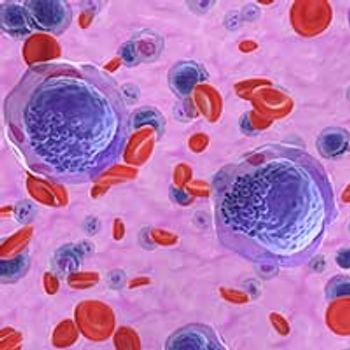
The phase 3 BRUIN CLL-314 trial evaluating the selective noncovalent BTK inhibitor pirtobrutinib vs the potent covalent BTK inhibitor ibrutinib is currently enrolling patients with chronic lymphocytic leukemia and small lymphocytic lymphoma who previously received treatment with non-BTK inhibitor therapy.

Combination therapy targeting multiple exons where mutations commonly develop in gastrointestinal stromal tumor may represent a promising treatment approach to increase efficacy when patients develop resistance to therapies such as imatinib.
The addition of venetoclax to carfilzomib and dexamethasone increased response rates compared with carfilzomib plus dexamethasone alone in patients with t(11:14)-positive relapsed/refractory multiple myeloma.
J. Randolph Hecht, MD, discusses the challenges researchers have faced in the development of cellular therapy for patients with solid tumors, and details how A2B530 could potentially overcome some of these obstacles.

Adagrasib monotherapy provided durable efficacy for patients with KRAS G12C–mutated locally advanced or metastatic non–small cell lung cancer, according to 2-year follow-up data from the phase 1/2 KRYSTAL-1 trial.
A predictive system developed using data from United States and European stem cell transplant registries was prognostic of survival in patients with myelofibrosis undergoing allogeneic hematopoietic cell transplantation.
The benzodiazepines lorazepam and alprazolam had differing effects on progression-free survival (PFS) outcomes among patients with pancreatic cancer, with lorazepam demonstrating an association with decreased PFS and alprazolam prolonging PFS.
Martin Wermke, MD, discusses why the novel agent may serve as a promising treatment option targeting DLL3.
James Chih-Hsin Yang, MD, PhD, discusses the implications of the phase 3 KEYNOTE-789 trial and what directions investigators can examine in the future to help fill the unmet need for patients with TKI-resistant, EGFR-mutated metastatic non–small cell lung cancer.

Combination treatment with atezolizumab, carboplatin, and pemetrexed showed activity in patients with advanced nonsquamous non–small cell lung cancer and untreated brain metastases without neurologic symptoms or asymptomatic with medical treatment.
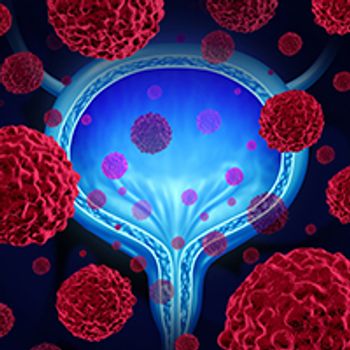
Treatment with neoadjuvant durvalumab plus gemcitabine and cisplatin followed by radical surgery and adjuvant durvalumab for patients with muscle-invasive urothelial carcinoma resulted in 2-year event-free survival rates that met the primary end point of the phase 2 SAKK 06/17 trial.

Funda Meric-Bernstam, MD, discusses the safety of CBX-12 and exploring dosage of the agent.

Lyudmila A. Bazhenova, MD, discusses upcoming inhibitors of interest in the combination therapy space for patients with KRAS G12C–mutant NSCLC.
Rami Komrokji, MD, discusses an international dataset analysis of the 2 current classification systems for patients with myelodysplastic syndromes, as well as the next steps being taken to develop a more harmonized classification system.

Luciano J. Costa, MD, PhD, discussed extended follow-up data from the trial and explained how the results may affect frontline treatment decisions in multiple myeloma.

HER2 amplification appears to be prognostic in patients with RAS wild-type metastatic colorectal cancer but may not be predictive of survival benefit as a first-line treatment option in combination with panitumumab vs standard-of-care bevacizumab.

The novel HER2-targeted bispecific antibody zanidatamab in combination with docetaxel demonstrated efficacy with a manageable safety profile as first-line treatment in patients with advanced HER2-positive breast cancer.

Zanubrutinib demonstrated long-term efficacy with superior tolerability compared with ibrutinib for the treatment of patients with symptomatic Waldenström macroglobulinemia regardless of CXCR4 or MYD88 mutational status.
Pembrolizumab demonstrated long-term survival benefit compared with ipilimumab in patients with unresectable stage III/IV melanoma who received up to 1 prior systemic therapy.

Treatment with the all-oral triplet of tucatinib, letrozole, and palbociclib yielded clinically meaningful efficacy results and had an acceptable safety profile in patients with hormone receptor–positive, HER2-positive metastatic breast cancer.
Yasser Mohamed Ali Ged, MBBS, highlights the early efficacy seen in patients with renal cell carcinoma with BAP1 mutations and next steps for the ORCHID trial.