

Suresh Senan, MRCP, FRCR, PhD, details how the FDA approval of durvalumab has changed care for patients with limited-stage small cell lung cancer.

Megan Hollasch joined MJH Life Sciences in 2022 following graduation from the University of Massachusetts Amherst with majors in Communication and English, and a specialization in Literature as History. She produces and edits original content for the print publication OncologyLive, aiding in all aspects of the publication process, as well as content for OncLive.com.
Suresh Senan, MRCP, FRCR, PhD, details how the FDA approval of durvalumab has changed care for patients with limited-stage small cell lung cancer.
Pedro Barata, MD, details factors affecting treatment selection with biomarker-based approvals and highlights questions regarding genetic testing.
Michael T. Tees, MD, MPH, describes how BTK degraders represent a promising class of agents, highlighting the agent AC676 that is currently under evaluation.
Christopher Graham, MD, details how axatilimab has changed the care of cGVHD and highlights considerations with axatilimab, belumosudil, and ruxolitinib.

Supriya Gupta, MD, details pros/cons with different BTK inhibitors and promising combination therapies in CLL, as well as how liso-cel is affecting care.

Nirav N. Shah, MD, MSHP, details how BTK degraders could fill an unmet need in pretreated CLL/SLL and highlights promising data seen with NX-5948.

A childhood dream became a reality for Montana native Kelly K. Hunt, MD, FACS, FSSO, who has changed the face of the surgical breast oncology workforce.
Experts detail how recent NCCN guideline changes in dozens of tumor types are affecting their practices, and we gather all the NCCN updates in a slideshow.
Felipe Batalini, MD, and Alberto Montero, MD, MBA, CPHQ, detail how allosteric inhibitors targeting PIK3CA such as STX-478 may reduce toxicities seen with orthosteric inhibitors.
Jonathan Wesley Riess, MD, MS, details the potential for ivonescimab in NSCLC after improving PFS vs pembrolizumab in the HARMONi-2 trial.
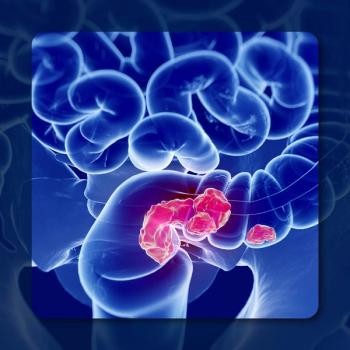
Retifanlimab represents a promising agent in the squamous cell anal carcinoma field and additional research is needed to improve outcomes for patients.
James J. Harding, MD, details the significance of the approval of zanidatamab and how the agent could fill unmet needs in biliary tract cancers.

Reshma Jagsi, MD, DPhil, highlights key takeaways from the Lancet Breast Cancer Commission Report and the necessary steps forward emphasized in the report.
Stephanie Gaillard, MD, PhD, details cervical and ovarian cancer NCCN guideline updates, as well as unmet needs associated with molecular markers.
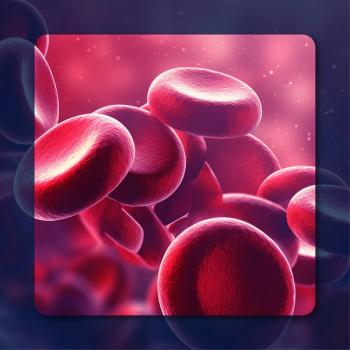
Treatment with asciminib results in superior efficacy and safety vs investigator-selected TKIs in CML according to updated 96-week data from ASC4FIRST.
Felipe Batalini, MD, details how targeting PIK3CA is evolving in breast cancer as new allosteric inhibitors have emerged and showed promising safety/efficacy.
Premal Thaker, MD, MS, highlights data seen with the IL-12 Immunotherapy IMNN-001 in the OVATION-2 trial and next steps with the agent in ovarian cancer.

Leo I. Gordon, MD, parses major changes to the 2024 NCCN guidelines for the treatment of patients with MCL, MZL, and follicular lymphoma.
Neil P. Shah, MD, PhD, highlights key recent changes to the CML NCCN guidelines and details anticipated data for 2025.

Jonathan Wesley Riess, MD, MS, and Megan E. Daly, MD, provide radiation and medical oncology perspectives on NCCN guideline updates in lung cancer.
Premal Thaker, MD, MS, discusses considerations when targeting IL-12 in ovarian cancer and how IMNN-001 has shown the potential to do so.

Alan P. Venook, MD, describes challenges implementing NCCN guidelines into practice in rectal, colon, and biliary tract cancers, and advancements from 2024.
Nataliya Uboha, MD, PhD, and Robert Albert Anders, MD, PhD, unpack the unfavorable risk-benefit profile of PD-1 inhibitors in patients with certain PD-L1–negative gastrointestinal cancers and discussions from a recent ODAC meeting.

Alberto Montero, MD, MBA, discusses the importance of PI3Kα pathway inhibition in solid tumors and expands on the unique mechanism of action of STX-478.

Elias Jabbour, MD, highlights the significance of obecabtagene autoleucel’s approval for patients with B-cell precursor ALL and data from the FELIX trial.

Alan P. Venook, MD, highlights notable NCCN guideline updates in HCC, considerations for implementing the changes in the clinic, and next steps in HCC.

Jairam Krishnamurthy, MD, FACP, details what to take into consideration when implementing 2024 Breast Cancer NCCN guideline changes into everyday practice.

Anita Scheuber, MD, PhD, details how HPK1 inhibition may enhance the antitumor activity of ICIs in solid tumors, diving into the agent NDI-101150 in particular.

Douglas B. Johnson, MD, MSCI, unpacks NCCN guideline updates in melanoma, detailing how neoadjuvant and TIL therapies have been notable advancements.
Jorge E. Cortes, MD, details how asciminib is improving upon first- and second-generation SOC TKIs in chronic myeloid leukemia.