
DVRd maintained efficacy benefits over VRd in transplant-ineligible, newly diagnosed multiple myeloma.
DVRd maintained efficacy benefits over VRd in transplant-ineligible, newly diagnosed multiple myeloma.
Encorafenib plus cetuximab and FOLFIRI improved PFS vs chemotherapy alone in first-line BRAF V600E–mutant metastatic colorectal cancer.
Ultra-low-dose nivolumab plus oral metronomic chemotherapy cut the risk of death by 43% versus paclitaxel-carboplatin in first-line platinum-sensitive recurrent or metastatic HNSCC.
Bezuclastinib plus sunitinib decreased the risk of progression or death by 50% compared with sunitinib monotherapy in GIST.
Roughly two-thirds of high-risk patients had low Prosigna scores and could safely omit adjuvant chemotherapy without compromising 5-year IBCFS.
Relacorilant plus nab-paclitaxel displayed OS benefit irrespective of prior taxane exposure or taxane-free interval in platinum-resistant ovarian cancer.
Final analysis of DREAMM-9 shows promising efficacy data and an optimal dosing schedule for BVRd in transplant-ineligible newly diagnosed multiple myeloma.
Chiauranib plus weekly paclitaxel cut the risk of progression or death by 57% vs placebo plus paclitaxel in platinum-resistant or refractory ovarian cancer.
The combination cut the risk of progression or death by 65% in the first phase 3 trial of an ADC plus pembrolizumab in this setting.
Did you catch all of this week's top oncology news? Test your knowledge with OncLive's Weekly News Quiz.
Expanded PFS sensitivity, subgroup, and safety data showed consistent, durable outcomes with both zanidatamab-based regimens in the first line.

RD118 produced an ORR of 94.4% and a median PFS of 18.2 months in heavily pretreated patients with relapsed/refractory multiple myeloma.

The top 5 OncLive TV videos of the week cover insights in breast cancer, ovarian cancer, prostate cancer, acute myeloid leukemia, and mantle cell lymphoma.
The FDA approved Dato-DXd for PD-1/PD-L1–ineligible triple-negative breast cancer, granted priority review to sevabertinib in HER2-mutant NSCLC, and more.
Poll results reflected some of the most anticipated presentations and fields of interest in hematologic oncology at the 2026 ASCO Annual Meeting.
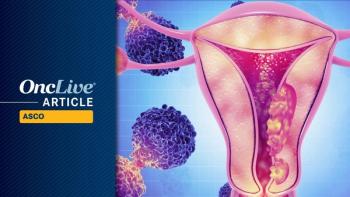
Poll results reflect some of the most anticipated presentations and fields of interest in gynecologic oncology at the 2026 ASCO Annual Meeting.
Did you catch all of this week's top oncology news? Test your knowledge with OncLive's Weekly News Quiz.
OncLive announced the 2026 Giants of Cancer Care winners.

Enzalutamide plus radium-223 demonstrated no early survival advantage but an 80% death risk reduction for long-term survivors in mCRPC at over 60 months.

No new safety signals were identified, and imAEs were predominantly low-grade and consistent with the known durvalumab safety profile.
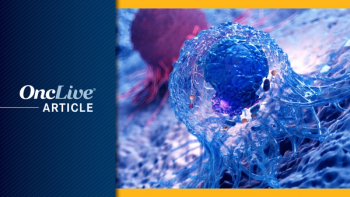
The PD-1/antiangiogenic combination yielded a 24% ORR and 28-month median PFS, surpassing prior monotherapy benchmarks in refractory chordoma.
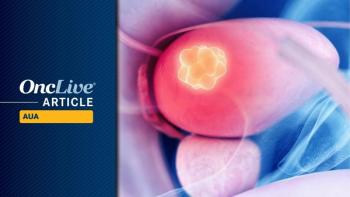
Adding lutetium Lu 177 vipivotide tetraxetan to ADT and ARPI deepened PSA responses and reduced the risk of PSA progression by 58% in patients with mHSPC.
Talazoparib plus enzalutamide data show rPFS correlates moderate-to-strongly with OS in first-line mCRPC across biomarker-defined subgroups.
Enzalutamide plus leuprolide produced a median treatment suspension of 17 months vs 11.5 months with leuprolide alone in biochemically recurrent prostate cancer.
The top 5 OncLive TV videos of the week cover insights in breast cancer, acute myeloid leukemia, bladder cancer, multiple myeloma, and melanoma.
The FDA approved T-DXd in early HER2+ breast cancer, adjuvant atezolizumab in MRD+ MIBC, and more.
Two doses of intravesical mitomycin-C administered before TURBT produced a 77% reduction in the risk of recurrence or death vs TURBT alone in NMIBC.
A biomarker analysis of SunRISe-4 found that high baseline TMB, GBD, and PD-L1 expression were associated with pathologic overall response to the regimen.
Durvalumab plus BCG induction and maintenance yielded an HR of 0.68 vs BCG alone for DFS in BCG-naive, high-risk non–muscle-invasive bladder cancer.
Did you catch all of this week's top oncology news? Test your knowledge with OncLive's Weekly News Quiz.