

The top 5 OncLive TV videos of the week cover insights in ovarian cancer, lung cancer, urothelial cancer, and prostate cancer.
The top 5 OncLive TV videos of the week cover insights in ovarian cancer, lung cancer, urothelial cancer, and prostate cancer.

The FDA approved a new option in resectable gastric cancer, and a new agent is under priority review in mantle cell lymphoma.

Experts discuss insights and considerations for identifying and managing HER2-mutated non–small cell lung cancer.
The top 5 OncLive TV videos of the week cover insights in ovarian cancer, lung cancer, urothelial cancer, and prostate cancer.
The FDA approved 5 therapeutic options spanning lung cancer, urothelial cancer, NF1-associated PNs, and AL amyloidosis.

OncLive has launched a new podcast series, From Discovery to Delivery: Charting Progress in Gynecologic Oncology, hosted by Ursula A. Matulonis, MD.
The top 5 OncLive TV videos of the week cover insights in breast cancer, uveal melanoma, prostate cancer, and multiple myeloma.
The FDA has approved ziftomenib for NPM1-positive acute myeloid leukemia, has accepted a NDA for 177Lu-edotreotide for GEP-NETs, and more.
The top 5 OncLive TV videos of the week cover insights in breast cancer and ovarian cancer.
The FDA clears subcutaneous daratumumab in smoldering myeloma, adds REMS guidelines for pexidartinib in TGCT, and more.

Here is your snapshot of all oncologic therapeutic options that were approved by the EMA in October 2025.
The top 5 OncLive TV videos of the week cover insights in myeloproliferative neoplasms, lung cancer, ovarian cancer, and prostate cancer.
Belzutifan-based combinations meet end points in RCC, imaging agent under review for SSTR-positive neuroendocrine tumors, and more.
Here is your guide to all therapeutic options that were approved by the FDA in October 2025 spanning tumor types.
The top 5 OncLive TV videos of the week cover insights in breast cancer and lung cancer.
The FDA has cleared BVd for multiple myeloma and revumenib for NPM1-mutant AML, and granted priority review to perioperative enfortumab vedotin in MIBC.

Preview the top lung, breast, GI, GU, gynecologic, and hematologic oncology abstracts and topics ahead of the 2025 ESMO Congress.
The top 5 OncLive TV videos of the week cover insights in uterine leiomyosarcoma, myelofibrosis, polycythemia vera, breast cancer, and multiple myeloma.
The FDA approved adjuvant cemiplimab in cutaneous squamous cell carcinoma, issued a CRL to dasatinib in chronic myeloid leukemia, and more.
Check out this September recap of OncLive’s coverage of the top news and expert insights renal cell carcinoma.
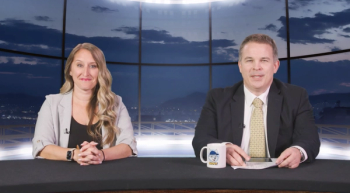
Co-hosts Kristie L. Kahl and Andrew Svonavec highlight what to look forward to at the 2025 ESMO Annual Congress, from hot topics and emerging trends to travel recommendations.

See poll results highlighting the top gastrointestinal oncology abstracts and subtypes to watch at the 2025 ESMO Congress.
See poll results highlighting the top gynecologic oncology abstracts and subtypes to watch at the 2025 ESMO Congress.
Check out this September recap of OncLive’s coverage of the top news and expert insights in urothelial cancer.
Check out this September recap of OncLive’s coverage of the top news and expert insights in melanoma.

Check out this September recap of OncLive’s coverage of the top news and expert insights in lung cancer.

Vote on the top abstracts and topics to watch in gynecologic and gastrointestinal oncology during the 2025 ESMO Congress.
The top 5 OncLive TV videos of the week cover insights in lung cancer, and prostate cancer, myelofibrosis.
The FDA clears maintenance lurbinectedin combination in lung cancer, T-DxD sBLA in HER2-positive breast cancer is accepted for review, and more.
Here is your guide to all therapeutic options that were approved by the FDA in September 2025 spanning tumor types.