
Here is your guide to all therapeutic options that were cleared by the FDA in June 2025 spanning tumor types.
Here is your guide to all therapeutic options that were cleared by the FDA in June 2025 spanning tumor types.

OncLive® showcases 13 cancer care pioneers, who have won the 2025 Giants of Cancer Care award.
The top 5 OncLive videos of the week cover insights in myelofibrosis, lung cancer, ovarian cancer, breast cancer, and melanoma.
The FDA grants approval to Dato-DXd in EGFR+ NSCLC, revumenib sNDA is under priority review for NPM1-mutant AML, and more from OncLive this week.
Here is your Q3 2025 preview spotlighting 10 FDA decisions to watch, including upcoming PDUFAs for sunvozertinib, linvoseltamab, vuslimogene oderparepvec, and more.
The top 5 OncLive videos of the week cover insights in CLL, multiple myeloma, follicular lymphoma, and extrapulmonary neuroendocrine carcinomas.
Tafasitamab combination gets approval in follicular lymphoma, FDA declines to expand label for talazoparib plus enzalutamide in mCRPC, and more.
The top 5 OncLive videos of the week cover insights in non–small cell lung cancer, small cell lung cancer, and breast cancer.
The FDA has approved new options in head and neck cancer, lung cancer, and bladder cancer—and more from OncLive this week.
The top oncology videos of the week for the week of June 1, 2025, including updates from the 2025 ASCO Annual Meeting.
Revisit key updates from the ASCO Annual Meeting, the FDA, NCCN, and more.
Here is your snapshot of all therapeutic options that were approved by the FDA in May 2025 spanning tumor types.
A 2025 ASCO press briefing previewed key advances in breast and lung cancer, HER2 diagnostics, and GLP-1s’ link to reduced cancer risk.
The top 5 OncLive videos of the week cover insights in HER2+ breast cancer, myeloma, pancreatic cancer, prostate cancer, and sarcoma.
FDA’s ODAC voted on therapeutic approaches in lymphoma, bladder, prostate, and myeloma, and more from OncLive this week.
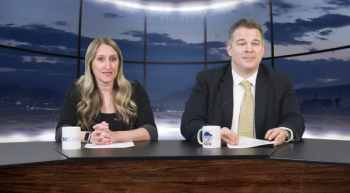
Co-hosts Kristie L. Kahl and Andrew Svonavec highlight what to look forward to at the 2025 ASCO Annual Meeting, from hot topics and emerging trends to travel recommendations.
The top 5 OncLive videos of the week cover insights in ovarian cancer, prostate cancer, chronic lymphocytic leukemia, and breast cancer.
The FDA has approved options in non–small cell lung cancer, advanced anal cancer, and pheochromocytoma or paraganglioma, and more from OncLive this week.
The top 5 OncLive videos of the week cover insights in myelodysplastic syndrome, lung cancer, hepatocellular carcinoma, colorectal cancer, and ovarian cancer.
A doublet is approved for KRAS-mutated ovarian cancer, T-DXd followed by THP improves pCR rates in HER2+ breast cancer, and more from OncLive.
OncLive announces the inductees of the 13th annual Giants of Cancer Care recognition program.
The top 5 OncLive videos of the week cover insights in colorectal cancer, prostate cancer, myeloma, renal cell carcinoma, and urothelial carcinoma.
The FDA issues a CRL to a glioma imaging agent, an sBLA seeking approval of an epcoritamab triplet in follicular lymphoma is planned for submission, and more.
The top 5 OncLive videos of the week cover insights in chronic lymphocytic leukemia, ovarian cancer, multiple myeloma, and large B-cell lymphoma.
Penpulimab gets green light from FDA for nasopharyngeal carcinoma, sacituzumab govitecan combination boosts PFS in TNBC, and more.
The top 5 OncLive videos of the week cover insights in multiple myeloma, AL amyloidosis, myelofibrosis, breast cancer, and sarcoma.
Vepdegestrant boosts PFS in select ESR1-mutated breast cancer, maintenance OSE2101 combination provides survival benefit in PDAC, and more from OncLive.
The top 5 OncLive videos of the week cover insights in TGCT, NSCLC, TNBC, AML, and MDS.
Tislelizumab regimen wins approval in ESCC, perioperative durvalumab plus chemotherapy boosts EFS in gastric/GEJ cancer, and more from OncLive this week.
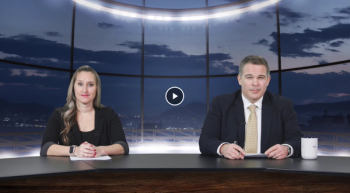
Co-hosts Kristie L. Kahl and Andrew Svonavec highlight the many advantages to attending the 42nd Annual Miami Breast Cancer Conference, with some additional tidbits to round out the main event.