
Dr Kang discusses the significance of the FDA approval of toripalimab for nasopharyngeal carcinoma and his anticipated use of the agent.
Dr Kang discusses the significance of the FDA approval of toripalimab for nasopharyngeal carcinoma and his anticipated use of the agent.

Dr Mims discusses the utility of emavusertib in acute myeloid leukemia and myelodysplastic syndrome and the rationale for the TakeAim Leukemia trial.
Dr Tripathy discusses the unique aspects of the Miami Breast Cancer Conference that make it worth returning to year after year.

Drs Kitko and Patel discuss graft-versus-host disease recognition, treatment selection, and ongoing research with novel agents and biomarkers of response.
Drs Camidge and Kelley discuss the ways Dr Kelley’s passion for research guided his early career path.

Dr Galsky discusses the FDA approval of enfortumab vedotin plus pembrolizumab for patients with locally advanced or metastatic urothelial cancer.
Drs Jacob, Van Der Wall, and Wright-Browne discuss challenges and growth opportunities they have experienced throughout their careers.
Drs Lunning and Brander discuss the evolution of chronic lymphocytic leukemia management.
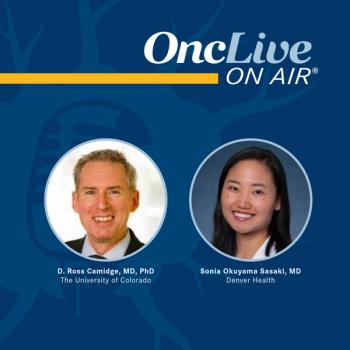
Drs Camidge and Okuyama Sasaki discuss the goals of safety net hospitals and the dynamics of helping low-income patients access cancer treatments.
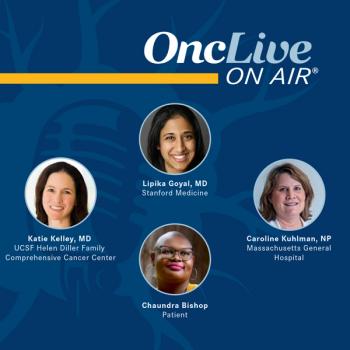
Goyal, Bishop, Kelley, and Kuhlman discuss ways to prepare patients with cholangiocarcinoma for FGFR inhibitor–related adverse effects.
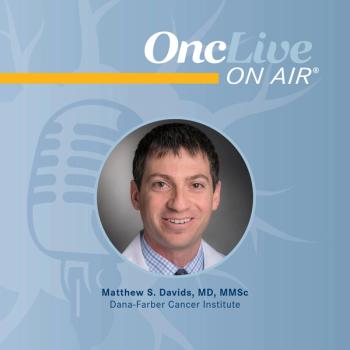
Dr Davids discusses the FDA approval of pirtobrutinib for patients with previously treated chronic lymphocytic leukemia/small lymphocytic lymphoma.
Drs Lunning and Maddocks discuss the management of MCL in the up-front setting.
Drs Camidge and Leland discuss various roles in the biotechnology field and the intricacies of starting a biotechnology company.
Dr Kasper discusses the FDA approval of nirogacestat for patients with progressing desmoid tumors; key efficacy, safety, and quality-of-life outcomes from the pivotal DeFi trial; and findings from an analysis investigating tumor volume and T2 hyperintensity changes with nirogacestat in patients enrolled in DeFi.
Drs Monk and Tarantino highlight current research investigating B7-H4–directed antibody-drug conjugates. in multiple solid tumor types.

Drs Donington and Stiles discuss the implications of perioperative immunotherapy trials on early-stage lung cancer management, definitions of resectability, and the incorporation of new multidisciplinary management guidance.
Dr Gradishar discusses the FDA approval of capivasertib plus fulvestrant for patients with advanced HR-positive, HER2-negative breast cancer harboring PIK3CA, AKT1, or PTEN alterations.
Dr Santos discusses findings from the EMPOWER-Lung 3 trial of cemiplimab plus chemotherapy in patients with advanced non–small cell lung cancer, as well as data from subgroup analyses of the EMPOWER-Lung 1 trial of cemiplimab monotherapy in patients with NSCLC and a PD-L1 score over 50%.
In case you missed it, below are some of the drugs that were approved by the FDA in the month of December.
Dr Jabbour discusses the activity and the utilization of olverembatinib in chronic myeloid leukemia and expanded upon the role that TKIs can play in the management of malignancies beyond chronic myeloid leukemia and acute lymphoblastic leukemia.
Dr Eskander discusses the impact of social determinants of health on cancer clinical trial participation; effective strategies for considering and engaging diverse communities in the clinical trial process; and how community partnerships can be strengthened to eliminate these financial and logistical barriers.
Drs Lunning and Mehta-Shah highlight challenges that arise when diagnosing patients with peripheral T-cell lymphoma and how molecular testing results influence induction and consolidation treatment approaches for patients with ALK-negative anaplastic large cell lymphoma.
Drs Simeone and Fakih discuss the main objective and design of the observational BASECAMP-1 study and how it functions alongside the EVEREST-1 study, which is evaluating the autologous CAR T-cell therapy A2B530 in patients with CEA-expressing solid tumors that have lost HLA-A*02 expression.
Drs Camidge and Gerber highlight the ways that a liberal arts education can lay the foundation for a successful career in academic medicine; the importance and various forms of mentorship; and how clinical investigators can use their experiences and data to drive national policy changes.
Drs Donington and Stiles discuss how the findings from the ADAURA trial with adjuvant osimertinib have changed thoracic surgery expectations, the potential surgical implications of the ALINA trial with adjuvant alectinib, and the importance of early-stage molecular testing in lung cancer.
Dr Abdou discusses how characteristics of patients with breast cancer impact ADC treatment selection and highlights some of the topline takeaways from breast cancer treatment to come out of the 2023 ASCO Annual Meeting.
Drs Hanna and Kandula discuss the significance of the FDA approval of toripalimab in nasopharyngeal carcinoma; pivotal data from the JUPITER-02 and POLARIS-02 trials; and how this regulatory decision increases the importance of multidisciplinary collaboration.
Drs Lunning and Jacobson discuss the characteristics of follicular lymphoma that may prompt aggressive treatment, the potential optimal role of CAR T-cell therapy in the third line and beyond, and how the toxicity profiles of different CAR T-cell products compare with each other.
Drs Camidge and McVeigh highlight the evolution of the clinical genetics field over time, the process of identifying pathogenic genetic variants, the difficulties of explaining genetic testing results to patients, and more.

Dr Dumbrava discusses the rationale and design of the PYNNACLE trial; phase 1 efficacy and safety findings with PC14586 in patients with p53 Y220C–mutated advanced solid tumors; and the next steps for this research.