
Drs Flinn, Lamanna, Brown, and Tam discuss the FDA approval of zanubrutinib in chronic lymphocytic leukemia and small lymphocytic lymphoma.
Drs Flinn, Lamanna, Brown, and Tam discuss the FDA approval of zanubrutinib in chronic lymphocytic leukemia and small lymphocytic lymphoma.
Advances in the development of bispecific antibodies have demonstrated response rates close to or surpassing those of other agents in development, offering investigators an avenue to pursue phase 3 studies such as EPCORE DLBCL-1 to challenge standard of care with the CD3 × CD20 agent, epcoritamab in diffuse large B-cell lymphoma.
A renewed focus on dismantling the barriers and closing gaps in care will aid in the mission to drive down the rate of cancer mortality and incidence across disease states.
Drs Short and Reagan discuss risk factors that can contribute to patients’ likelihood of developing tumor lysis syndrome, preventive measures for patients most at risk, and the clinical implications of standard treatment options for patients with tumor lysis syndrome.
Dr D’Amato discusses research in sarcoma and gastrointestinal stromal tumor, incorporating circulating tumor DNA analysis into routine reevaluation of patients with progressive disease, and the importance of establishing a drug’s clinical profile in non–trial target ethnic populations.
Dr Strickler discusses the FDA approval of tucatinib plus trastuzumab in metastatic colorectal cancer, key efficacy and safety findings from the MOUNTAINEER trial, and ongoing research seeking to address remaining unmet needs in this population.
Dr Rosenthal discusses the care of adolescent and young adult patients with Hodgkin lymphoma, the discrepancies between pediatric and adult oncologists that result in differing treatment approaches, and common concerns these patients have as they navigate their diagnosis and treatment alongside other life changes.
Dr Nair discusses a study evaluating the role of yoga as a complementary therapy in patients with breast cancer, how these results emphasize the importance of multidisciplinary breast cancer care, and the potential applications of these findings beyond breast cancer.
Jose Pablo Leone, MD, discusses the distinguishing features of male breast cancer, explains the benefits and limitations of current treatments, and emphasizes the importance of raising awareness about this breast cancer subset to propel further research.
Dr Shore discusses the FDA approval of nadofaragene firadenovec in non–muscle invasive bladder cancer, the benefits of this therapy’s administration method and schedule, and how this agent’s efficacy and safety pave the way for future treatment advances.

Although fully addressing the financial hardship of patients with cancer requires a complex, multifaceted approach, even small changes may ease these burdens and improve patient outcomes.
Drs Goetz and Choong discuss the potential for adjuvant endocrine therapy omission in patients with estrogen receptor–positive breast cancer who have a pathologic complete response to neoadjuvant chemotherapy.
Data presented during the 2022 ASH Annual Meeting and Exposition showcased practice-changing updates from several studies across hematologic malignancies. Experts across hematologic cancers were on hand to discuss long-term readouts, the introduction of novel regimens for several diseases, and the impact of new data and trends in care for patients.
Dr Dy discusses the development of CEACAM5-directed antibody-drug conjugates in non–small cell lung cancer, ongoing research with tusamitamab ravtansine, and the potential role of competing docetaxel-based combination strategies in the second-line setting.
Dr Giacchetti discusses the findings from a study of patient-selected timing of the daily oral intake of adjuvant hormone therapy and everolimus in breast cancer and how this study highlights the need for further research combining the fields of chronobiology and oncology.
Dr Hilal discusses data with frontline ibrutinib, acalabrutinib, and zanubrutinib in chronic lymphocytic leukemia; remaining uncertainties regarding the use of BTK inhibitors to manage this disease; and how a patient’s minimal residual disease status influences their subsequent treatment options.
In the inaugural episode of ‘How This is Building Me,’ Camidge sits down with Cetnar to discuss the ins-and-outs of defining personal and professional success, perceptions around sought-after accolades and accomplishments, the meaning behind mentoring, and more.
Joseph A. Sparano, MD, highlights practice-changing clinical trials, novel therapies, the evolving treatment landscape, and unmet needs in the field of breast cancer.
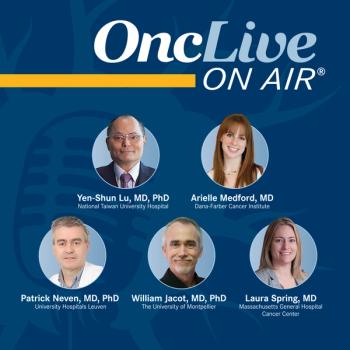
Drs Lu, Neven, Jacot, Medford, and Spring highlight updates in the treatment of hormone receptor–positive breast cancer that were presented at the 2022 San Antonio Breast Cancer Symposium.
Dr Oppong discusses findings showing that Black and Hispanic women are more likely than their White counterparts to refuse surgery for nonmetastatic breast cancer, the reasons some patients refuse to undergo surgery, and potential strategies to overcome those objections.
Dr Somaiah discusses the excitement surrounding novel agents such as CSF1R inhibitors and ULK1/2 inhibitors, and the utility of broad spectrum TKIs such as ripretinib.
Dr Rugo discusses overall survival in the TROPiCS-02 trial, post-progression treatments after ribociclib and endocrine therapy in the MONALEESA-2, MONALEESA-3, and MONALEESA-7 studies, and what the AMALEE trial indicates about optimal doses of ribociclib in hormone receptor–positive breast cancer.

Dr Kumar, Dr Patel, Falbo, and Ahlstrom highlight the importance of community-based discussions regarding adverse effects in multiple myeloma, the benefits of considering the whole treatment course, and subgroup analyses from the MAIA trial.
Dr Blum discusses renal medullary carcinoma, the lack of approved systemic therapy for these patients, and findings showing a correlation between CA-125 levels and increased tumor burden and treatment response in this disease.
Dr Johnson discusses the FDA approval of tremelimumab plus durvalumab and chemotherapy in non–small cell lung cancer, key data from the POSEIDON trial, and the combination’s efficacy and tolerability in various patient populations.
Nicholas Acuna discusses research showing that incidence of liver cancer increases over time in people of Mexican descent living in Los Angeles, the “Latino paradox” in health outcomes, and the next steps for this research.
Dr Brody previews mantle cell lymphoma data being presented at the 2022 ASH Annual Meeting and Exposition, including promising data on pirtobrutinib from the BRUIN trial, the potential for CAR T-cell therapy as evidenced in the ZUMA-2 trial, and how immunotherapies such as glofitamab are expanding the treatment paradigm.
Dr Matulonis discusses the FDA approval of mirvetuximab soravtansine-gynx in folate receptor alpha–positive, platinum-resistant ovarian cancer, key efficacy and safety data from the SORAYA trial, and how further research can continue the momentum behind finding effective ovarian cancer treatments.
Dr Leone discusses the distinguishing features of male breast cancer, the benefits and limitations of current treatments, and the importance of raising awareness about this breast cancer subset to propel further research.
Dr Florez discusses why cancer care equity and survivorship should be a priority for all physicians, the steps the health care system needs to take to address disparities in these areas, and specific ways that Dana-Farber is working to close these gaps.