
Dr Abou-Alfa discusses the FDA approval of durvalumab plus tremelimumab in unresectable hepatocellular carcinoma, the regimen’s unique mechanism of action, and the importance of expanding global access to this combination.
Dr Abou-Alfa discusses the FDA approval of durvalumab plus tremelimumab in unresectable hepatocellular carcinoma, the regimen’s unique mechanism of action, and the importance of expanding global access to this combination.
Dr Crane discusses why Atrium Health decided to launch a gyn onc fellowship, how she helps fellows navigate the current political landscape while maintaining high-level care, and how she tries to model a good work-life balance for her trainees.

Dr Oppong discusses factors that contribute to the ongoing disparity in breast cancer deaths among Black women vs White women, the importance of increased access to high-quality screening, and the need for more inclusive research efforts to close the gaps in breast cancer diagnosis and care.
Dr Garfall discusses the FDA approval of teclistamab in relapsed/refractory multiple myeloma, key efficacy and safety data from the MajesTEC-1 trial, and the drug’s unique mechanism of action compared with other anti-myeloma agents.
In this inaugural episode, Dr Lunning details important findings to come out of the Pan Pacific Lymphoma Conference, including results evaluating prophylactic medications in the management of patients with hematologic malignancies receiving cellular therapy or autologous stem cell transplant.
The Chemotherapy Foundation Symposium® returns to New York City for its 40th annual meeting with a 3-day program that will deliver the latest updates across the gamut of oncology care.
Drs Sauter and Hill discuss the use of CAR T-cell therapy in patients with lymphomas, the potential for allogeneic CAR T cells, and ways to expand access and address financial toxicity.
Dr Goyal discusses the FDA approval of futibatinib in FGFR2-positive cholangiocarcinoma, key safety data from the FOENIX*-CCA2 trial, and the importance of biomarker testing in the cholangiocarcinoma population.

Optimizing clinical pathways to address financial toxicities faced by patients with cancer requires a complex, multifaceted approach. However, even small in-practice changes may ease the financial burdens and improve outcomes.
Drs Giaccone and He discuss the implications of their thymic cancer research, the importance of combining immunotherapy and anti-angiogenesis agents to treat solid tumors, and the challenges of investigating rare cancers.

Drs Mikhael and Cole discuss ways to help reduce disparities in myeloma by delivering culturally relevant care and highlight the importance of implementing shared decision-making, creating a well-informed multidisciplinary staff, and meeting patients where they are.
Dr Shah discusses the FDA approval of sodium thiosulfate in pediatric patients with solid tumors treated with cisplatin, key efficacy and safety data from the SIOPEL6 and COG ACCL0431 trials, and the importance of multidisciplinary communication when prescribing and administering the agent.
Drs DiNardo, Wang, and Altman discuss the challenges they faced in their early careers, the rollout of molecular profiling and targeted therapy in the early 2000s, and their growth from protégés to mentors.
Drs Ramkumar and Morganstein discuss the challenges they face with integrating and organizing molecular testing results into electronic medical records, how they address non–small cell lung cancer test results with patients, and their hopes for the future of pathology at their institutions.
Dr Subbiah discusses the significance of the FDA approval of selpercatinib in RET fusion–positive non–small cell lung cancer, thyroid cancer, and other solid tumors.
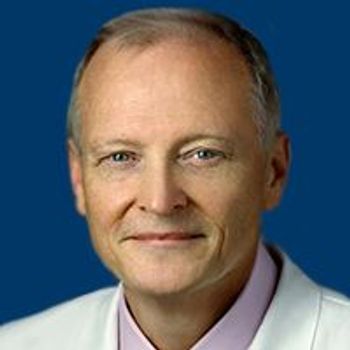
John L. Marshall, MD, provides an overview of esophageal squamous cell carcinoma and discusses several key updates to the treatment landscape, including putting data in the context of the treatment algorithm.

Sequencing complexities with chemotherapy-based regimens in metastatic breast cancer pose unique challenges for valuebased decision-making in routine practice.
Dr Brentjens discussed targeting the “enigmatic” GPRC5D protein, safety results with MCARH109, and the appropriate sequencing for the agent.
Dr Velcheti discusses planned research into whether mobile technology services can improve patient outcomes for underserved and underrepresented patient populations.
Dr Oh discusses the FDA approval of durvalumab plus gemcitabine and cisplatin in biliary tract cancer, the tolerability of the regimen, and the importance of using immunotherapy to treat this disease.
Dr Shepard discusses the unpredictable course of desmoid tumors, the use of TKIs for these tumors, and findings from 2 trials presented at the 2022 ESMO Congress that may represent new treatment options for patients with desmoid tumors.
Dr Deol discusses what he wants his trainees to take from the fellowship program he directs, how his colleagues help fellows find jobs, and how he helps fellows deal with grief.
Dr Patel discusses post-transplant complications in myeloid disorders, the prevalence of these complications, and the most common ones that may arise, including primary disease relapse, graft-vs-host disease, infection, organ toxicity, persistent cytopenias, and immunosuppression.
Dr Verstovsek discusses the FDA approval of pemigatinib in myeloid/lymphoid neoplasms with FGFR1 rearrangements, the transformative effects of pemigatinib, and the importance of identifying chromosomal abnormalities in patients with this aggressive disease.
Dr Leal discusses the symptoms commonly associated with Lambert-Eaton Myasthenic Syndrome, the prevalence of this disorder in concurrence with underlying cancers, and how amifampridine can help manage this disease by improving motor and autonomic symptoms.
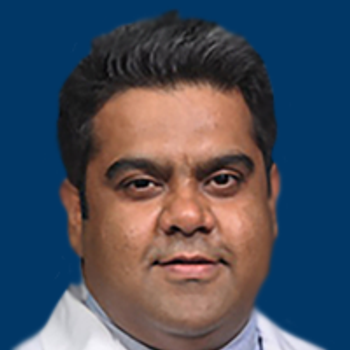
Abhinav Deol, MD, discusses how Karmanos Cancer Institute prepares trainees for their first job and helps them handle negative situations and deal with grief.
Dr Elamin discusses results from a phase 2 study of poziotinib efficacy in EGFR exon 20–mutant non–small cell lung cancer and highlights the agent’s sensitivity in relation to insertion location.
Dr Chen details the findings from a study of patients with transformed cutaneous T-cell lymphoma, gives her perspective on findings from the FLASH trial, and discusses the need for more research funding in this disease.
Dr Modi discusses the significance of the FDA approval of trastuzumab deruxtecan in metastatic HER2-low breast cancer, pivotal efficacy and safety data from the DESTINY-Breast04 trial, and how these findings pave the way for further progress across cancer therapy.
Drs Bekaii-Saab, George, and von Mehren discuss patient-reported outcomes from the INTRIGUE trial, the rationale for a phase 1/2 study investigating DCC-3116 in patients with RAS or RAF–mutated solid tumors, and how vimseltinib may alleviate unmet needs in the tenosynovial giant cell tumors population.