Zofia Piotrowska, MD, MHS
Articles by Zofia Piotrowska, MD, MHS

Panelists discuss how future developments in EGFR-mutated non–small cell lung cancer (NSCLC) will focus on biomarker-driven patient selection, rational sequencing strategies, and emerging therapies including cellular therapy and treatments for atypical EGFR mutations.
Panelists discuss how ADC-based therapies like dato-DXd offer superior efficacy compared with traditional chemotherapy options like docetaxel, while requiring careful monitoring for unique toxicities including ILD, stomatitis, and ocular effects.
Panelists discuss how TROP2-targeted ADC dato-DXd represents another promising option with evolving digital pathology biomarker approaches, though practical implementation and patient selection strategies remain challenging.
Panelists discuss how HER3-directed ADC patritumab deruxtecan shows promise as a later-line therapy with approximately 30% response rates and intracranial activity, though biomarker selection remains elusive and mechanism of CNS penetration unclear.
Panelists discuss how second-line treatment selection depends heavily on frontline therapy choice, emphasizing the importance of repeat biopsies to identify resistance mechanisms and considering continuation of TKI with added chemotherapy for patients with controlled CNS disease.
Panelists discuss how balancing safety and efficacy in frontline regimens involves managing distinct toxicity profiles, with FLAURA2 requiring standard chemotherapy monitoring vs MARIPOSA necessitating complex supportive care for EGFR-related skin toxicity and venous thromboembolism prophylaxis.
Panelists discuss how oligometastatic disease treatment requires careful definition of metastatic burden, with liver metastases potentially indicating more aggressive biology and warranting consideration of intensified frontline therapy.
Panelists discuss how CNS metastases in EGFR-mutated NSCLC require multidisciplinary management with close radiation oncology collaboration, frequent monitoring, and preference for FLAURA2 regimen due to superior intracranial efficacy data.
Panelists discuss how the MARIPOSA regimen (amivantamab plus lazertinib) shows promising overall survival benefits in first-line treatment, though with increased toxicity concerns including rash, edema, and VTE risk requiring careful patient selection.
Panelists discuss how FLAURA2 regimen (osimertinib plus chemotherapy) is being incorporated into frontline EGFR-mutated NSCLC treatment, with considerations for escalating to combination therapy based on disease burden, CNS metastases, and patient tolerance factors.
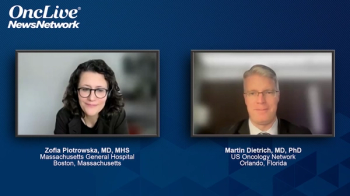
Zofia Piotrowska, MD, MHS, and Martin Dietrich, MD, PhD, emphasize the critical role of both tissue and liquid biopsies, the necessity of rapid time-to-treatment initiation, and the increasing likelihood of liquid biopsies becoming the standard of care for metastatic non-small cell lung cancer patients in the near future.
Key opinion leaders delve into the challenges posed by payers, costs, out-of-pocket maximums, and the need for letters of medical necessity, while also addressing additional sources of resistance encountered in clinical practice.
Zofia Piotrowska, MD, MHS, shares insights into the challenges and advantages of diagnostic testing practices at Massachusetts General Hospital, including the benefits of on-site testing, the need for less streamlined consent forms, and areas for improvement to expedite the diagnostic testing ordering process.

Key opinion leaders highlight findings from a University of Pennsylvania study demonstrating that implementing reflex next-generation sequencing testing can reduce time-to-treatment from 19 days to 10 days, potentially leading to improved overall patient outcomes and survival rates in non-small cell lung cancer.
Medical experts recommend that EGFR, ALK, and PD-L1 testing be performed as reflex tests for patients with early-stage non-small cell lung cancer to inform personalized treatment strategies.
The expert panel underscores the critical importance of rapid diagnostic testing and identification of driver alterations to optimize patient outcomes, given the often-narrow therapeutic window for chemotherapy and targeted therapies.
Key opinion leaders examine the current National Comprehensive Cancer Network (NCCN) guidelines regarding the utilization of liquid and tissue biopsies, highlighting the necessity for the NCCN to prioritize and recommend concurrent testing as the preferred approach over relying on a single liquid or tissue biopsy alone.
Martin Dietrich, MD, PhD, shares his approach to optimizing the use of diagnostic testing from both a tissue perspective and cost perspective, noting he routinely orders tissue and liquid biopsies during the initial patient visit if prior testing has not been conducted.
Zofia Piotrowska, MD, MHS, and Martin Dietrich, MD, PhD, emphasize the crucial role of molecular testing in disease diagnosis, focusing on the significance of rapid turnaround times and the ability of liquid biopsies to address time-sensitive diagnostic needs.

Insights on the use of neoadjuvant therapy in resectable NSCLC, particularly focusing on the use of neoadjuvant IO in EGFR mutated patients and the results of relevant trials.
On the subject of patient eligibility, the panel deliberates on the decision-making process between osimertinib and chemotherapy and outlines adjuvant therapy options.
Recommendations for community oncologists concerning molecular testing, including the types of tests, timing best practices, and how the results should inform treatment decisions.
Analyzing a recent overall survival analysis from the ADAURA trial, its impact on practice, and changes in the treatment landscape of early NSCLC.
The panelists explore the groundbreaking ADAURA trial, covering its study design, efficacy and safety results, and the current clinical implications.
After a brief introduction, Lyudmila Bazhenova, MD reviews treatment options for early-stage NSCLC, the prevalence of EGFR mutations, and guidelines for managing patients with stage 1b resectable disease.

Zofia Piotrowska, MD, discusses the management of paronychia associated with EGFR TKIs.

Zofia Piotrowska, MD, MHS, discusses the utility of mobocertinib in patients with non–small cell lung cancer who harbor EGFR exon 20 insertions.
Zofia Piotrowska, MD, MHS, discusses the patient populations eligible to receive osimertinib as treatment for lung cancer.
Zofia Piotrowska, MD, MHS, discusses treatment strategies for EGFR-mutant non–small cell lung cancer.


