

Gastrointestinal Cancer
Latest News
Advertisement
Latest Videos

















































Advertisement
More News
Frontline pembrolizumab demonstrated non-inferior overall survival compared with standard chemotherapy among patients with PD-L1–positive, HER2-negative, advanced gastric or gastroesophageal junction cancer.
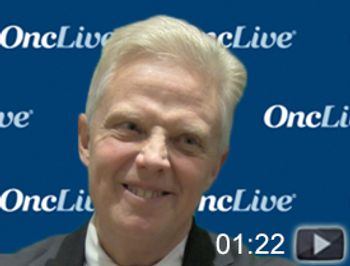
Mark M. Zalupski, MD, professor of medicine at the University of Michigan School of Medicine, discusses the clinical implications of the phase III KEYNOTE-061 trial in gastric cancer.
Mark M. Zalupski, MD, sheds light on the current treatment landscape of advanced gastric cancer and the numerous challenges that remain.
Lowell B. Anthony, MD, FACP, chief, Division of Medical Oncology, University of Kentucky Markey Cancer Center, discusses preliminary research with spartalizumab (PDR001) in neuroendocrine tumors (NETs).
Bassel El-Rayes, MD, chief clinical research scientist, Winship Cancer Institute of Emory University, discusses considerations for locoregional therapy versus resection in patients with colorectal cancer.
Gazala N. Khan, MD, medical oncologist, Henry Ford Health System, discusses the implications of the REFLECT trial in advanced hepatocellular carcinoma (HCC).
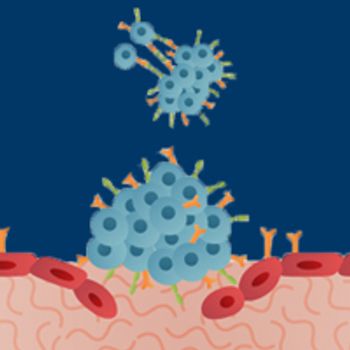
Mesothelin, a protein found on cell surfaces and in serum, has emerged as a promising target for immunotherapy-based treatment approaches for several malignancies with poor prognoses and limited treatment options. Investigating novel approaches to optimize delivery and identifying combinations of agents to synergistically improve therapeutic response will be the next steps in bringing mesothelin-targeted therapies into the clinical setting.
Two in 3 patients treated with PD-1 or PD-L1 inhibitors experienced at least 1 AE and 1 in 7 patients experienced at least 1 grade ≥3 AE, according to a systematic review and meta-analysis of clinical trials and study updates published through December 15, 2018.
Gazala N. Khan, MD, highlights the recent headway made in hepatocellular carcinoma and discusses the remaining challenges.
The triplet regimen of encorafenib, binimetinib, and cetuximab led to a 48% reduction in the risk of death compared with cetuximab and irinotecan-containing regimens in patients with BRAF V600E-mutant metastatic colorectal cancer who previously received up to 2 lines of therapy, meeting both primary endpoints of the phase III BEACON CRC trial.
Benjamin Leon Musher, MD, associate professor of medicine, hematology and oncology, at Baylor College of Medicine, discusses the role of regorafenib in the treatment of patients with advanced hepatocellular carcinoma.
Scott Kopetz, MD, PhD, FACP, associate professor, Department of Gastrointestinal Medical Oncology, Division of Cancer Medicine, The University of Texas MD Anderson Cancer Center, discusses the biology of right- versus left-sided colorectal cancer.
Emil Cohen, MD, discusses the locoregional therapies available for the treatment of patients with hepatocellular carcinoma and offers insight into optimal strategies.
Philip A. Philip, MD, PhD, FRCP, professor, Department of Oncology, Barbara Ann Karmanos Cancer Institute, discusses research questions with Lutathera in the treatment of patients with neuroendocrine tumors.
Vaibhav Sahai, MBBS, sheds light on ongoing research in metastatic pancreatic cancer and discusses the role of genomic profiling in the space.
With multiple biomarker-directed clinical trials for metastatic CRC expected to produce data within the next few years, experts in gastrointestinal oncology who took part in a recent OncLive Peer Exchange® program recommended that clinicians become more proactive about incorporating genomic and immune markers into their decision making.
Anthony Shields, MD, PhD, oncologist, Department of Oncology, Molecular Imaging and Diagnostics Program, Barbara Ann Karmanos Cancer Institute, discusses the standard of care in patients with newly diagnosed metastatic colorectal cancer (mCRC).
Philip A. Philip, MD, PhD, FRCP, discusses recent studies that have impacted locally advanced pancreatic cancer treatment and shared key updates in the neuroendocrine tumors paradigm.
Gazala N. Khan, MD, gastrointestinal medical oncologist, Henry Ford Health System, discusses sequencing strategies in advanced hepatocellular carcinoma.

Ivosidenib demonstrated a statistically significant improvement in progression-free survival by independent radiology review compared with placebo in patients with IDH1-mutant previously treated cholangiocarcinoma.
Anthony Shields, MD, PhD, shares recent efforts being made with immunotherapy research in colorectal cancer, stressed the importance of molecular testing, and shed light on the use of liquid biopsies in the space.
Advertisement
Advertisement
Trending on OncLive
1
Epcoritamab Plus R-CHOP Meets PFS End Point in Newly Diagnosed DLBCL
2
‘Our Impact Will Be Broad and Transformative’: Wells Messersmith, MD, Takes the Reins at CU Anschutz Cancer Center
3
FDA Approves Pirtobrutinib for Previously Untreated CLL/SLL
4
Berzosertib Plus Carboplatin Fails to Improve Responses in Pretreated mCRPC
5