




Gastrointestinal Cancer
Latest News
Advertisement
Latest Videos






















































Advertisement
More News

Sujatha Nallapareddy, MD, discusses how personalized therapy has improved the outlook for patients with colorectal cancer and sheds light on some of the challenges that lie ahead.

Jerome Galon, PhD, research director, French Institute of Health and Medical Research, discusses the prognostic value of Immunoscore in stage III colorectal cancer.

Christopher Lieu, MD, director, GI Medical Oncology Program and deputy associated director for clinical research, at the University of Colorado Cancer Center, discusses HER2-directed therapy for patients with colorectal cancer (CRC).

S. Lindsey Davis, MD, an assistant professor of medicine and gastrointestinal medical oncologist at the University of Colorado Cancer Center, discusses the potential for maintenance therapy in gastric cancer.

Having a late-stage treatment for pancreatic cancer that avoids many of the adverse events associated with chemotherapy would be a boon for patients.

Michael J. Hall, MD, MS, director, Gastrointestinal Risk Assessment, assistant professor, Fox Chase Cancer Center, discusses the rationale for the POLO trial in metastatic pancreatic cancer.

Tanios Bekaii-Saab, MD, professor of medicine, Mayo Clinic, discusses the impact of the BEACON CRC trial in patients with BRAF V600E-mutated metastatic colorectal cancer.

Christopher Lieu, MD, highlights updates on biomarker-directed therapy with colorectal cancer and ongoing research being done with immunotherapy.

Rutika Mehta, MD, MPH, provides insight on the ongoing study combining TAS-102 with ramucirumab in the treatment of patients with advanced gastric/GEJ cancer.
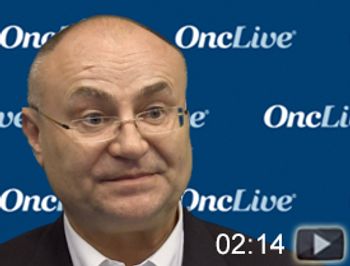
Heinz-Josef Lenz, MD, associate director for Adult Oncology and co-leader of the Gastrointestinal Cancers Program, USC Norris Comprehensive Cancer Center, discusses frontline nivolumab plus ipilimumab in metastatic colorectal cancer.
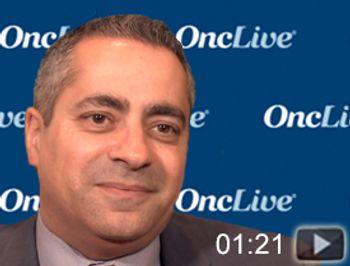
Anthony B. El-Khoueiry, MD, associate professor of clinical medicine, Keck School of Medicine, USC Norris Comprehensive Cancer Center, distinguishes between lenvatinib and sorafenib for the frontline treatment of advanced hepatocellular carcinoma.

Wells A. Messersmith, MD, discusses the evolving standards of care in colorectal cancer and the importance of molecular testing in guiding treatment decisions.
Sujatha Nallapareddy, MD, gastrointestinal medical oncologist, Rocky Mountain Cancer Centers, discusses treatment options for left- and right-sided colorectal cancer.

S. Lindsey Davis, MD, highlights the latest immunotherapy developments and other advances in gastric and gastroesophageal junction cancers.
Philip A. Philip, MD, PhD, FRCP, professor, Department of Oncology, Karmanos Cancer Institute, discusses the impact of the PRODIGE 24/CCTG PA.6 study in pancreatic cancer.

Bassel El-Rayes, MD, chief clinical research scientist, Winship Cancer Institute of Emory University, discusses methods of locoregional therapy in metastatic colorectal cancer.

Vaibhav Sahai, MBBS, assistant professor of medicine at the University of Michigan, discusses the role of genomic profiling in pancreatic cancer.

Scott Kopetz, MD, PhD, FACP, associate professor, Department of Gastrointestinal Medical Oncology, Division of Cancer Medicine, The University of Texas MD Anderson Cancer Center, discusses the correlation between tumor sidedness and biomarkers in colorectal cancer.

Wells A. Messersmith, MD, co-director of the Developmental Therapeutics Program, and director, GI Cancer Program, at the University of Colorado School of Medicine, discusses molecular markers to be aware of in patients with colorectal cancer (CRC).

Similar long-term rates of survival were seen in patients with colorectal cancer and liver metastases regardless of whether the patient underwent laparoscopic or open liver surgery.
Talia Golan, MD, head of Sheba Pancreatic Cancer Center, discusses the results of the phase III POLO trial, which evaluated maintenance olaparib compared with placebo among patients with germline BRCA-mutated metastatic pancreatic cancer.

Maintenance therapy with olaparib significantly improved progression-free survival compared with placebo among patients with germline BRCA-mutated metastatic pancreatic cancer.
Advertisement
Advertisement
Trending on OncLive
1
Epcoritamab Plus R-CHOP Meets PFS End Point in Newly Diagnosed DLBCL
2
‘Our Impact Will Be Broad and Transformative’: Wells Messersmith, MD, Takes the Reins at CU Anschutz Cancer Center
3
FDA Approves Pirtobrutinib for Previously Untreated CLL/SLL
4
Berzosertib Plus Carboplatin Fails to Improve Responses in Pretreated mCRPC
5