
Gastrointestinal Cancer
Latest News
Advertisement
Latest Videos

















































Advertisement
More News
The FDA has approved pembrolizumab for the treatment of patients with PD-L1–positive recurrent or advanced gastric or gastroesophageal junction adenocarcinoma who have received 2 or more lines of chemotherapy, including fluoropyrimidine- and platinum-containing chemotherapy, and, if appropriate, HER2/neu-targeted therapy.
Heinz-Josef Lenz, MD, discusses his study of molecular variations between small bowel adenocarcinomas, right-sided colon cancers, and gastroesophageal cancers.
Yelena Y. Janjigian, MD, medical oncologist, Memorial Sloan Kettering Cancer Center, discusses testing for microsatellite instability (MSI) testing in patients with gastric cancer.
Direct acting antivirals are a novel and completely oral hepatitis C therapy that is associated with a high response rate in hepatocellular carcinoma (HCC).
BLU-554 induced an overall response rate of 16% in patients with FGF19-positive hepatocellular carcinoma.
Theodore H. Welling, MD, associate professor of surgery, director of the Liver Tumor Program at Perlmutter Cancer Center of NYU Langone Medical Center, discusses the purpose of the CheckMate-040 trial, which explored nivolumab (Opdivo) in patients with hepatocellular carcinoma. (HCC).
Robert Montal, MD, visiting researcher, Icahn School of Medicine, Mount Sinai Hospital, discusses biomarker findings of the phase III STORM trial, which explored adjuvant treatment with sorafenib (Nexavar) in patients with hepatocellular carcinoma (HCC).
First-line therapy with lenvatinib continued to be noninferior in overall survival and achieve significant improvements in progression-free survival, time to progression, and objective response rate compared with sorafenib for patients with unresectable hepatocellular carcinoma.
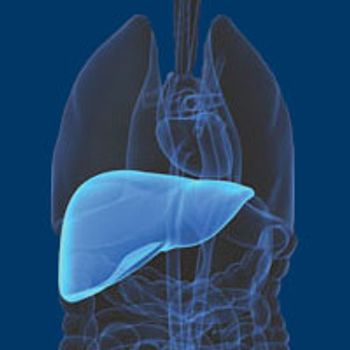
Hepatocyte pERK-positive immunostaining and microvascular invasion were independent prognostic factors of recurrence-free survival for patients with hepatocellular carcinoma treated with adjuvant sorafenib; however, a predictive biomarker for recurrence was not uncovered.
Precision screening for hepatocellular carcinoma (HCC) could improve on current screening techniques through its risk-stratifying approach.
Richard Finn, MD, associate professor of medicine at the UCLA David Geffen School of Medicine, discusses the significance of the phase III trial of frontline lenvatinib (Lenvima) versus sorafenib (Nexavar) in patients with hepatocellular carcinoma (HCC).
Theodore H. Welling, MD, associate professor of surgery, director of the Liver Tumor Program at Perlmutter Cancer Center of NYU Langone Medical Center, discusses how immunotherapy agents will eventually fit into the paradigm of hepatocellular carcinoma. (HCC).
Theodore H. Welling, MD, shares insight on the top presentations at the ILCA meeting, and how he believes the future will look for the treatment of HCC.
Robert Montal, MD, visiting researcher, Icahn School of Medicine, Mount Sinai Hospital, discusses advancements regarding systemic therapies in the field of hepatocellular carcinoma (HCC).
Richard Finn, MD, associate professor of medicine at the UCLA David Geffen School of Medicine, shares insight on some current and emerging agents in the field of hepatocellular carcinoma (HCC).
The 11th International Liver Cancer Association Annual Conference, taking place September 15 to 17 in Seoul, South Korea, is showcasing multidisciplinary findings across the field of hepatocellular carcinoma.
The FDA approved the first biosimilar for the treatment of cancer. ABP-215 (bevacizumab-awwb; Mvasi), a biosimilar for bevacizumab (Avastin), is indicated for the treatment of colorectal, lung, brain, kidney, and cervical cancers in adult patients.
Advertisement
Advertisement
Trending on OncLive
1
Epcoritamab Plus R-CHOP Meets PFS End Point in Newly Diagnosed DLBCL
2
INBRX-106 Plus Pembrolizumab Improves Responses and PFS in First-Line PD-L1–Positive HNSCC
3
FDA Approves Pirtobrutinib for Previously Untreated CLL/SLL
4
‘Our Impact Will Be Broad and Transformative’: Wells Messersmith, MD, Takes the Reins at CU Anschutz Cancer Center
5