
Gastrointestinal Cancer
Latest News
Advertisement
Latest Videos





















































Advertisement
More News
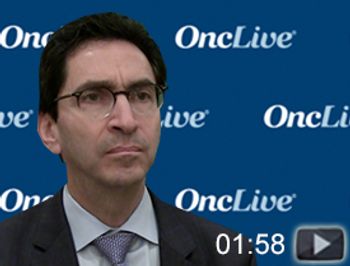
Leonard Saltz, MD, Executive Director for Clinical Value & Sustainability, head, Colorectal Oncology Section, Memorial Sloan Kettering Cancer Center, discusses chemotherapy for patients with metastatic colorectal cancer.
Tanios Bekaii-Saab, MD, FACP, and Rona D. Yaeger, MD, discuss the current treatment landscape and other key issues relating to this distinct subset of colorectal cancer.
Adding ramucirumab to cisplatin and capecitabine or 5-FU in the frontline setting did not improve overall survival in patients with HER2-negative metastatic gastric or gastroesophageal junction adenocarcinoma, according to topline results from the phase III RAINFALL trial.
Shubham Pant, MD, associate professor, The University of Texas MD Anderson Cancer Center, discusses the third-line setting for patients with metastatic colorectal cancer (CRC).
Michael Pishvaian, MD, PhD, discusses the progress that has been made in the treatment of patients with pancreatic cancer during the 2017 Ruesch Center Symposium.
John L. Marshall, MD, chief, Division of Hematology/Oncology, Medstar Georgetown University Hospital director, Otto J. Ruesch Center for the Cure of Gastrointestinal Cancer, discusses the current state of RAS-mutant gastrointestinal (GI) cancers during the 2017 Ruesch Center Symposium.
A. David McCollum, MD, Baylor-Sammons Cancer Center, discusses integrating immunotherapy into the treatment landscape of colorectal cancer (CRC).
Johanna C. Bendell, MD, medical oncologist, Sarah Cannon Research Institute, discusses the treatment of patients with colorectal cancer (CRC) that are microsatellite stable.
Avelumab did not improve overall survival compared with chemotherapy in previously treated patients with gastric or gastroesophageal junction adenocarcinoma, according to findings from the phase III JAVELIN Gastric 300 trial.
Andrew E. Hendifar, MD, medical oncology lead for the Gastrointestinal Disease Research Group, Cedars-Sinai Medical Center, discusses a 92-gene assay of patients with neuroendocrine tumors (NETs).
A. David McCollum, MD, discusses the optimal management of CRC in the first-line setting and the ongoing research with checkpoint inhibitors designed to benefit larger groups of patients.

The inaugural Luminary Awards in GI Cancer, which will be hosted by OncLive and The Ruesch Center for the Cure of Gastrointestinal Cancers, will honor Julie Fleshman, Daniel G. Haller, Henry T. Lynch, Frank McCormick and Andrew L. Warshaw for their dedication to the gastrointestinal cancers community.
Carlos Becerra, MD, discusses the current management and emerging therapies for patients with pancreatic cancer.
Shubham Pant, MD, associate professor, The University of Texas MD Anderson Cancer Center, discusses the current treatment landscape of colorectal cancer.
Scott Paulson, MD, discusses developments with NETs and liver cancer.

A. David McCollum, MD, Baylor-Sammons Cancer Center, discusses drug sequences for patients with colorectal cancer (CRC).
Carlos Becerra, MD, physician, Texas Oncology, discusses emerging treatments for patients with pancreatic cancer.
A. David McCollum, MD, physician, Texas Oncology, discusses treatment options in the first-line setting for patients with colorectal cancer (CRC).
Results from a retrospective, multi-institutional study showed that lowering the dose of sorafenib (Nexavar) for patients with HCC reduced pill burden and treatment costs, while showing a trend toward improved treatment completion.
Jennifer Chan, MD, MPH, senior physician, clinical director, Program in Carcinoid and Neuroendocrine Tumors, Dana-Farber Cancer Institute, assistant professor of medicine, Harvard Medical School, discusses a trial of cabozantinib (Cabometyx) in neuroendocrine tumors (NETs).
Johanna C. Bendell, MD, medical oncologist, Sarah Cannon Research Institute, discusses the future of regorafenib (Stivarga) for patients with colorectal cancer (CRC).

Pembrolizumab (Keytruda) induced an overall response rate of 30% in patients with heavily pretreated, PD-L1–positive advanced esophageal carcinoma.
Advertisement
Advertisement
Trending on OncLive
1
Epcoritamab Plus R-CHOP Meets PFS End Point in Newly Diagnosed DLBCL
2
‘Our Impact Will Be Broad and Transformative’: Wells Messersmith, MD, Takes the Reins at CU Anschutz Cancer Center
3
FDA Approves Pirtobrutinib for Previously Untreated CLL/SLL
4
INBRX-106 Plus Pembrolizumab Improves Responses and PFS in First-Line PD-L1–Positive HNSCC
5