
Gastrointestinal Cancer
Latest News
Advertisement
Latest Videos


















































Advertisement
More News
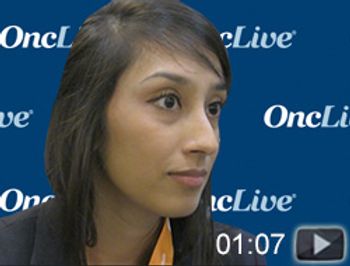
Jasmine Rassiwala, MD, resident physician, University of California, San Francisco, discusses the analysis of the “all-comers” downstaging protocol, which investigated whether there were upper limits in tumor burden for successful downstaging of patients with hepatocellular carcinoma to liver transplant.
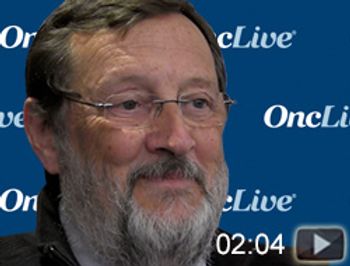
Jordi Bruix, MD, head of the Barcelona Clinic Liver Cancer at University of Barcelona, discusses positive results with the use of regorafenib as a second-line treatment in patients previously treated with sorafenib in advanced hepatocellular carcinoma.
Activating, hotspot mutations in the NRAS gene occur in a small subset of patients with metastatic colorectal cancer. These mutations are now being identified in routine clinical practice by extended RAS genotyping.
Morris Sherman, MD, PhD, professor of Medicine at University of Toronto, discusses the emergence of regorafenib (Stivarga) and how it fits into the treatment of hepatocellular carcinoma (HCC).
Filippo Pietrantonio, MD, Department of Medical Oncology, Medical Oncology Unit, Milan Fondazione IRCCS Istituto Nazionale dei Tumori, discusses survival rates in patients with colorectal cancer.
Francis Yao, MD, gastroenterologist and medical director of the Liver Transplant Program at the University of California San Francisco Medical Center, discusses liver transplants beyond Milan criteria for patients with liver cancer.
George N. Ioannou, MD, associate professor, VA Puget Sound Health Care System, University of Washington School of Medicine, discusses the best treatment options for patients with hepatocellular carcinoma.
Tanios Bekaii-Saab, MD, professor of Medicine, Mayo Clinic, discusses immunotherapeutic options being explored in the treatment landscape of colorectal cancer (CRC) beyond PD-1/PD-L1 agents.
Alan P. Venook, MD, The Madden Family Distinguished Professor of Medical Oncology and Translational Research at the University of California, San Francisco Helen Diller Family Comprehensive Cancer Center, provides advice to community oncologists who are treating patients with colorectal cancer.
The addition of PEGPH20 to standard nab-paclitaxel and gemcitabine demonstrated improvements in progression-free survival compared with nab-paclitaxel/gemcitabine alone for untreated patients with advanced pancreatic cancer.
John L. Marshall, MD, chief, Division of Hematology and Oncology, Medstar Georgetown University Hospital, discusses the mechanism of action of Yttrium-90 in the treatment of patients with liver-dominant, metastatic colorectal cancer.
The FDA has granted a priority review to a supplemental new drug application for the use of regorafenib as a second-line treatment for patients with unresectable hepatocellular carcinoma.
An immunotherapy combination that adds the interleukin-10 agonist AM0010 to FOLFOX chemotherapy will be evaluated in a phase III trial for patients with metastatic pancreatic cancer that could introduce a new modality to the treatment paradigm for the malignancy.
Maria Ignez Braghiroli, MD, medical oncologist, Instituto do Câncer do Estado de São Paulo, discusses a study exploring the various molecular characteristics of colorectal cancer (CRC) tumors.
Tanios Bekaii-Saab, MD, professor of Medicine, Mayo Clinic, discusses the role of immunotherapy in the treatment of patients with colorectal cancer.
Alan P. Venook, MD, The Madden Family Distinguished Professor of Medical Oncology and Translational Research at the University of California, San Francisco Helen Diller Family Comprehensive Cancer Center, discusses important factors for oncologists to consider when treating patients with colorectal cancer.
Mikhail Fedyanin, MD, PhD, Russian Academy of Medical Science, discusses future approaches for the treatment of patients with colorectal cancer (CRC).
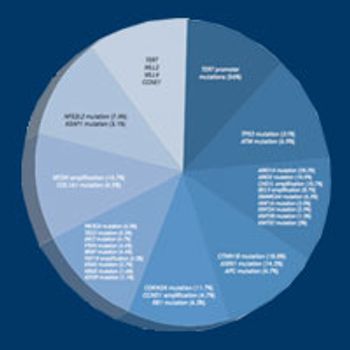
The growing incidence of primary liver cancer in the United States poses a great therapeutic challenge.
John L. Marshall, MD, chief, Division of Hematology and Oncology, Medstar Georgetown University Hospital, and director, Otto J. Ruesch Center for the Cure of Gastrointestinal Cancers, discusses the next steps following the findings from the phase III SIRFLOX trial, which explored the addition of selective internal radiation therapy (SIRT), using Y-90 resin microspheres, to FOLFOX-based first-line chemotherapy in patients with liver-dominant metastatic colorectal cancer (mCRC).
Tanios Bekaii-Saab, MD, professor of Medicine, Mayo Clinic, discusses the recent expansion of treatment options available for patients with colorectal cancer.
Gastroesophageal cancer (GEC) is a complex disease, encompassing cancers with different histological and molecular subtypes. Growing insight into the molecular biology of GEC is poised to change the treatment landscape for this disease, although many questions remain unanswered.

Alan P. Venook, MD, The Madden Family Distinguished Professor of Medical Oncology and Translational Research at the University of California, San Francisco Helen Diller Family Comprehensive Cancer Center, discusses the potential that immunotherapy may have in the treatment of patients with colorectal cancer.
Regorafenib (Stivarga) has demonstrated the first survival benefit for a systemic therapy in the second-line setting for patients with advanced hepatocellular carcinoma (HCC) who have progressed on sorafenib (Nexavar), according to results from the phase III RESORCE trial published in The Lancet.1
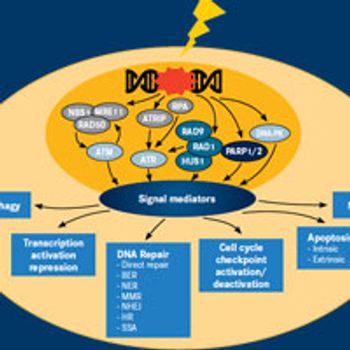
A coordinated network of signaling pathways works to protect the cell from the toxic effects of DNA damage.
It is highly probable that molecular profiling is the key to more precise treatments, as well as prediction of outcomes in metastatic colorectal cancer.
Advertisement
Advertisement
Trending on OncLive
1
INBRX-106 Plus Pembrolizumab Improves Responses and PFS in First-Line PD-L1–Positive HNSCC
2
Epcoritamab Plus R-CHOP Meets PFS End Point in Newly Diagnosed DLBCL
3
FDA Approves Pirtobrutinib for Previously Untreated CLL/SLL
4
‘Our Impact Will Be Broad and Transformative’: Wells Messersmith, MD, Takes the Reins at CU Anschutz Cancer Center
5