


Gastrointestinal Cancer
Latest News
Advertisement
Latest Videos

















































Advertisement
More News

Although regorafenib is not currently approved, Morris Sherman, MD, PhD, already views the agent as the standard second-line therapy, with hopes for moving the agent into the frontline setting.
Early evidence suggests that the combination of locoregional therapy with an immune checkpoint inhibitor is a safe and effective strategy to pursue for patients with advanced hepatocellular carcinoma.
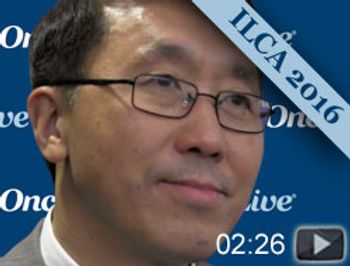
Andrew X. Zhu, MD, PhD, professor of Medicine, Harvard Medical School, director of Liver Cancer Research, Medicine, Massachusetts General Hospital, discusses the possibility of an optimal second-line treatment for all patients with hepatocellular carcinoma (HCC).
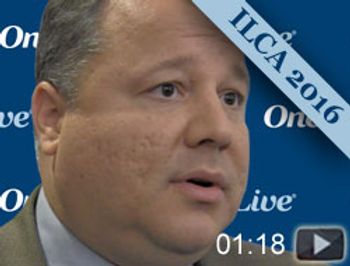
Klaus Hoeflich, PhD, director of Biology, Blueprint Medicines, discusses diagnosis of liver cancer as well as the treatment challenges associated with the disease during the 10th Annual Conference of the International Liver Cancer Association in Vancouver, Canada.
Although it has been nearly 10 years since a new drug was approved for the treatment of patients with hepatocellular carcinoma, the past decade has been marked by advances on the scientific and radiology fronts and the prospects for the development of new therapies are bright.

An assay that would evaluate the immune status of patients with colon cancer is poised to become the first of a series of Immunoscore tests for various tumor types.
Obesity is more prevalent in cancer survivors, specifically in those with a history of breast or colorectal cancer, compared with those without any history of disease.
Molecular testing for colorectal cancer continues to evolve at a rapid pace. Biomarkers already have the potential to predict outcomes and better target therapies, with the eventual goal to completely personalize treatments based on the patient’s individual biomarker profile and other tumor markers.
Dr. Navesh K. Sharma, associate professor of Radiology in the Division of Radiology and Oncology at Penn State Hershey Medical Center and section chief of Radiation Oncology at the Penn State Health St. Joseph Cancer Center, discusses the safety profile of selective internal radiation therapy (SIRT) when added to chemotherapy for patients with colorectal cancer (CRC) that has metastasized to the liver.

Richard J. Bold, MD, discusses the reasoning to break gastroesophageal junction cancers into multiple subgroups and why it is important for treatment and surgical decisions.
John L. Marshall, MD, discusses second-line treatment options for patients with metastatic colorectal cancer, along with who is most appropriate to receive regorafenib (Stivarga) and how to manage doses and toxicities when using the multikinase inhibitor.
Zev Wainberg, MD, discusses a plethora of immunotherapy agents, such as pembrolizumab (Keytruda), durvalumab, avelumab, and apatinib, for the treatment of patients with gastric cancer, as well as a number of ongoing clinical trials in this space.
Colorectal cancer mortality rates have been on the decline in California for both men and women since the mid-1990s, but for one group—Hispanic men—rates have remained essentially unchanged, and a new study suggests that lower rates of screening may be the chief driver of this disparity.
Volker Heinemann, MD, PhD, director of the Comprehensive Cancer Center at Ludwig Maximilian University of Munich, discusses using depth of response as an appropriate endpoint in studies examining patients with metastatic colorectal cancer (mCRC).

Philip B. Paty, MD, surgeon, Memorial Sloan Kettering Cancer Center, discusses patients with rectal cancer who are ineligible for a "watch and wait" approach with their surgeons.
Advertisement
Advertisement
Trending on OncLive
1
INBRX-106 Plus Pembrolizumab Improves Responses and PFS in First-Line PD-L1–Positive HNSCC
2
FDA Approves Pirtobrutinib for Previously Untreated CLL/SLL
3
Epcoritamab Plus R-CHOP Meets PFS End Point in Newly Diagnosed DLBCL
4
‘Our Impact Will Be Broad and Transformative’: Wells Messersmith, MD, Takes the Reins at CU Anschutz Cancer Center
5