

Gastrointestinal Cancer
Latest News
Advertisement
Latest Videos


















































Advertisement
More News
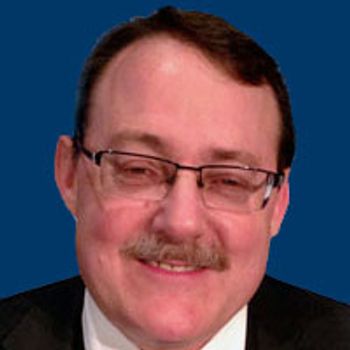
Alan P. Venook, MD, discusses key issues in metastatic colorectal cancer, including tumor sidedness and the conflicting data regarding the precise benefit of cetuximab in the frontline setting.

Jordi Bruix, MD, head of the Barcelona Clinic Liver Cancer (BCLC) at University of Barcelona, discusses the efficacy, safety, and quality-of-life with regorafenib, a novel second-line agent that is currently being considered for approval by the FDA for second-line systemic therapy for patients with hepatocellular carcinoma (HCC) who progressed on sorafenib.
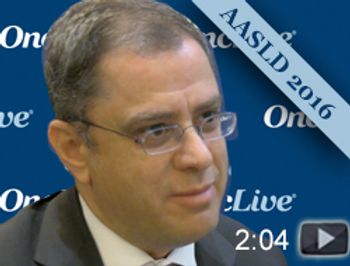
Ghassan K. Abou-Alfa, MD, medical oncologist at Memorial Sloan Kettering Cancer Center, discusses the impact of the phase III RESORCE trial, which demonstrated that regorafenib improved survival over placebo for patients with hepatocellular carcinoma (HCC) that progressed on sorafenib.
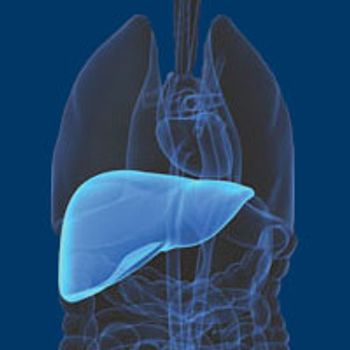
Researchers have uncovered an upper limit in tumor burden after which there is a lower probability of successfully downstaging patients with hepatocellular carcinoma for liver transplantation.
An overall survival analysis of 3 randomized controlled trials exploring Yttrium-90 (Y-90) resin microspheres may demonstrate noteworthy survival benefits for patients with liver-dominant metastatic colorectal cancer receiving first-line FOLFOX6 with or without bevacizumab plus Y-90 resin microspheres.

Suzanne L. Topalian, MD, professor of Surgery, Johns Hopkins Medicine, discuses novel immunotherapy biomarkers in colorectal cancer (CRC).
Alan P. Venook, MD, The Madden Family Distinguished Professor of Medical Oncology and Translational Research at the University of California, San Francisco Helen Diller Family Comprehensive Cancer Center, discusses factors in determining first-line treatment for patients with metastatic colorectal cancer (mCRC).

Multidisciplinary tumor boards led to higher utilization of guideline-recommended curative therapies, which was associated with improved overall survival for patients with early-stage hepatocellular carcinoma.
Aldo J. Montano-Loza, MD, MSc, PhD, associate professor of medicine, program director of hepatology, gastroenterology rotation supervisor, University of Alberta, discusses the link between high visceral adipose tissue and hepatocellular carcinoma risk in patients with cirrhosis.
Treatment with direct-acting antiviral therapy did not increase the risk of developing hepatocellular carcinoma in patients with hepatitis C virus (HCV) infection.

A new system for gauging the probability for hepatocellular carcinoma recurrence following liver transplant surgery has proved successful.

Naveed Zafar Janjua, MBBS, MSc, DrPH, senior scientist, clinical prevention services, BC Centre for Disease Control and clinical associate professor, School of Population and Public Health, University of British Columbia, discusses the findings from the British Columbia hepatitis testers cohort, which looked at the impact of hepatitis infection on long term risk of hepatocellular carcinoma (HCC).
There has been renewed optimism in hepatocellular carcinoma with regorafenib, a novel second-line agent that is currently being considered for approval by the FDA.

Following on their impressive success in the treatment of several other tumor types, immune-based therapies are being studied in clinical trials for hepatocellular carcinoma and are showing promising signals of efficacy.
Similar recurrence-free survival was demonstrated with radiofrequency ablation using percutaneous and laparoscopic methods for patients with hepatocellular carcinoma who were eligible for ablation.

Tim F. Greten, MD, senior investigator thoracic and gastrointestinal oncology branch, head, gastrointestinal malignancy section, National Cancer Institute (NCI), discusses the potential for immunotherapy in hepatocellular carcinoma (HCC).
Hashem El-Serag, MD, MPH, medicine-gastroenterology, Baylor College of Medicine, discusses the relationship between nonalcoholic steatohepatitis (NASH) and hepatocellular carcinoma (HCC).
The use of immunotherapy as a treatment for cancer is progressively increasing with a flood of recent approvals for immune checkpoint inhibitors directed against CTLA-4 and PD-1.

Hepatocellular carcinoma‎ incidence continues to rise among patients with hepatitis B despite improvements in antiviral therapies, stressing the importance of screening and surveillance in this population.
George N. Ioannou, MD, associate professor, VA Puget Sound Health Care System, University of Washington School of Medicine, discusses a study evaluating the effectiveness of direct antiviral agents for hepatitis C virus patients with hepatocellular carcinoma (HCC).

Efforts are under way to further evaluate the effects of regorafenib on sorafenib-resistant HCC cells, including the role of suppressing the ERK signaling pathway.

Stevan A. Gonzalez, MD MS, clinical assistant professor, department of internal medicine, Texas A&M College of Medicine, medical director of liver transplantation, Simmons Transplant Institute, Baylor All Saints Medical Center, discusses a cost effectiveness analysis of treating hepatitis C patients with hepatocellular carcinoma (HCC) before or after a liver transplant.
Treatment with nivolumab significantly extended overall survival compared with placebo for patients with unresectable, advanced, or recurrent gastric cancer who were refractory or intolerant to standard therapy.
Alan P. Venook, MD, The Madden Family Distinguished Professor of Medical Oncology and Translational Research at the University of California, San Francisco Helen Diller Family Comprehensive Cancer Center, discusses evolving treatment strategies for patients with colorectal cancer, with regards to molecular features such as sidedness.
A supplemental new drug application has been submitted to the FDA for the use of regorafenib (Stivarga) as a second-line treatment for patients with unresectable hepatocellular carcinoma.
Advertisement
Advertisement
Trending on OncLive
1
INBRX-106 Plus Pembrolizumab Improves Responses and PFS in First-Line PD-L1–Positive HNSCC
2
FDA Approves Pirtobrutinib for Previously Untreated CLL/SLL
3
Epcoritamab Plus R-CHOP Meets PFS End Point in Newly Diagnosed DLBCL
4
‘Our Impact Will Be Broad and Transformative’: Wells Messersmith, MD, Takes the Reins at CU Anschutz Cancer Center
5