





Gastrointestinal Cancer
Latest News
Advertisement
Latest Videos





















































Advertisement
More News

Matthew Yurgelun, MD, instructor in medicine, Harvard Medical School, Dana-Farber Cancer Institute, explains why oncologists should discuss genetic testing with their patients and family members for colorectal cancer, as well as some of the common risk factors for the disease.
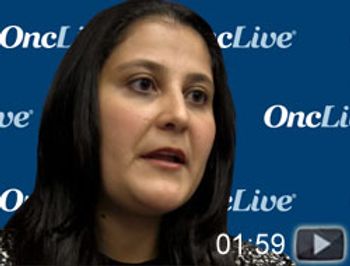
Areej R. El-Jawahri, MD, assistant in Medicine, Massachusetts General Hospital, instructor in Medicine, Harvard Medical School, discusses a study examining early integrated palliative care for patients with gastrointestinal (GI) or lung cancer and the impact it has on family caregiver outcomes.
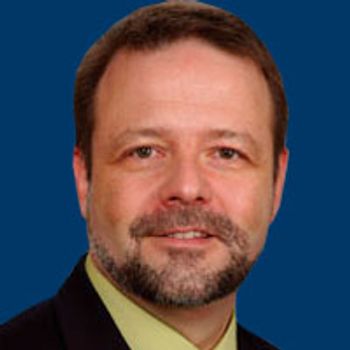
Axel Grothey, MD, discusses both the LUME-1 and LUME-2 trials, the differences between left and right tumors in colorectal cancer, and how that information could potentially be used in diagnosis and treatment.
Hendrik-Tobias Arkenau, MD, PhD, founding medical director, executive medical director, Sarah Cannon Research Institute UK, discusses immunotherapy advancements on the horizon in the field of gastric cancer.
Adam Bass, MD, discusses the various subclasses of gastric and esophageal cancer, mechanisms by which cancers are activated within a patient from dormancy, and the potential for uncovering an optimal treatment regimen for individual patients.
Ghassan K. Abou-Alfa, MD, medical oncologist, Memorial Sloan Kettering Cancer Center, discusses the significance of the RESORCE trial, which explored regorafenib (Stivarga) versus best supportive care for patients with unresectable hepatocellular carcinoma who progressed after receiving sorafenib (Nexavar).
Richard Finn, assistant professor of Medicine at the Geffen School of Medicine, Department of Medicine, Division of Hematology/Oncology at UCLA Jonsson Comprehensive Cancer Center, discusses regorafenib (Stivarga) for the treatment of patients with hepatocelluar carcinoma (HCC).
Eric Van Cutsem, MD, PhD, of University Hospitals Gasthuisberg/Leuven, Leuven, Belgium, discusses regorafenib (Stivarga) as a treatment for patients with colorectal cancer.

The Committee for Medicinal Products for Human Use has recommended the approval of pegylated liposomal irinotecan (Onivyde) in combination with fluorouracil and leucovorin for patients with metastatic pancreatic adenocarcinoma following progression on a gemcitabine-based therapy.

Alan P. Venook, MD, The Madden Family Distinguished Professor of Medical Oncology and Translational Research at the University of California, San Francisco Helen Diller Family Comprehensive Cancer Center, discusses how treatment strategies have evolved for patients with colorectal cancer.

Tanios Bekaii-Saab, MD, professor of Medicine, Mayo Clinic, discusses dosing strategies with regorafenib (Stivarga) in patients with colorectal cancer (CRC).





Advertisement
Advertisement
Trending on OncLive
1
INBRX-106 Plus Pembrolizumab Improves Responses and PFS in First-Line PD-L1–Positive HNSCC
2
FDA Approves Pirtobrutinib for Previously Untreated CLL/SLL
3
Epcoritamab Plus R-CHOP Meets PFS End Point in Newly Diagnosed DLBCL
4
‘Our Impact Will Be Broad and Transformative’: Wells Messersmith, MD, Takes the Reins at CU Anschutz Cancer Center
5