
Gastrointestinal Cancer
Latest News
Advertisement
Latest Videos
























































Advertisement
More News

The addition of ADI-PEG 20, a pegylated form of an arginine-depleting enzyme, to nab-paclitaxel and gemcitabine showed encouraging activity and minimal additional toxicity in the treatment of patients with advanced pancreatic adenocarcinoma.
Arturo Loaiza-Bonilla, MD, medical oncologist, specializing in gastrointestinal malignancies, assistant professor of Clinical Medicine at the University of Pennsylvania, discusses a clinical trial focused on the differences between left- and right-sided tumors of colorectal cancer (CRC).
Michael J. Overman, MD, discusses the significance of the ongoing CheckMate-142 study and the next steps in microsatellite instability-high metastatic colorectal cancer.

Geoffrey Y. Ku, MD, medical oncologist at Memorial Sloan Kettering Cancer Center discusses immunotherapy treatments for patients with gastric and esophageal cancers.

Patients with metastatic pancreatic ductal adenocarcinoma lived longer and had slowing of disease progression when nanoliposomal irinotecan was added to 5-fluorouracil and leucovorin, irrespective of treatment history, a posthoc analysis of a randomized trial showed.
Patients with microsatellite-high metastatic colorectal cancer responded to an immunotherapy-containing regimen, according to results of a preliminary clinical evaluation presented at the 2017 Gastrointestinal Cancers Symposium.
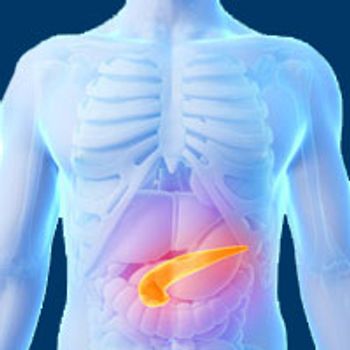
Few phase II trials in advanced pancreatic cancer conformed to recommended design characteristics for pilot trials, a contributing factor to lack of success in the disease, Australian investigators reported.

As many as one-third of patients with treatment-resistant colorectal cancer attained objective responses with the stemness inhibitor napabucasin plus FOLFIRI chemotherapy with or without bevacizumab, according to evaluable results of a study presented at the 2017 Gastrointestinal Cancers Symposium.

Cynthia L. Sears, MD, professor of Medicine, Johns Hopkins University School of Medicine, member of the Bloomberg-Kimmel Institute for Cancer Immunotherapy, discusses bacteria possibly influencing the development of colon cancer.

The adoption of enhanced recovery after surgery protocols can improve not only the outcomes of patients after a procedure but can also reduce hospital costs, as has been seen in an ERAS program in colorectal cancer at the University of Virginia Health System.

Kei Muro, MD, Aichi Cancer Center Hospital, discusses the findings of Asian XELIRI project (AXEPT) in colorectal cancer (CRC).

The incidence of hand-foot syndrome was decreased following first-line treatment with S-1 compared to capecitabine in patients with metastatic colorectal cancer, according to findings from the phase III SALTO study that were presented at the 2017 European Cancer Congress.

Patients receiving the same diagnosis, colorectal cancer with synchronous peritoneal metastases, were offered different treatments that led to dramatically different outcomes based upon the institution in which they were diagnosed. Findings presented at the 19th European Cancer Congress revealed underutilization of a highly effective treatment, due to a lack of referral.
Patients with advanced hepatocellular carcinoma had objective responses and prolonged survival when treated with single-agent nivolumab, data from a dose escalation/expansion trial showed.

Steven H. Lin, MD, PhD, associate professor at The University of Texas MD Anderson Center, discusses study of chemoradiation in elderly patients with esophageal cancer.

Richard Finn, MD, associate professor of Medicine at the UCLA David Geffen School of Medicine, discusses results of the RESOURCE study in advanced liver cancer.
Richard Finn, MD, associate professor of Medicine at the UCLA David Geffen School of Medicine, discusses studies of pembrolizumab (Keytruda) in patients with previously untreated hepatocellular carcinoma (HCC).
Advertisement
Advertisement
Trending on OncLive
1
INBRX-106 Plus Pembrolizumab Improves Responses and PFS in First-Line PD-L1–Positive HNSCC
2
Epcoritamab Plus R-CHOP Meets PFS End Point in Newly Diagnosed DLBCL
3
FDA Approves Pirtobrutinib for Previously Untreated CLL/SLL
4
‘Our Impact Will Be Broad and Transformative’: Wells Messersmith, MD, Takes the Reins at CU Anschutz Cancer Center
5